
The wholesale cabinets US market has transformed dramatically over the past decade, offering homeowners and contractors unprecedented access to quality cabinetry at direct pricing. Understanding how wholesale distribution works, what quality standards matter, and where to find reliable suppliers can save thousands of dollars on kitchen remodeling projects while ensuring long-term durability and style. Whether you're planning a complete kitchen renovation or simply replacing outdated cabinets, navigating the wholesale landscape requires knowledge of construction methods, certification standards, and regional supply chains that connect manufacturers directly to end users.
Wholesale cabinets operate through a fundamentally different business model than traditional retail showrooms. Manufacturers sell directly to dealers, contractors, and increasingly to informed homeowners, eliminating multiple markup layers that typically inflate retail prices by 40-60%. This direct-to-consumer approach has democratized access to premium cabinetry options previously available only through expensive kitchen designers.
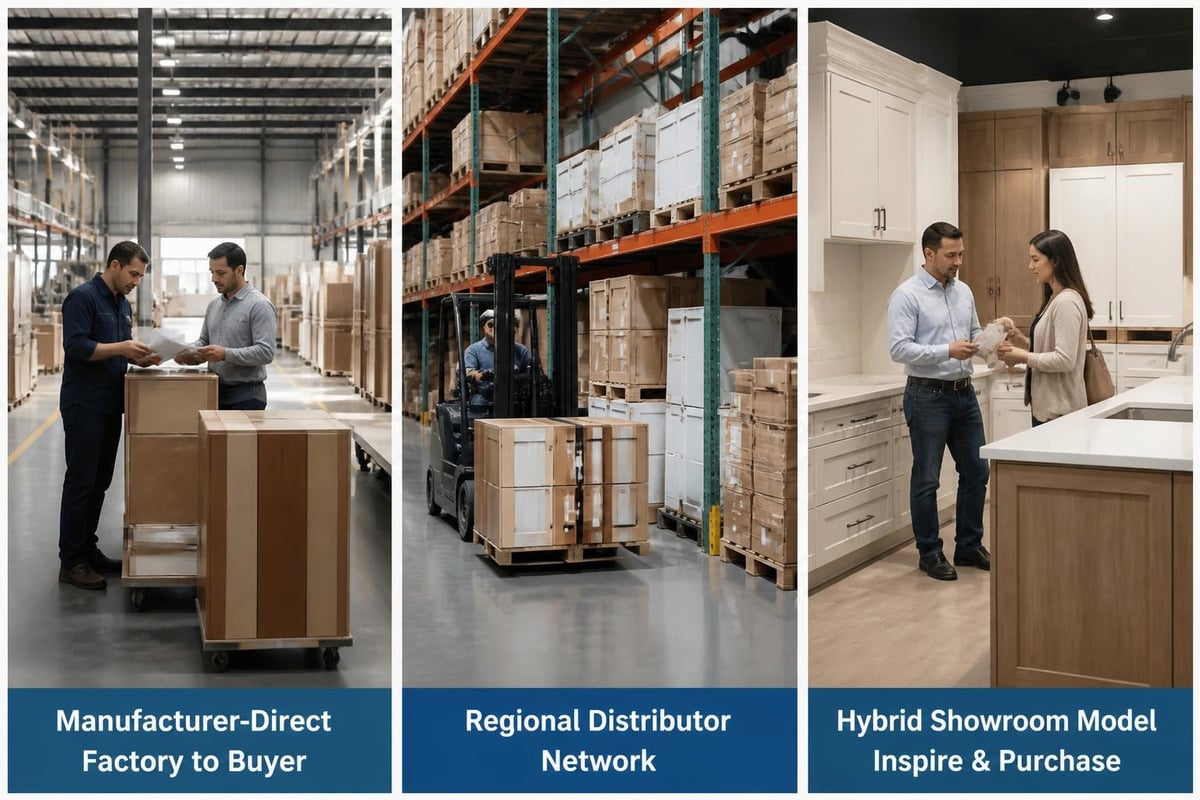
The wholesale cabinets US network spans domestic manufacturers, international suppliers, and hybrid operations that combine imported components with American assembly. Domestic producers concentrate in regions with strong woodworking traditions, particularly the Southeast and Midwest, while import operations primarily source from China, Vietnam, and Eastern Europe. Regional showrooms and distribution centers serve as critical touchpoints where buyers can examine construction quality, finishes, and hardware before committing to large orders.
Different wholesale channels serve distinct buyer segments with varying service levels:
Each channel presents trade-offs between price, service, selection, and convenience. Buyers must evaluate their own capabilities in design, ordering accuracy, and installation when choosing which wholesale path to pursue.
Quality assessment separates value-driven wholesale purchases from costly mistakes. The Kitchen Cabinet Manufacturers Association establishes the ANSI/KCMA A161.1 certification standard, which tests cabinets through rigorous structural, finish, and hardware durability protocols. This certification provides objective verification that wholesale cabinets meet minimum performance thresholds for residential use.
Box construction methods determine long-term structural integrity. Premium wholesale cabinets typically feature:
Material specifications directly impact durability and indoor air quality. The EPA’s formaldehyde emission standards regulate composite wood products used in cabinet boxes, shelves, and drawer bottoms. Compliant wholesale suppliers use CARB2-certified plywood and particleboard that meet strict emission limits, protecting household air quality while maintaining structural performance.
| Construction Feature | Economy Grade | Mid-Grade | Premium Grade |
|---|---|---|---|
| Box Material | Particleboard | Plywood sides, particle bottom | All-plywood construction |
| Box Thickness | 1/2" | 5/8" | 3/4" |
| Drawer Box | Stapled particleboard | Doweled 5/8" plywood | Dovetail 3/4" hardwood |
| Shelf Adjustment | Fixed or pin holes | Hidden adjustable clips | Full adjustability |
| Warranty Coverage | 1-5 years | 10-15 years | Limited lifetime |
The structural approach fundamentally shapes aesthetics, storage efficiency, and price points across wholesale cabinets US offerings. Framed cabinets feature a 1.5-inch hardwood face frame attached to the box front, creating the traditional American cabinet style with visible frames between doors. Frameless cabinets eliminate this frame, allowing door hinges to mount directly to the cabinet sides for a contemporary European aesthetic and slightly more interior access.
Frameless construction typically increases usable interior space by 5-8% compared to framed equivalents, a meaningful difference in smaller kitchens where every inch matters. The frameless approach also simplifies installation alignment since doors attach directly to adjustable mounting plates rather than requiring precise frame positioning.
Beyond aesthetics, construction method influences hardware compatibility and adjustment capabilities. Framed cabinets accept both concealed European hinges and traditional overlay hinges, providing flexibility for various door styles. Frameless cabinets exclusively use cup hinges that offer superior adjustability but require precision drilling during manufacturing.
Installation tolerances differ significantly between methods. Framed cabinets provide greater forgiveness for wall irregularities since the face frame creates a buffer between the box and doors. Frameless installations demand more precise leveling and shimming to ensure consistent door reveals and gaps.
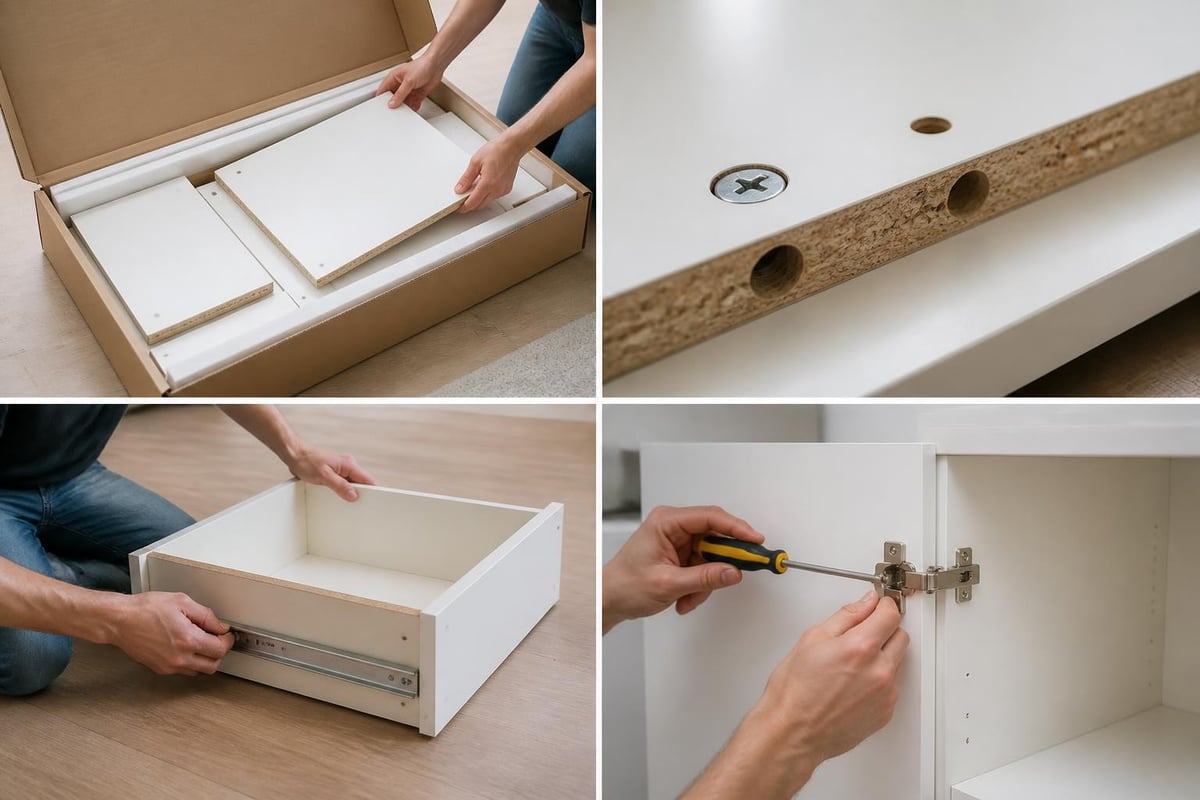
RTA cabinets represent the fastest-growing segment within wholesale cabinets US distribution, combining maximum cost savings with same-week availability. These flat-packed systems reduce shipping costs by 60-70% compared to assembled units while enabling warehouse inventory models that eliminate custom manufacturing lead times. Modern RTA engineering has largely overcome early quality concerns through cam-lock assembly systems and precision CNC manufacturing.
Assembly requirements vary dramatically across RTA brands:
The labor-cost equation shifts based on project scope. Kitchen renovations involving 15+ cabinets typically justify professional assembly at $35-50 per cabinet, while smaller projects favor DIY assembly to maximize wholesale savings.
Wholesale suppliers categorize inventory into stock, semi-custom, and fully custom tiers that balance availability against personalization. Stock cabinets ship within days from warehouse inventory in standardized 3-inch width increments, limiting design flexibility but offering unmatched speed and predictability. Semi-custom options provide extensive door style, finish, and dimensional choices while maintaining 4-8 week production timelines.
The dimensional flexibility of semi-custom construction solves common layout challenges. Rather than forcing kitchen designs into 3-inch module increments, semi-custom allows 1-inch width variations that eliminate filler strips and maximize storage efficiency. This precision particularly benefits galley kitchens and spaces with irregular wall configurations.
| Category | Lead Time | Width Options | Finish Choices | Price Range (per linear foot) |
|---|---|---|---|---|
| Stock | 1-7 days | 3" increments | 5-12 colors | $75-150 |
| Semi-Custom | 4-8 weeks | 1" increments | 50+ colors/glazes | $150-300 |
| Full Custom | 8-16 weeks | Unlimited | Unlimited | $300-800+ |
Price-per-linear-foot calculations provide standardized comparison metrics across wholesale suppliers. However, total project costs depend heavily on cabinet height, depth modifications, specialty units, and upgraded hardware that can substantially alter base pricing.
Geographic proximity to manufacturing and distribution hubs significantly impacts wholesale cabinets US pricing and lead times. Buyers near major metro markets access multiple showrooms and delivery options, while rural purchasers face limited local selection and higher freight costs. Understanding regional supply chains helps optimize value.
West Coast buyers benefit from proximity to Asian import operations and domestic manufacturers in California and Oregon. Shipping costs from East Coast producers can add $500-1,200 to full kitchen orders, potentially offsetting wholesale discounts. Conversely, Southeast and Midwest buyers enjoy direct access to America's cabinet manufacturing heartland, with many premium domestic brands offering factory-direct programs and shortened lead times.
Freight damage represents a critical risk in wholesale transactions. Reputable suppliers use specialized cabinet delivery services with lift-gate trucks and inside delivery. Standard LTL freight saves $200-400 but requires buyers to unload curbside and increases damage risk substantially. Insurance and damage inspection protocols should be confirmed before finalizing wholesale orders.
Environmental certifications increasingly differentiate wholesale cabinet suppliers as consumers prioritize sustainable materials and responsible forestry. The Forest Stewardship Council chain-of-custody certification verifies that wood materials originate from responsibly managed forests, tracked through the entire production chain from forest to finished cabinet.
Beyond forestry practices, manufacturing emissions and waste management separate progressive suppliers from commodity producers. Water-based finishes eliminate volatile organic compounds while delivering durability comparable to traditional lacquers. Pre-catalyzed conversion varnish remains the industry standard for superior moisture and chemical resistance, though newer formulations reduce solvent content by 40-50%.
Material efficiency affects both environmental impact and product quality. Premium wholesale operations optimize yield through CNC nesting software that reduces waste to 8-12%, compared to 20-30% waste in conventional production. This efficiency translates to lower material costs and reduced environmental footprint without compromising construction quality.
Standard wholesale cabinet packages typically include basic hardware that meets functional requirements without aesthetic distinction. Strategic hardware upgrades transform cabinet functionality and appearance while representing modest additional investment. Soft-close hinges and drawer slides should be considered essential rather than optional, preventing door slam damage and extending cabinet life by 30-50%.
Specialized storage accessories maximize kitchen efficiency:
Installation timing matters significantly. Factory-installed accessories ensure precise fit and professional appearance, while field-added solutions allow budget flexibility and future upgrades. Most wholesale suppliers offer both approaches with corresponding price differentials.
The 2025 U.S. Kitchen Trends Study reveals consumer preferences shifting toward warmer, more organic palettes after years of cool gray dominance. Natural wood tones including walnut, white oak, and cherry have rebounded strongly, with transparent and light stains showcasing grain character. Off-white and cream finishes maintain popularity while pure white installations decline as homeowners seek differentiation from builder-grade aesthetics.
Two-tone cabinet designs now appear in 35% of kitchen remodels, typically pairing island cabinets in contrasting colors with perimeter cabinetry. This approach adds visual interest while allowing personalization without overwhelming spaces. Navy, forest green, and charcoal serve as popular accent colors that complement rather than dominate kitchen palettes.
Finish durability matters as much as aesthetics for wholesale purchases intended for long-term service. Catalyzed finishes provide superior resistance to moisture, household chemicals, and UV exposure compared to basic lacquers. The finish investment represents just 8-12% of total cabinet costs but determines how well cabinets maintain appearance over decades of daily use.

Successful wholesale purchasing requires different approaches than traditional retail transactions. Many wholesale cabinets US suppliers maintain showrooms but expect buyers to arrive with preliminary measurements and design concepts rather than starting from scratch. Preparation steps significantly improve consultation productivity:
Design support varies dramatically across wholesale suppliers. Some offer complimentary 3D rendering and professional layout services, while others provide only technical specification assistance. Understanding service inclusions prevents mismatched expectations and project delays.
Warranty terms reveal manufacturer confidence in construction quality and provide critical protection for wholesale investments. Limited lifetime warranties cover structural defects for as long as the original buyer owns the home, though finish warranties typically span 1-5 years due to normal wear expectations. Coverage details matter more than duration, particularly regarding drawer slide failures, hinge adjustments, and finish delamination.
Service accessibility separates exceptional wholesale suppliers from problematic ones. Regional operations with physical showrooms and service departments handle warranty claims far more responsively than distant manufacturers requiring photographic documentation and complex approval processes. Response time commitments and replacement part availability should be confirmed before purchase rather than discovered when problems arise.
The KCMA certification seal provides third-party verification of warranty compliance and testing standards. While not all quality manufacturers participate in voluntary certification, the seal offers reassurance for buyers concerned about wholesale supplier credibility.
Professional installation typically adds 15-25% to wholesale cabinet costs but ensures proper mounting, alignment, and warranty validity. DIY installation remains feasible for experienced homeowners with proper tools, potentially saving $2,500-5,000 on average kitchen projects. However, installation errors frequently cost more to remedy than professional services would have charged initially.
Critical installation requirements include:
Countertop coordination deserves particular attention in wholesale cabinet projects. Template dates must be scheduled after cabinet installation completion, with countertop fabrication and installation typically requiring 2-3 additional weeks. Project timeline management becomes buyer responsibility in wholesale transactions, unlike turnkey retail arrangements with integrated scheduling.
Wholesale cabinets US suppliers employ varying pricing methodologies that complicate direct comparison. Per-linear-foot pricing provides rough estimates but fails to account for cabinet height variations, specialty units, and upgraded features. Itemized quotes offer transparency but require detailed specification knowledge to ensure apples-to-apples comparison across suppliers.
Budget allocations should anticipate costs beyond cabinet boxes:
| Cost Category | Typical Percentage of Total Budget |
|---|---|
| Cabinet boxes and doors | 45-55% |
| Installation labor | 15-20% |
| Countertops | 20-25% |
| Hardware upgrades | 5-8% |
| Delivery and disposal | 3-5% |
Payment terms in wholesale transactions typically require 50% deposit upon order with balance due before delivery or installation. This structure protects manufacturers from custom order cancellations while requiring buyers to commit before seeing finished products. Credit card payment options provide additional consumer protection though many suppliers limit card payments to avoid processing fees.
Delivery acceptance procedures protect buyers from concealed damage and manufacturing defects. Immediate inspection upon delivery remains critical since freight damage claims must be documented within 24-48 hours. Check all boxes for crushing, water damage, or obvious impacts before signing delivery receipts. Note any concerns directly on paperwork and photograph damage for insurance claims.
Post-delivery but pre-installation verification should include:
Concealed defects discovered during installation present complications in wholesale transactions. Reputable suppliers replace defective components promptly, but resolution timeframes can delay projects by 2-4 weeks. Building buffer time into renovation schedules prevents these inevitable hiccups from cascading into major disruptions.
Wholesale cabinets US purchasing offers substantial savings and extensive selection for informed buyers willing to navigate the specifications, quality standards, and logistics that traditional retail simplifies. Understanding construction methods, certification standards, and regional supply chains empowers homeowners to secure premium cabinetry at direct pricing. SD Kitchen Cabinets combines wholesale pricing with full-service support including free 3D design consultations, professional installation, and a limited lifetime warranty on every cabinet, eliminating the typical trade-offs between cost and convenience for San Diego area homeowners.