
Ready to assemble kitchen cabinets have revolutionized how homeowners and contractors approach kitchen renovations. These flat-pack cabinet systems arrive at your doorstep with all components pre-cut, pre-drilled, and ready for assembly, offering significant cost savings without sacrificing quality. For budget-conscious homeowners looking to maximize value while maintaining design flexibility, understanding the construction, materials, and installation process of RTA cabinets is essential before making a purchase decision.
A ready to assemble kitchen cabinet consists of engineered wood panels, hardware, and finishing components packaged in a compact box. The construction methodology differs significantly from fully assembled cabinets, but modern manufacturing techniques have closed the quality gap considerably.
Most RTA cabinets utilize plywood or medium-density fiberboard (MDF) for cabinet boxes, with solid wood or thermofoil for door fronts. The US Forest Service research demonstrates that properly manufactured composite panels can match or exceed solid wood in many performance metrics, particularly dimensional stability and moisture resistance.
Material choices directly impact durability and longevity:
The cabinet industry follows strict guidelines established by the ANSI/KCMA A161.1 performance standard, which defines minimum construction requirements for structural adequacy, door operation, drawer cycling, and finish durability. Manufacturers pursuing KCMA certification submit products to independent testing laboratories that verify compliance with these rigorous benchmarks.
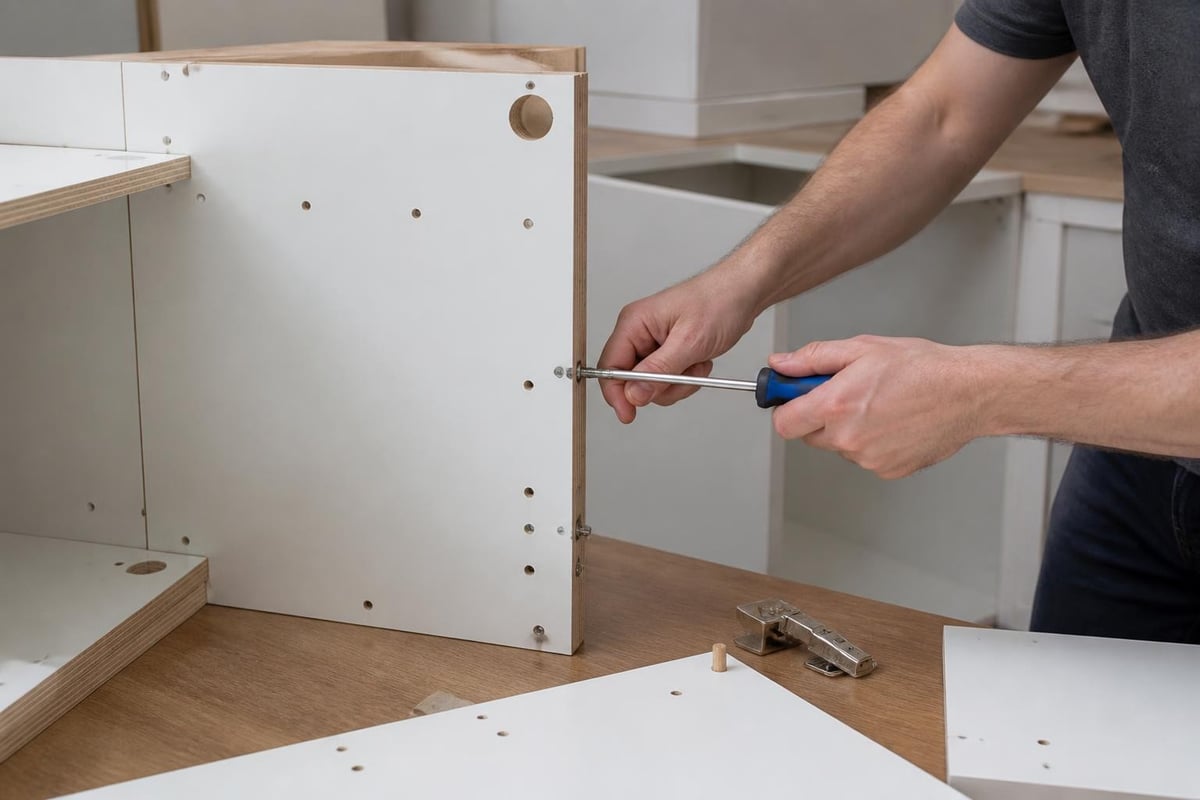
Traditional cabinets rely on glue and mechanical fasteners applied during factory assembly. Ready to assemble kitchen cabinet systems instead use precision-engineered connection hardware:
| Hardware Type | Function | Advantages | Installation Difficulty |
|---|---|---|---|
| Cam locks | Primary box joinery | Strong, repeatable, tool-free adjustment | Easy |
| Wooden dowels | Alignment and reinforcement | Natural material, prevents shifting | Moderate |
| Metal brackets | Wall mounting and support | Adjustable, load-bearing | Easy |
| European hinges | Door attachment | Concealed, adjustable in three dimensions | Moderate |
| Drawer slides | Drawer operation | Soft-close options, full extension | Moderate |
These connection methods enable complete disassembly and reassembly, making RTA cabinets ideal for homeowners who may move or reconfigure their kitchen layout in the future.
The quality spectrum for ready to assemble kitchen cabinets ranges from economy-grade imports to premium domestic products that rival custom cabinetry. Discerning buyers should evaluate several critical factors before purchasing.
Engineered wood products contain formaldehyde-based adhesives that release volatile organic compounds (VOCs) into indoor air. The EPA formaldehyde emission standards under TSCA Title VI establish maximum emission levels for composite wood products, including plywood, MDF, and particleboard.
California maintains even stricter requirements through CARB Phase 2 compliance, which many reputable manufacturers adopt as their baseline standard regardless of where products are sold. When evaluating a ready to assemble kitchen cabinet, verify that the manufacturer provides CARB Phase 2 or TSCA Title VI certification documentation.
Cabinet boxes may be standardized, but door and drawer front quality varies dramatically across manufacturers. Premium RTA lines feature five-piece mortise-and-tenon door construction with center panels that float within the frame, allowing natural wood movement without cracking.
Budget options typically use one-piece routed MDF doors with applied profiles. While less expensive, these doors are more susceptible to damage during assembly and lack the dimensional stability of multi-piece construction.
Drawer boxes represent another quality indicator:
One of the primary advantages of choosing a ready to assemble kitchen cabinet is the ability to complete installation as a DIY project. However, realistic timeline and skill-level assessment ensures project success rather than frustration.
Professional kitchen designers follow the NKBA Kitchen Planning Guidelines when developing functional layouts. These evidence-based recommendations ensure adequate clearances, appropriate cabinet heights, and logical workflow patterns that make kitchens safer and more efficient.
Before ordering, complete these preparatory steps:
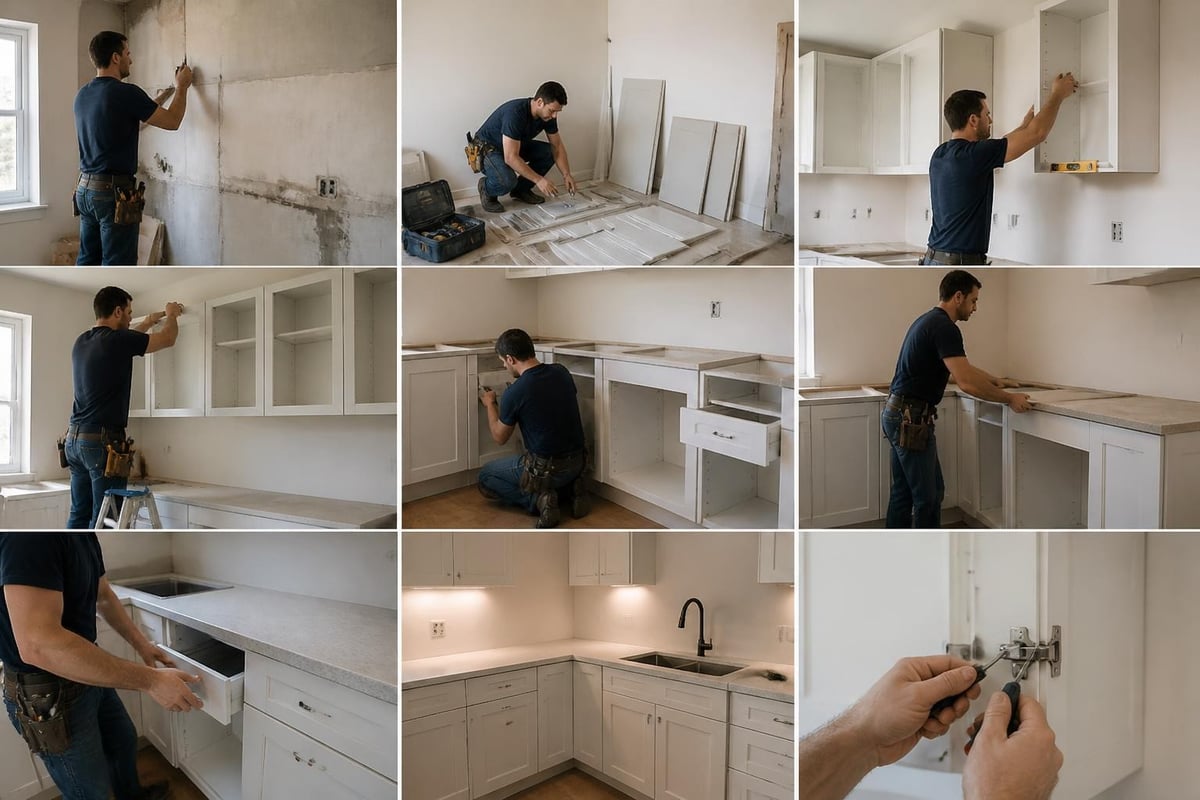
This Old House provides detailed guidance on the practical aspects of RTA cabinet assembly and installation. Most homeowners with moderate DIY skills can complete a typical 10×10 kitchen in 40-60 hours of labor when working methodically.
The assembly sequence matters significantly:
Phase One: Cabinet Assembly (2-3 hours per cabinet)
Phase Two: Upper Cabinet Installation (4-6 hours for typical kitchen)
Phase Three: Base Cabinet Installation (6-8 hours for typical kitchen)
The financial advantage of a ready to assemble kitchen cabinet typically ranges from 30% to 50% compared to fully assembled equivalents. Understanding where these savings originate helps buyers make informed value decisions.
| Cost Factor | Fully Assembled | Ready to Assemble | Savings Percentage |
|---|---|---|---|
| Materials | $3,500 | $3,200 | 8-10% |
| Factory labor | $1,800 | $0 | 100% |
| Packaging and shipping | $1,200 | $400 | 67% |
| Retail markup | $2,500 | $800 | 68% |
| Total (10×10 kitchen) | $9,000 | $4,400 | 51% |
These numbers reflect mid-range quality cabinets with standard features. Premium materials and upgraded hardware reduce the percentage savings but maintain substantial absolute dollar differences.
Initial purchase price represents only one component of total ownership cost. Evaluate these additional factors:
The in-stock cabinets collection at wholesale suppliers often includes ready to assemble options that combine immediate availability with direct pricing, eliminating both long lead times and retail markups.
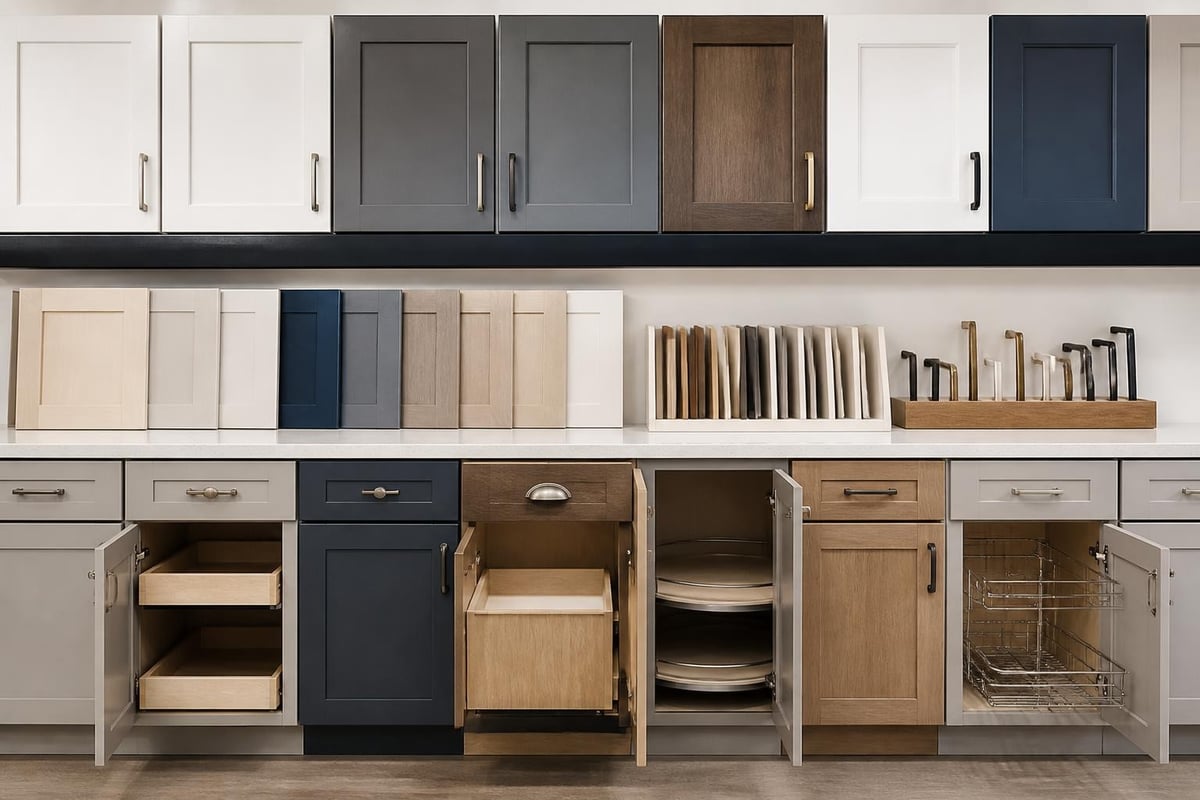
Modern ready to assemble kitchen cabinets are available in virtually every style category, from traditional raised-panel designs to contemporary slab-door minimalism. Material and finish options have expanded dramatically as manufacturers respond to design-conscious consumers.
The cabinet door establishes the kitchen's visual character. RTA manufacturers now offer:
Traditional profiles: Raised panels, cathedral arches, applied moldings, ornate details
Transitional designs: Recessed panels, simple frames, modest detailing, versatile aesthetics
Contemporary styles: Flat slab doors, handleless integration, horizontal grain matching
Shaker construction: Five-piece frames, flat center panels, clean lines, enduring appeal
Finish options extend beyond basic stains and paints to include:
While marketed as standardized products, ready to assemble kitchen cabinets accept numerous modifications that personalize the installation:
Achieving professional results from a ready to assemble kitchen cabinet project requires attention to industry-standard practices that separate amateur installations from contractor-grade work.
The North American Architectural Woodwork Standards define three quality grades for casework and cabinetry: Economy, Custom, and Premium. These specifications address materials, construction tolerances, installation criteria, and finishing standards.
For RTA installations targeting Custom grade (appropriate for residential applications):
Professional installers focus on details that homeowners frequently overlook:
Scribing and Fitting: Cabinet end panels rarely align perfectly with walls. Scribing techniques using a compass or profile gauge transfer wall irregularities to the panel, allowing precise cuts that create seamless joints.
Shimming Strategy: Level base cabinets create proper countertop support and door alignment. Use plastic or composite shims that won't compress over time, and shim at every cabinet corner plus mid-span on units exceeding 30 inches wide.
Fastener Selection: Install cabinets using 2.5-inch cabinet screws driven into wall studs, not drywall anchors. Upper cabinets require minimum two studs per unit; heavier cabinets with granite or quartz countertops need three-stud support.
Door Adjustment Procedure: European hinges allow three-dimensional adjustment (in/out, up/down, left/right). Adjust all doors after complete installation when cabinets have settled into final positions, achieving consistent reveals and parallel alignment.
Understanding where and how manufacturers source materials for ready to assemble kitchen cabinets provides insight into quality, consistency, and ethical purchasing practices.
The RTA cabinet market includes both domestic manufacturers and offshore producers, each offering distinct advantages:
Domestic production benefits:
Imported product considerations:
Regardless of manufacturing origin, verify that products meet EPA and CARB emission standards and that the company provides accessible customer support for assembly questions and warranty claims.
Responsible ready to assemble kitchen cabinet manufacturers participate in sustainable forestry programs that ensure wood products originate from well-managed forests. Look for certifications from:
These third-party certifications verify that harvesting practices maintain forest health, protect wildlife habitats, and respect indigenous land rights. Additionally, many manufacturers now incorporate post-consumer recycled content into particleboard and MDF substrates, reducing landfill waste while maintaining structural performance.
With hundreds of ready to assemble kitchen cabinet options available in 2026, systematic evaluation prevents costly mistakes and ensures satisfaction with the finished installation.
Different households place different demands on kitchen storage. Consider these usage factors:
Heavy-use kitchens (daily cooking, large families, entertaining):
Moderate-use kitchens (occasional cooking, small households):
Light-use kitchens (secondary homes, vacation properties):
The best ready to assemble kitchen cabinet companies distinguish themselves through comprehensive customer support:
Before purchasing, test the manufacturer's support system by asking technical questions about assembly procedures or requesting clarification on specifications. Companies that provide helpful, knowledgeable responses demonstrate the infrastructure needed to support your project through completion.
Proper maintenance extends the service life of a ready to assemble kitchen cabinet installation and preserves its appearance through years of daily use.
Cabinet surfaces require different care depending on finish type:
| Finish Type | Cleaning Method | Protection Tips | Frequency |
|---|---|---|---|
| Painted surfaces | Mild soap and water, soft cloth | Avoid abrasive cleaners, wipe spills immediately | Weekly |
| Stained wood | Furniture polish or wood cleaner | Use cutting boards, coasters on countertops | Monthly |
| Thermofoil | Damp microfiber cloth | Avoid excessive heat exposure | Weekly |
| Laminate | All-purpose cleaner, non-abrasive | Use heat shields near appliances | As needed |
Cabinet hardware experiences significant wear over time. Annual maintenance prevents minor issues from becoming major problems:
Ready to assemble construction actually simplifies maintenance since standardized components and accessible fasteners enable straightforward repairs without specialized tools or professional assistance.
Geographic location influences material selection and installation practices for ready to assemble kitchen cabinets. Understanding regional challenges prevents performance issues.
Coastal and humid climates pose challenges for wood-based cabinets:
Local building codes may specify:
Research local requirements before finalizing your cabinet layout and installation approach, particularly for permitted renovation projects requiring inspector approval. Visiting a showroom like those offered by wholesale suppliers provides opportunities to discuss regional considerations with experienced professionals familiar with local conditions and requirements.
Investing in a ready to assemble kitchen cabinet offers substantial cost savings while maintaining quality and design flexibility when you understand construction standards, material choices, and proper installation techniques. Whether you're tackling a DIY renovation or working with professional installers, selecting certified products from reputable manufacturers ensures long-term satisfaction with your kitchen investment. For San Diego homeowners seeking the perfect balance of quality and value, SD Kitchen Cabinets provides expert guidance, same-week RTA delivery, free 3D design consultations, and comprehensive support throughout your kitchen transformation project.