
Modern style cabinets have transformed from niche architectural statements into the dominant force shaping kitchen design across North America. These sleek, streamlined storage solutions emphasize clean lines, functional simplicity, and innovative materials that prioritize both form and purpose. Whether you're renovating an urban loft or updating a suburban home, understanding the principles and practical applications of modern cabinetry will help you create a kitchen that feels fresh, organized, and perfectly suited to contemporary living.
Modern style cabinets distinguish themselves through several fundamental design principles that separate them from traditional or transitional approaches. The aesthetic revolves around minimalism, horizontal emphasis, and the elimination of unnecessary ornamentation. Rather than relying on decorative moldings, raised panels, or elaborate hardware, modern cabinets achieve visual interest through material choices, precise proportions, and thoughtful integration with the surrounding architecture.
The hallmark of modern cabinetry lies in its door style. Flat-panel doors, also called slab doors, feature a single, unadorned surface without frame-and-panel construction. This creates an uninterrupted visual plane that emphasizes the cabinet's material and finish rather than decorative detailing.
The simplicity of flat-panel construction offers several practical advantages:
According to research from the National Kitchen & Bath Association, flat-panel cabinets continue to dominate kitchen remodeling projects, with 68% of designers specifying slab or flat-panel doors for modern and contemporary projects in 2026.
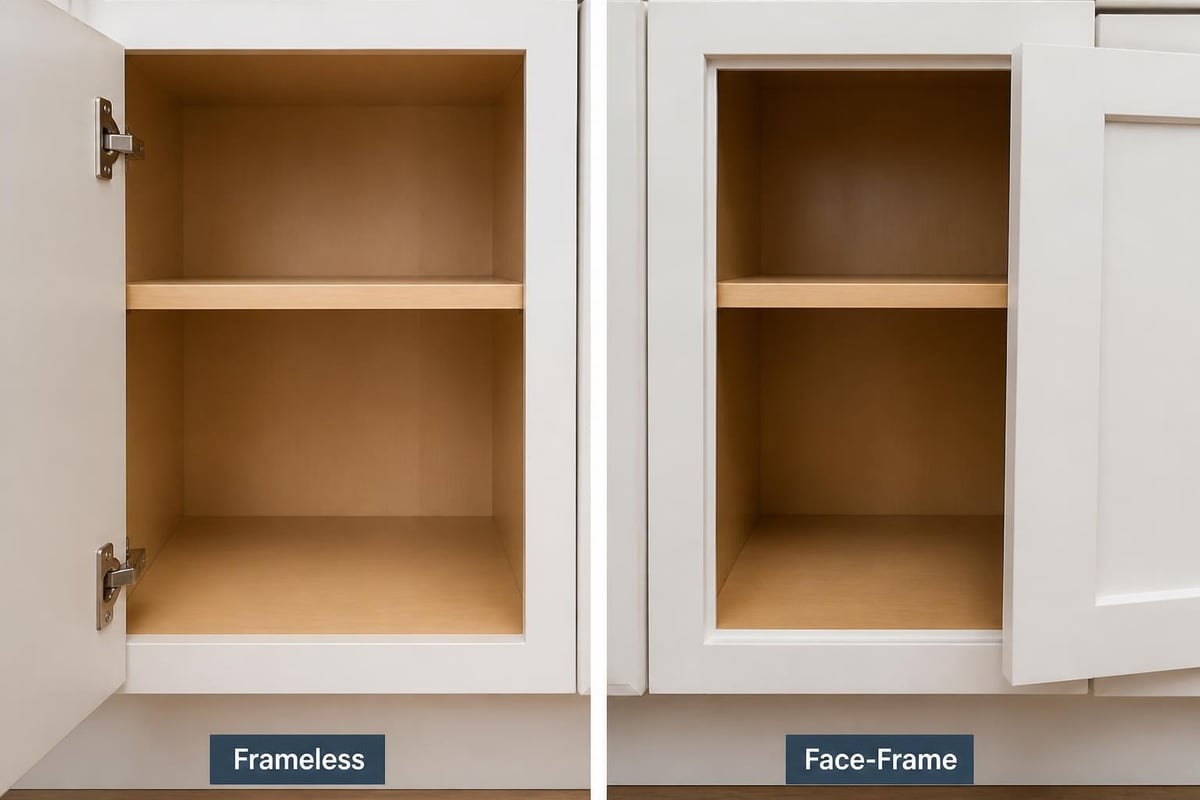
Modern style cabinets frequently utilize frameless construction, a European innovation that maximizes interior storage space. Unlike traditional face-frame cabinets that feature a wooden frame around the cabinet opening, frameless cabinets (also called full-access cabinets) mount doors directly to the cabinet box sides.
| Feature | Frameless Construction | Face-Frame Construction |
|---|---|---|
| Interior Access | Full width of cabinet box | Reduced by 1-2 inches |
| Door Mounting | Directly to box sides | To face frame |
| Hinge Visibility | Typically concealed | May be exposed or concealed |
| Storage Capacity | 10-15% greater | Standard |
| Structural Approach | Thicker box materials | Frame provides rigidity |
This construction method aligns perfectly with modern design philosophy by eliminating visual breaks and creating a seamless appearance when doors are closed. Frameless Cabinets have become increasingly popular among homeowners who value both contemporary aesthetics and practical storage optimization.
Material selection plays a crucial role in achieving an authentic modern aesthetic while ensuring durability and longevity. Modern style cabinets embrace both natural and engineered materials, often combining multiple surfaces within a single kitchen for visual contrast and functional zoning.
Natural wood remains a popular choice for modern cabinetry, though the species and finish treatments differ significantly from traditional applications. Horizontal grain patterns, light stains, and even raw wood finishes create warmth without sacrificing the clean modern aesthetic.
Popular wood choices include:
Modern applications typically avoid heavy stains and glossy topcoats, instead favoring matte or satin finishes that feel contemporary and sophisticated. Architectural Digest’s 2025 kitchen trends coverage highlights the growing preference for natural wood tones that complement rather than dominate kitchen spaces.
High-pressure laminate and thermofoil surfaces have evolved dramatically, offering modern style cabinets exceptional durability at accessible price points. Contemporary laminates convincingly replicate concrete, stone, and wood textures while providing superior resistance to moisture, scratches, and UV fading.
Benefits of modern laminate finishes:
Modern cabinetry often incorporates metal and glass elements to create visual interest and functional variety. Stainless steel, aluminum, and powder-coated steel appear as cabinet faces, open shelving supports, and integrated handles. Glass fronts-whether clear, frosted, or back-painted-provide display opportunities while maintaining the clean lines essential to modern design.
The Houzz 2025 Kitchen Trends Study indicates that 42% of homeowners incorporating modern style cabinets include at least one glass-front cabinet section, typically for displaying glassware or creating visual breaks in solid cabinet runs.
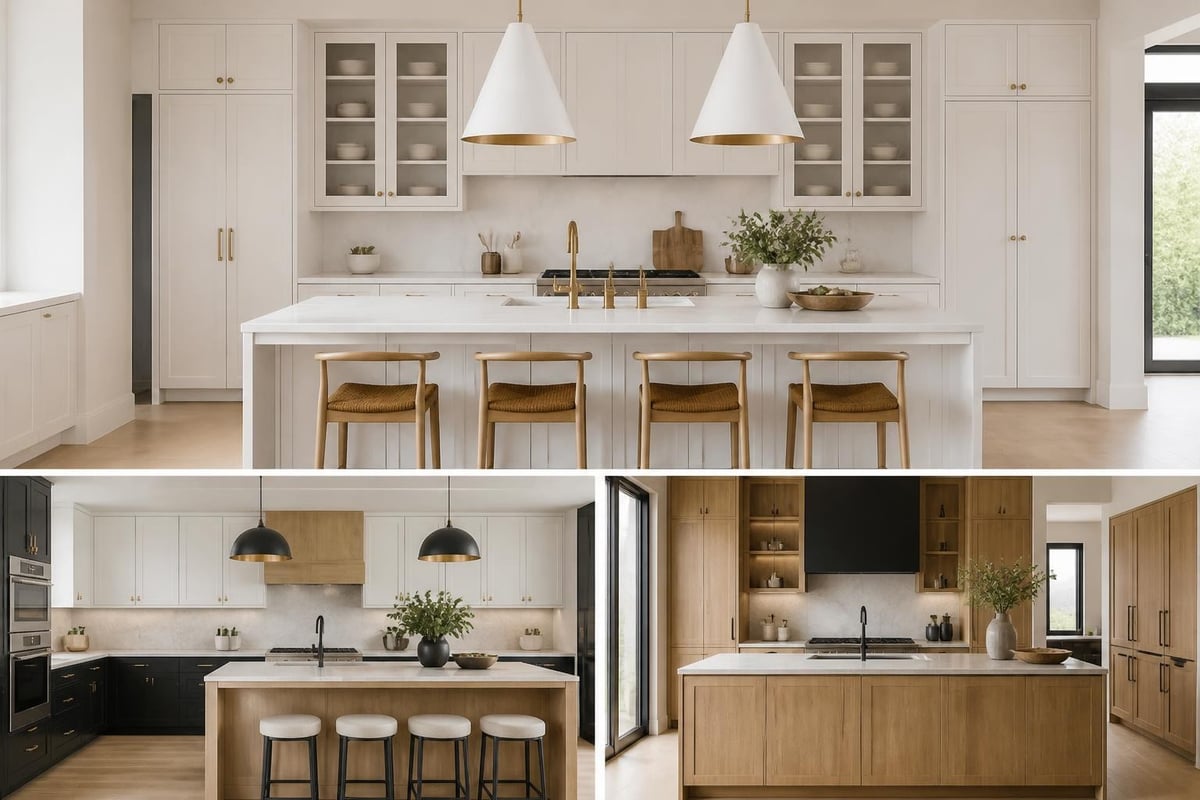
Color selection fundamentally shapes the mood and character of modern style cabinets. While white and gray dominate contemporary kitchens, the modern palette has expanded to include bold accent colors, natural wood tones, and sophisticated neutrals that create depth without visual clutter.
Single-color approaches remain the cornerstone of modern kitchen design. All-white kitchens communicate spaciousness and cleanliness, while charcoal and black cabinets create dramatic, sophisticated environments. The key to successful monochromatic schemes lies in introducing texture and subtle tonal variations to prevent monotony.
Modern design embraces contrast as a tool for defining zones and creating visual hierarchy. Common two-tone strategies include:
| Color Combination | Design Effect | Best Application |
|---|---|---|
| White + Natural Wood | Scandinavian warmth | Smaller kitchens needing brightness |
| Black + White | High contrast drama | Large kitchens with ample natural light |
| Gray + Brass | Sophisticated elegance | Transitional modern spaces |
| Navy + White Oak | Contemporary richness | Statement islands, featured walls |
Surface sheen significantly impacts the perception of modern style cabinets. Matte and ultra-matte finishes have displaced high-gloss surfaces in contemporary design, offering a sophisticated, fingerprint-resistant alternative that photographs beautifully and ages gracefully. Textured finishes-including wood grain, concrete replication, and linear patterns-add tactile interest while maintaining visual simplicity.
Hardware selection represents one of the most defining choices in modern cabinet design. The trend has shifted decisively toward minimal or completely integrated solutions that preserve the clean facade modern aesthetics demand.
Handle-less cabinets utilize several ingenious mechanisms to eliminate protruding hardware:
These integrated approaches create uninterrupted surfaces that emphasize the cabinet material and finish while maintaining excellent functionality. Push-to-open systems work particularly well for modern style cabinets in kitchens with integrated appliances, creating a completely seamless appearance when everything is closed.
When visible hardware is preferred, modern design favors sleek, understated options that complement rather than compete with the cabinetry. Popular choices include slim bar pulls in brushed or matte finishes, tab pulls that extend minimally from the cabinet face, and finger pulls routed directly into the door edge with metal inserts.
Hardware finish trends for 2026:
The Elle Decor 2025 kitchen trends report notes that 58% of high-end modern kitchens feature either fully integrated pulls or minimal bar hardware measuring less than half an inch in diameter.
Modern style cabinets prioritize intelligent organization as much as aesthetic impact. Contemporary storage solutions maximize accessibility, improve workflow efficiency, and adapt to evolving household needs through modular and reconfigurable systems.
Deep drawers with full-extension slides have largely replaced traditional shelving in modern base cabinets. These systems provide complete visibility and access to contents, eliminating the need to reach into dark cabinet corners. Pull-down shelving brings upper cabinet contents to eye level, particularly valuable for frequently accessed items or for universal design applications.
Modern kitchens employ dedicated storage for specific functions:
These specialized solutions maintain the clean exterior aesthetic of modern style cabinets while dramatically improving interior functionality. As documented in Dwell’s modern kitchen collections, successful modern kitchens balance minimalist appearances with highly organized, purpose-driven interiors.
Strategic open shelving provides display opportunities and visual relief within modern cabinet runs. Floating shelves, boxed shelving units, and glass-front cabinets break up solid surfaces while maintaining horizontal lines and clean geometry. The key is treating open storage as a deliberate design element rather than an afterthought, ensuring displayed items contribute to the overall aesthetic.
Lighting design has become inseparable from modern cabinetry planning. Integrated lighting enhances both functionality and atmosphere while highlighting the material qualities and precise construction of modern style cabinets.
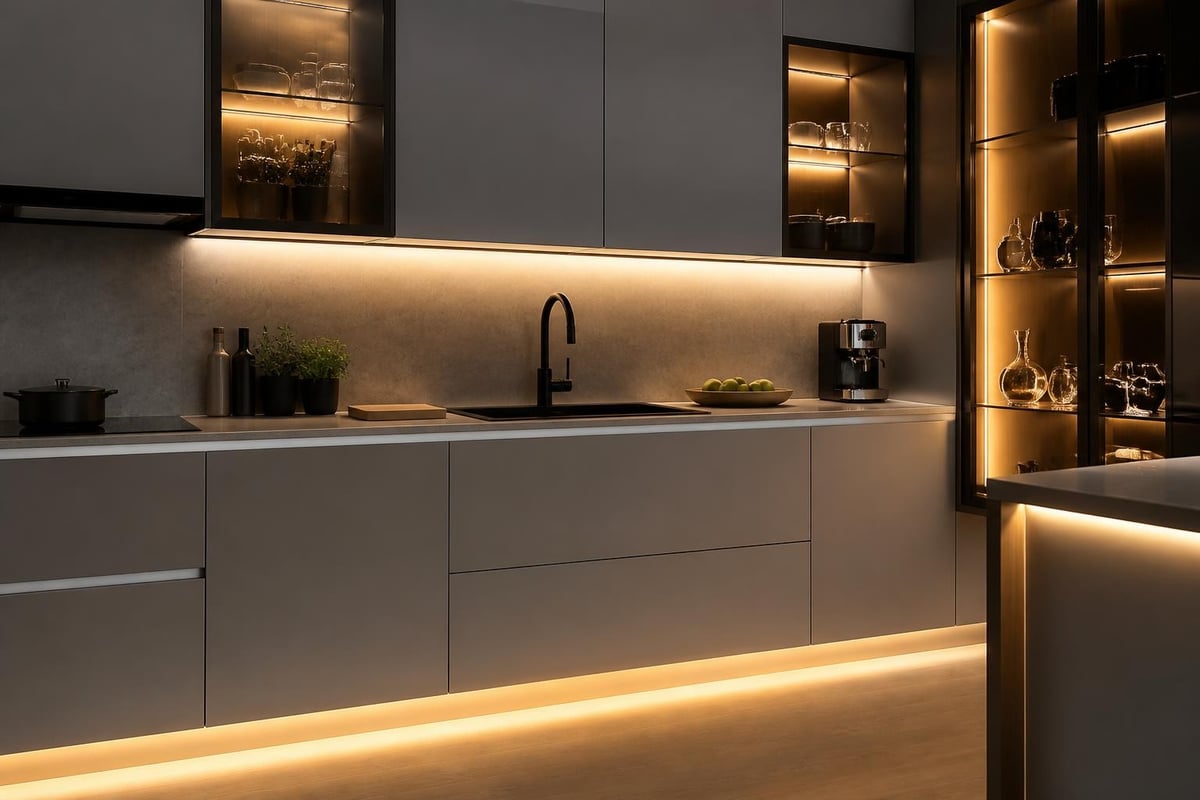
LED strip lighting beneath wall cabinets provides shadow-free task illumination for countertop work surfaces. Modern installations favor recessed or channeled mounting that conceals the light source, creating a floating effect where only the illumination is visible, not the fixture itself.
Illuminated interiors transform modern cabinets into display features. Motion-activated LED systems inside glass-front cabinets, open shelving units, and appliance garages provide automatic illumination when doors open, combining practical function with dramatic effect.
Low-level lighting integrated into cabinet toe kicks creates ambient illumination perfect for nighttime navigation. This subtle detail enhances the floating appearance of modern cabinetry while providing practical safety lighting. Linear LED channels installed in open shelving or between cabinet sections emphasize horizontal lines while adding architectural drama.
Environmental consciousness has become central to modern cabinet design and specification. Contemporary manufacturers prioritize sustainable materials, responsible sourcing, and production methods that reduce environmental impact while maintaining the quality standards modern style cabinets demand.
Forest Stewardship Council (FSC) certified woods ensure sustainable harvesting practices, while reclaimed and salvaged materials bring character and environmental responsibility to modern projects. Bamboo, rapidly renewable cork, and agricultural byproduct panels offer alternatives to traditional hardwoods without sacrificing performance or aesthetics.
Modern cabinet manufacturers increasingly specify water-based finishes and formaldehyde-free adhesives that improve indoor air quality. These products meet stringent environmental standards while delivering the matte, contemporary finishes that define modern aesthetics. Metropolis magazine’s coverage of sustainable materials highlights how specification decisions impact both project sustainability and occupant health.
Domestically manufactured cabinets reduce transportation emissions while supporting local economies and ensuring responsive customer service. Custom and semi-custom manufacturers located near installation sites can provide faster delivery, easier coordination, and reduced environmental impact compared to imported alternatives.
Successful modern style cabinets require precise installation that ensures proper alignment, reveal consistency, and smooth operation of specialized hardware. Professional installation becomes particularly important given the exacting standards modern design demands.
Modern cabinetry shows every imperfection. Consistent reveals between doors, parallel horizontal lines, and perfectly plumb installations are non-negotiable. Professional installers use laser levels, custom shimming systems, and specialized mounting hardware to achieve the precision modern aesthetics require.
Integrated appliances represent a signature element of modern kitchen design. Refrigerators, dishwashers, and even range hoods disappear behind cabinet panels, creating seamless surfaces interrupted only by necessary functional elements. This integration requires careful planning during both cabinet design and installation phases.
Critical integration considerations:
Professional design services help homeowners visualize how modern style cabinets will function in their specific space. Three-dimensional renderings show exact layouts, reveal sightlines, and allow experimentation with colors, materials, and configurations before committing to fabrication. Many showrooms, including SD Kitchen Cabinets, offer complimentary design consultations that translate modern design principles into practical, buildable solutions.
Modern style cabinets function as the foundation for comprehensive kitchen design, requiring thoughtful coordination with countertops, backsplashes, flooring, and architectural elements to create cohesive, harmonious spaces.
Countertop selection dramatically impacts how modern cabinetry reads within the overall space. Popular pairings include:
| Cabinet Finish | Recommended Countertop | Design Effect |
|---|---|---|
| White Matte | Black Granite/Quartz | High-contrast modern |
| Natural Walnut | White Quartz/Marble | Warm contemporary |
| Gray Lacquer | Concrete/Gray Quartz | Industrial minimalist |
| Two-Tone | Waterfall Edge Detail | Architectural statement |
Waterfall edges, where countertop material extends vertically to the floor at island ends, pair exceptionally well with modern cabinetry by emphasizing clean geometry and material quality.
Modern backsplashes either disappear into the background or serve as intentional focal points. Full-height slab backsplashes in matching countertop material create seamless, monolithic surfaces. Alternatively, contrasting tiles in geometric patterns, textured materials, or metallic finishes provide visual interest against simple cabinet faces. The AIA’s home design trends research emphasizes how architects increasingly specify integrated backsplash solutions that complement modern cabinetry rather than competing for visual attention.
Modern kitchens often feature large-format tiles, polished concrete, or wide-plank hardwood flooring that echoes the horizontal emphasis of modern style cabinets. Minimal baseboards or flush-mounted toe kicks maintain clean floor-to-wall transitions. When millwork appears elsewhere in the home, coordinating finish colors and material choices between spaces creates visual flow while allowing the kitchen to maintain its distinct modern character.
Modern style cabinets span an enormous price range depending on materials, construction quality, customization level, and manufacturer. Understanding where to invest and where to economize helps homeowners achieve modern aesthetics within realistic budgets.
Ready-to-assemble (RTA) modern cabinets offer the most accessible entry point, with flat-pack components that reduce shipping costs and allow DIY installation. Mid-range semi-custom options provide more size flexibility and finish choices while maintaining efficiency through standardized components. Fully custom cabinets deliver exact specifications, unlimited material options, and solutions for challenging spaces, but command premium pricing.
Budget allocation guidelines:
These ranges include cabinet boxes, doors, and hardware but exclude countertops, installation, and appliances.
When budget constraints require compromise, prioritize investments that most impact daily function and long-term satisfaction:
Less critical areas might accept standard dimensions, simpler materials on less-visible cabinets, or reduced customization where stock sizes work adequately.
Modern style cabinets typically deliver strong returns on investment due to broad market appeal and timeless aesthetics that resist dating. The Architectural Record’s project coverage demonstrates how well-executed modern kitchens maintain relevance across decades, providing both enjoyment during ownership and marketability upon resale.
San Diego's climate, lifestyle, and architectural traditions influence how modern style cabinets perform and integrate into local homes. Understanding these regional factors helps homeowners make informed decisions that suit their specific context.
Southern California's dry climate with occasional high humidity from coastal fog demands moisture-resistant materials and finishes. Modern laminate and thermofoil surfaces excel in these conditions, while natural woods require proper sealing to prevent cracking. Coastal properties particularly benefit from corrosion-resistant hardware and marine-grade finishes on metal components.
The region's emphasis on indoor-outdoor living affects modern cabinet design. Kitchens often open directly to outdoor entertaining spaces, requiring cabinet finishes that transition gracefully between interior and exterior environments. Weather-resistant materials on island cabinets near large openings prevent damage from wind-blown moisture and UV exposure.
San Diego homeowners increasingly favor modern aesthetics that balance sleek contemporary elements with warm, livable materials. Two-tone schemes combining white uppers with natural wood lowers, and modern cabinets paired with traditional architectural details create the transitional modern style particularly popular throughout Southern California. The cabinet gallery showcases numerous examples of how modern principles adapt to regional preferences and architectural contexts.
Modern style cabinets represent the convergence of aesthetic refinement, functional innovation, and thoughtful material selection that defines contemporary kitchen design. By understanding construction methods, material options, hardware solutions, and integration strategies, homeowners can create kitchens that deliver both immediate visual impact and lasting satisfaction. Whether you're pursuing minimalist perfection or warm contemporary character, SD Kitchen Cabinets offers the expertise, selection, and support to transform your vision into reality with their extensive in-stock and custom options, professional design services, and wholesale pricing that makes modern cabinetry accessible.