
Custom cabinetry has long been perceived as a luxury reserved for high-end renovations, but savvy homeowners in 2026 are discovering that inexpensive custom cabinets represent a practical solution for achieving personalized kitchen designs without draining their savings. The key lies in understanding where to invest, where to economize, and how to navigate the modern cabinet market. Whether you're renovating a single kitchen or planning multiple projects, the right combination of materials, construction methods, and purchasing strategies can deliver the tailored look you want at a fraction of traditional custom pricing.
The price gap between stock and custom cabinets has narrowed significantly in recent years, thanks to manufacturing innovations and direct-to-consumer sales models. Traditional custom cabinets typically range from $500 to $1,200 per linear foot installed, while inexpensive custom cabinets can fall into the $150 to $400 range when you make strategic choices.
Several factors contribute to the premium pricing of traditional custom cabinetry. Labor represents a substantial portion, with skilled craftspeople spending hours on intricate joinery and finishing work. Premium hardwoods like cherry and walnut command higher material costs, and multiple shop visits for measurements, mockups, and adjustments add overhead that gets passed to customers.
The construction cost data from NAHB shows that cabinetry and countertops represent approximately 6-7% of total construction costs in new homes, making them one of the most significant individual line items. This context helps explain why even modest kitchens can see cabinet budgets exceeding $15,000.
Industry markup also plays a role. Traditional retail channels add 40-60% markup over wholesale pricing, meaning homeowners often pay nearly double what the cabinets actually cost to produce.
The foundation of inexpensive custom cabinets starts with intelligent material selection. You don't need exotic hardwoods to achieve a stunning kitchen when engineered alternatives deliver comparable performance at lower price points.
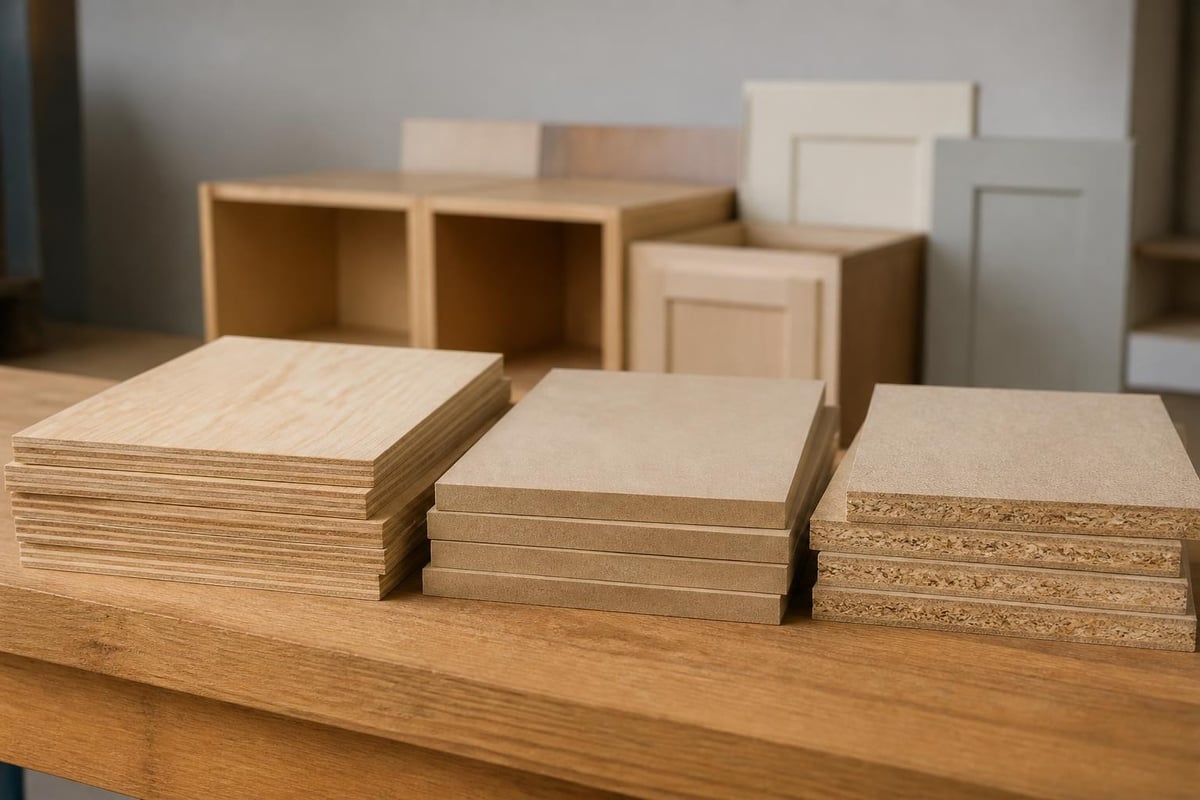
Plywood remains the gold standard for cabinet boxes, offering excellent strength-to-weight ratios and superior screw-holding capacity. According to the APA’s technical guidance on plywood products, cabinet-grade plywood provides dimensional stability and moisture resistance that justifies its moderate cost premium over alternatives.
For budget-conscious projects, furniture-grade particle board with melamine coating delivers adequate performance in dry locations. The APA’s research on residential cabinet applications confirms that properly manufactured particle board meets CARB2 emission standards and performs well in controlled environments.
| Material | Cost Per Sheet | Best Use | Durability |
|---|---|---|---|
| Cabinet-grade plywood | $45-75 | Box construction, structural | Excellent |
| MDF | $30-50 | Door panels, painted finishes | Good |
| Particle board | $20-35 | Box interiors, shelving | Fair to Good |
| Hardwood veneer plywood | $60-100 | Visible interiors | Excellent |
Door construction represents your best opportunity to customize appearance while controlling costs. Slab doors in thermofoil or laminate finishes cost 40-60% less than raised-panel hardwood doors while offering modern aesthetics and easy maintenance.
For those seeking traditional styling, MDF doors with quality paint finishes provide the raised-panel or shaker look at half the cost of solid wood. The key is ensuring your provider uses five-piece construction with mortise-and-tenon joinery rather than cheaper applied-panel methods.
Frameless Cabinets represent a middle ground that delivers customization without full custom pricing. These European-style cabinets offer modular sizing in one-inch or three-inch increments, providing layout flexibility while maintaining manufacturing efficiency.
The frameless construction method eliminates the face frame, reducing material costs and labor while creating easier access to interior space. This approach has dominated European kitchens for decades and now accounts for approximately 35% of the North American market according to recent NKBA industry data.
Semi-custom programs allow you to specify:
This structured customization keeps manufacturing costs down while giving homeowners far more design control than stock cabinets permit. Many semi-custom lines now offer 50-100 door styles and 30-50 finish options, providing ample design latitude.
Ready-to-assemble cabinets have evolved dramatically from the budget options of years past. Today's RTA market includes premium manufacturers offering custom-quality materials and construction at 30-50% below installed custom pricing.
The labor savings come from two sources: flat-pack shipping reduces freight costs substantially, and homeowners or contractors handle assembly, eliminating factory assembly labor. For those comfortable with basic tools and following instructions, this trade-off delivers significant savings.
Not all ready-to-assemble products deliver equal value. When evaluating inexpensive custom cabinets in RTA format, examine these quality markers:
Premium RTA manufacturers now offer custom sizing services, allowing you to order non-standard widths and heights for a modest upcharge. This capability transforms RTA from purely stock sizing into a semi-custom solution at budget pricing.
The most direct path to inexpensive custom cabinets involves bypassing retail markup by purchasing at wholesale prices. Showrooms operating on wholesale models reduce overhead by maintaining smaller sales staffs and relying on higher volume rather than margin per sale.
This approach requires consumers to be more informed buyers, but the savings justify the additional research. Wholesale pricing typically runs 40-50% below traditional retail, meaning a $25,000 retail cabinet package might cost $12,000-15,000 wholesale.
Legitimate wholesale cabinet sellers provide essential services despite lower pricing:
When working with wholesale providers, verify that they maintain proper licensing, carry liability insurance, and offer clear return policies. The cost savings shouldn't come with elevated risk.
Strategic design decisions can dramatically impact the final cost of your custom cabinetry. Following NKBA planning guidelines helps avoid costly mistakes while optimizing both function and budget.
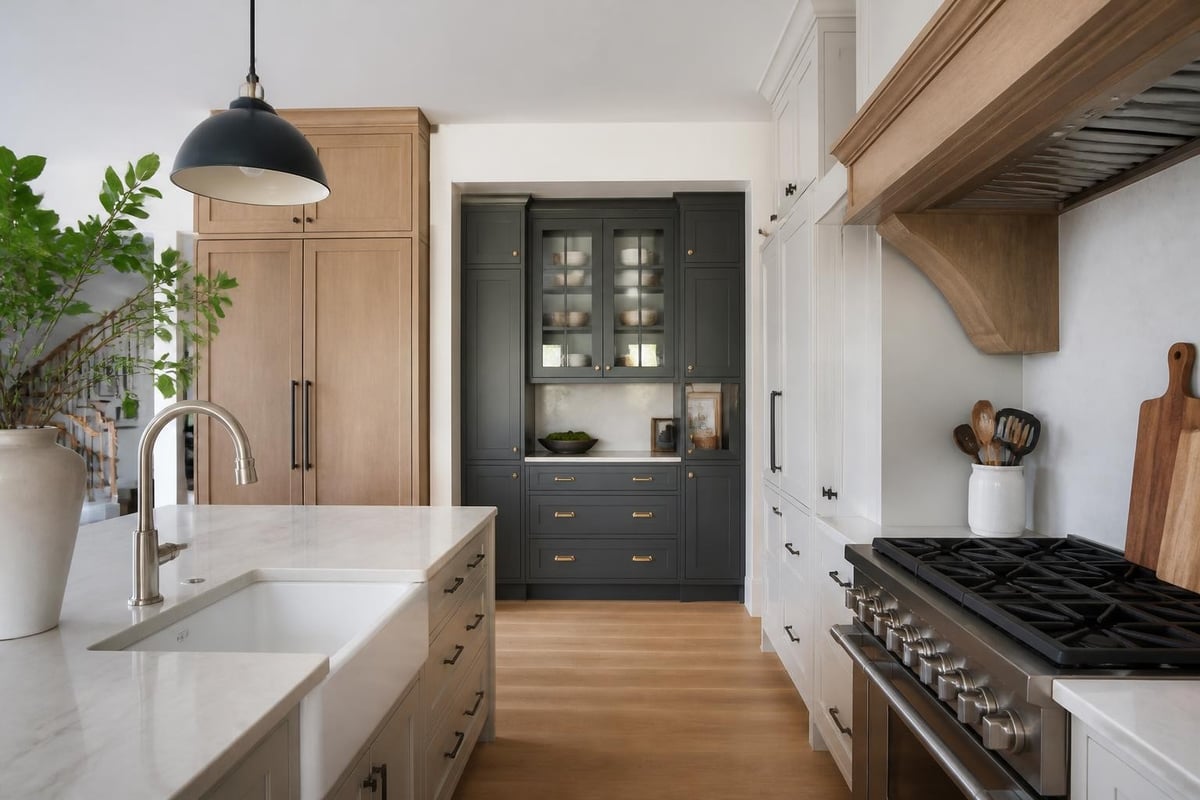
One proven approach combines standard-sized base and wall cabinets with custom specialty pieces. This hybrid strategy places custom dollars where they create maximum impact:
The bulk of your kitchen uses efficient, lower-cost standard cabinets, while the 20-30% that truly benefits from customization receives the attention it deserves.
Paint-grade finishes cost significantly less than stained wood because they hide minor imperfections and allow the use of less expensive substrate materials. A high-quality painted cabinet in a classic color like white, gray, or navy delivers timeless appeal at $100-200 less per unit than stained cherry or walnut.
Hardware represents another opportunity for smart spending. Quality knobs and pulls range from $3-8 each for simple designs to $15-40 for decorative options. With an average kitchen requiring 30-50 pulls, this choice can swing your budget by $600-1,500.
| Element | Budget Option | Cost | Premium Option | Cost |
|---|---|---|---|---|
| Door style | Slab or simple shaker | $40-60/door | Raised panel hardwood | $100-150/door |
| Finish | Painted MDF | $60-80/door | Stained wood | $120-200/door |
| Hardware | Brushed nickel basics | $4-6/piece | Designer pulls | $20-40/piece |
| Interior | White melamine | Included | Wood veneer | +$15-25/cabinet |
Labor costs for cabinet installation typically run $50-100 per hour, with a standard kitchen requiring 16-30 hours of work. This represents $800-3,000 in labor, making DIY installation attractive for capable homeowners working with inexpensive custom cabinets.
The decision hinges on your skill level and the complexity of your project. Simple galley or L-shaped kitchens with straightforward layouts suit DIY approaches, while projects involving islands, complex crown molding, or challenging spaces benefit from professional expertise.
Professional installers bring value beyond speed:
For those purchasing custom cabinets in San Diego, installation services often come bundled at competitive rates because volume providers negotiate favorable installer pricing.
Cabinet pricing fluctuates based on seasonal demand and manufacturer incentives. Understanding these patterns helps you secure inexpensive custom cabinets at their lowest annual prices.
January through March represents the slowest period for kitchen remodeling, prompting many manufacturers and retailers to offer aggressive promotions. Discounts of 15-25% below regular pricing commonly appear during this window.
Black Friday through New Year's also brings promotional pricing, though inventory may be constrained, and lead times extend as homeowners rush to complete year-end projects.
According to BobVila’s kitchen remodeling budget guidance, strategic timing combined with flexible scheduling can save 10-20% on total project costs when you can wait for optimal pricing periods.
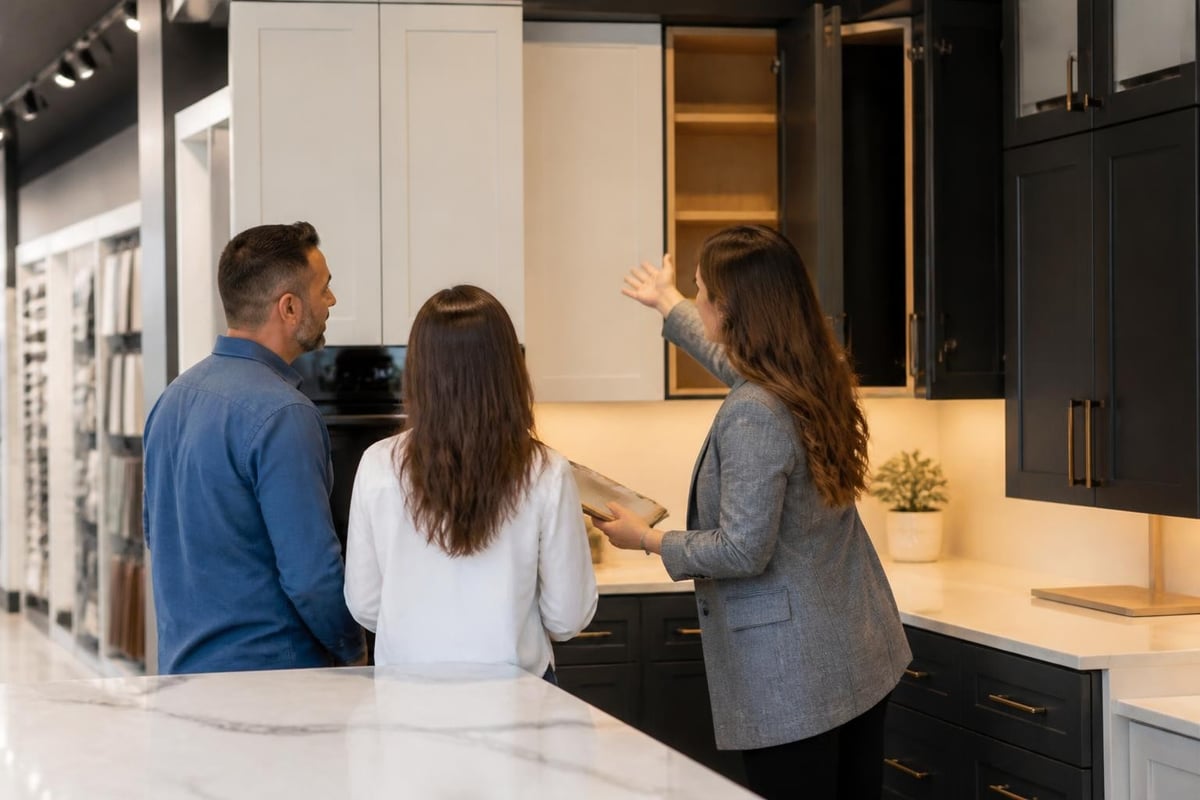
Direct wholesale showrooms combine cost advantages with professional support services. These facilities maintain extensive inventory, allowing customers to see, touch, and compare options before purchasing, while offering pricing that approaches online-only retailers.
The showroom model works because high volume and efficient operations offset the costs of maintaining physical space. Customers gain confidence from seeing actual products rather than relying solely on photos, reducing return rates and improving satisfaction.
Many wholesale showrooms now provide comprehensive services including free design consultations, 3D rendering, contractor referrals, and coordinated delivery. This support structure helps homeowners navigate complex decisions while maintaining the price advantages that make custom cabinetry accessible.
Price alone doesn't determine value in cabinetry. Inexpensive custom cabinets should still meet quality benchmarks that ensure longevity and performance.
Examine these elements when comparing options:
These features appear in quality cabinets across all price ranges. Their absence in supposedly custom products signals corner-cutting that will compromise performance.
Legitimate cabinet manufacturers stand behind their products with meaningful warranties. Look for:
Budget cabinets with comprehensive warranties demonstrate manufacturer confidence in their construction quality and materials. Absence of warranty protection should raise concerns regardless of attractive pricing.
Beyond initial purchase price, several factors affect the total cost of ownership for your cabinetry. Considering these elements helps identify truly inexpensive custom cabinets rather than false economies.
Maintenance requirements vary by finish type. Laminate and thermofoil surfaces clean easily and resist damage, while natural wood finishes may require periodic treatment. Factor long-term care into your material selection.
Energy efficiency impacts operational costs when cabinets house appliances or lighting. Well-constructed cabinets with proper seals around refrigerator panels and freezer units reduce energy consumption.
Adaptability provides value over time. Cabinets designed with standard European 32mm boring patterns allow future hardware updates and interior accessory additions without modification.
Several creative strategies deliver custom aesthetics at stock cabinet prices, effectively creating inexpensive custom cabinets through intelligent design rather than manufacturing customization.
Existing cabinet boxes in good structural condition can receive new doors, drawer fronts, and hardware for 40-60% less than complete replacement. This approach works especially well when the current layout functions properly but the style feels dated.
Professional refacing includes new door and drawer fronts, matching end panels, crown molding, and hardware, transforming the appearance completely while retaining serviceable boxes and interior components.
Incorporating open shelving in upper cabinet locations reduces costs while creating contemporary visual interest. This strategy works particularly well in:
Pairing a few premium custom pieces with simpler surrounding elements focuses budget on high-impact areas while controlling overall spending.
Location affects cabinet pricing through shipping costs, local labor rates, and regional market competition. California homeowners benefit from proximity to major manufacturers and extensive wholesale competition, which drives prices down.
Coastal climates demand moisture-resistant construction and finishes, making plywood boxes and sealed finishes essential rather than optional upgrades. The modest additional investment prevents warping, delamination, and finish failure in humid environments.
Understanding regional market dynamics helps identify fair pricing. Researching how to choose between stock, semi-custom, and custom cabinets provides local context for making informed decisions.
Selecting inexpensive custom cabinets requires balancing priorities across design, quality, and budget. Start by clearly defining your must-have features versus nice-to-have options, then allocate budget accordingly.
Create a prioritized list:
This framework guides trade-off decisions when budget constraints require compromise. You might accept simpler door styles to fund superior drawer slides, or choose painted finishes to afford better box construction.
Request detailed quotes from multiple suppliers, ensuring each includes identical specifications for accurate comparison. Price differences should reflect actual value variations, not incomplete scope.
Achieving beautiful, personalized cabinetry without exceeding your budget is entirely possible when you understand where to invest and where to economize. The combination of smart material choices, wholesale pricing, and strategic design creates opportunities for inexpensive custom cabinets that deliver lasting value and satisfaction. Whether you're planning a complete kitchen renovation or a targeted update, SD Kitchen Cabinets offers the expertise, selection, and direct wholesale pricing to transform your vision into reality while respecting your budget.