
Selecting good cabinets for kitchens requires understanding construction quality, material durability, and design features that stand the test of time. Kitchen cabinets represent one of the largest investments in any remodel, accounting for nearly 40% of the total budget in most projects. The difference between adequate and exceptional cabinets lies in joinery methods, material selection, hardware quality, and manufacturing standards. Homeowners who prioritize these elements enjoy kitchens that remain functional and attractive for decades, while those who compromise on quality often face premature repairs and costly replacements.
Quality construction distinguishes good cabinets for kitchens from inferior alternatives. The Kitchen Cabinet Manufacturers Association (KCMA) establishes rigorous certification standards that test cabinet durability, structural integrity, and finish quality. Cabinets bearing KCMA certification have passed comprehensive tests including door cycle testing, drawer cycle testing, and structural load requirements.
Frameless vs. Framed Construction
Two primary construction styles dominate the market:
The choice between these methods affects storage capacity, hinge types, and aesthetic appeal. Frameless cabinets maximize usable interior space by eliminating the face frame, gaining approximately 10-15% more storage.
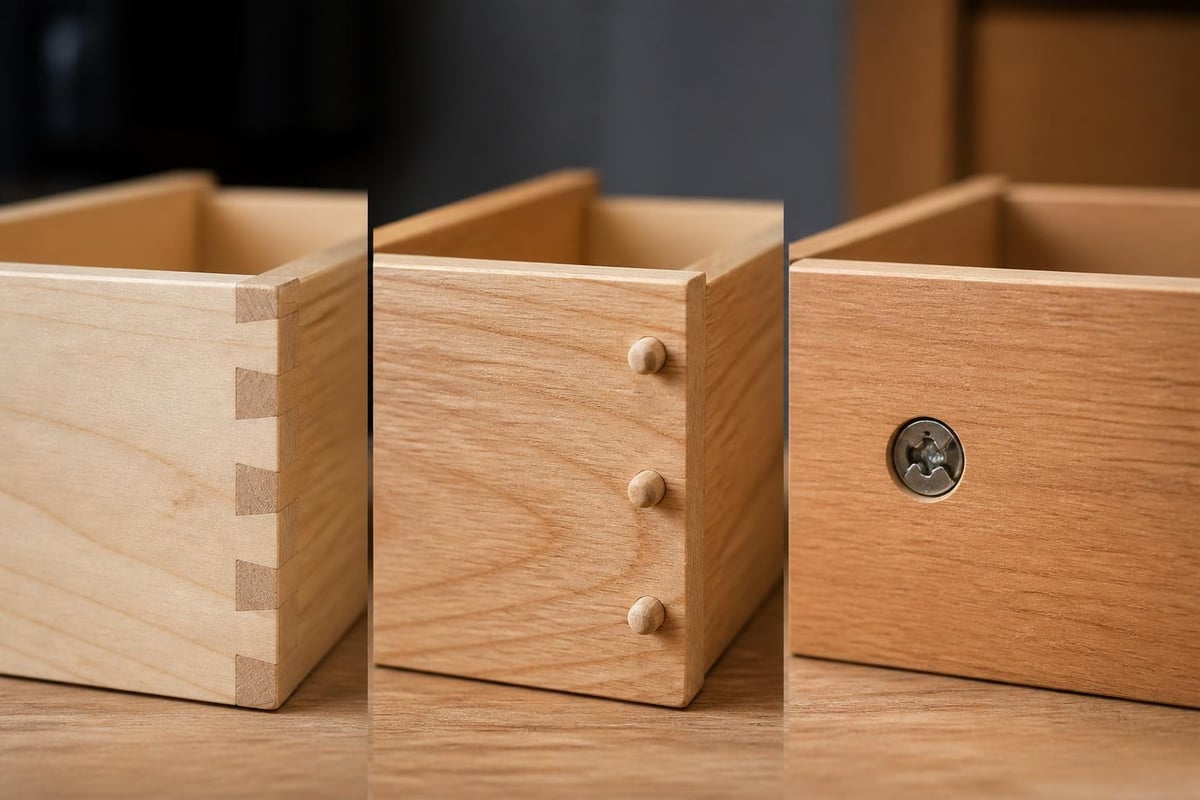
Superior joinery ensures cabinets withstand daily use and maintain structural integrity. Consumer Reports’ kitchen cabinet buying guide emphasizes examining joinery when evaluating quality.
Premium joinery includes:
| Joinery Type | Strength Rating | Typical Application | Cost Impact |
|---|---|---|---|
| Dovetail | Excellent | Premium drawer boxes | High |
| Dowel | Very Good | Mid-range cabinet boxes | Moderate |
| Cam-lock | Good | RTA cabinets | Budget-friendly |
| Staples/Glue | Fair | Economy cabinets | Low |
The materials used in good cabinets for kitchens directly impact durability, appearance, and environmental safety. Material choices affect everything from moisture resistance to formaldehyde emissions.
Plywood Construction
Plywood remains the gold standard for cabinet boxes. Multi-ply construction with alternating grain patterns creates superior strength and moisture resistance compared to particleboard alternatives. Premium cabinets use 3/4-inch furniture-grade plywood throughout.
Engineered Wood Products
Modern engineered materials offer cost-effective alternatives with specific advantages:
The U.S. EPA formaldehyde emission standards regulate composite wood products used in cabinet manufacturing. Good cabinets comply with these federal requirements, ensuring healthier indoor air quality. California homeowners should verify cabinets meet CARB2 (California Air Resources Board Phase 2) standards, which impose even stricter emission limits.
Solid Wood
Natural wood delivers timeless beauty and exceptional durability. Popular species include:
Engineered Alternatives
Medium-density fiberboard with quality veneers or thermofoil coatings provides consistency and affordability. MDF doesn't expand or contract like solid wood, making it ideal for painted finishes that remain crack-free through seasonal humidity changes.
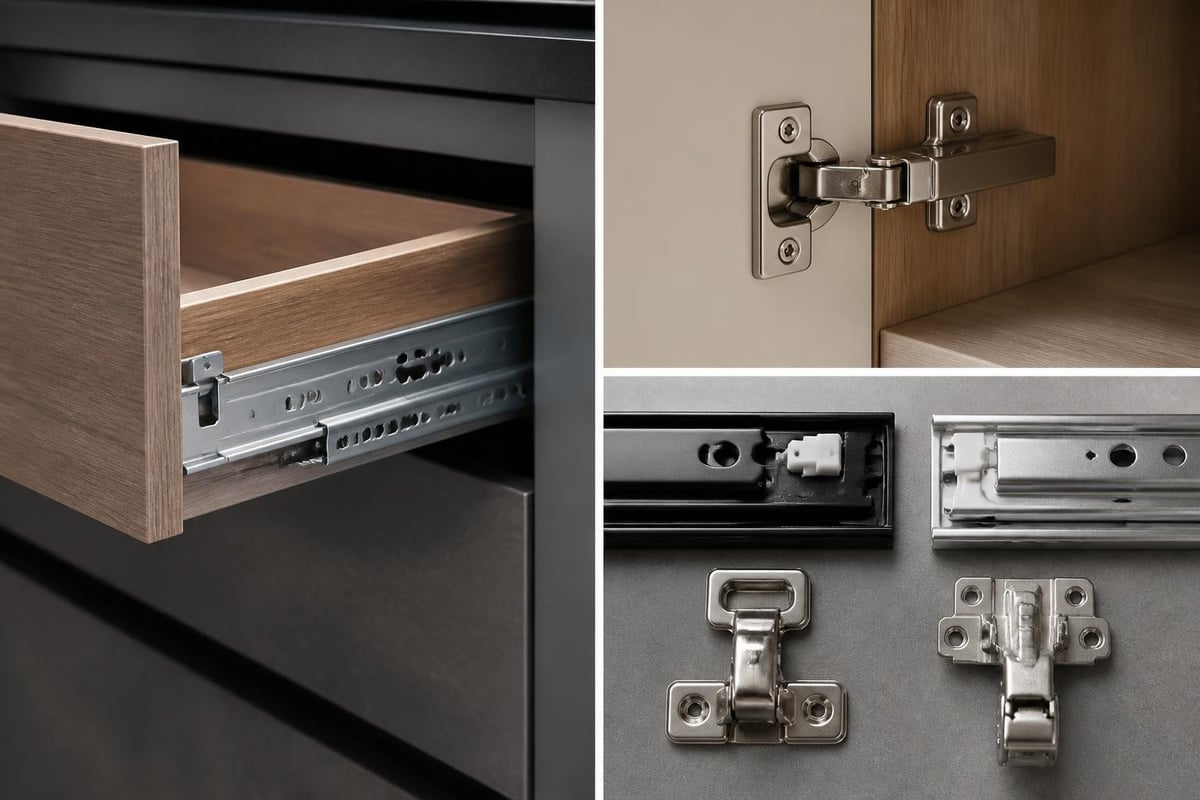
Hardware transforms good cabinets for kitchens into exceptional ones. Professional-grade components ensure smooth operation and extended service life.
Undermount vs. Side-Mount
Undermount drawer slides hide beneath drawer boxes, creating clean sight lines and maximizing interior width. Quality undermount slides feature:
Side-mount slides cost less but reduce interior drawer width and remain visible when opened.
European-style concealed hinges dominate modern cabinetry for good reasons. Six-way adjustment capability allows precise door alignment, soft-close technology protects cabinet boxes from impact damage, and clip-in mounting simplifies installation and future adjustments.
Hinge quality indicators:
| Component | Entry-Level | Mid-Range | Premium |
|---|---|---|---|
| Drawer Slides | Epoxy-coated steel, side-mount | Ball-bearing, undermount, soft-close | Heavy-duty undermount, full-extension, lifetime warranty |
| Hinges | Visible, basic adjustment | Concealed, soft-close, six-way adjust | Commercial-grade, integrated dampening, tool-free adjustment |
| Shelf Pins | Plastic, basic | Metal, adjustable spacing | Locking metal, custom spacing options |
Smart design features distinguish truly good cabinets for kitchens from basic storage boxes. These elements improve accessibility, organization, and daily functionality.
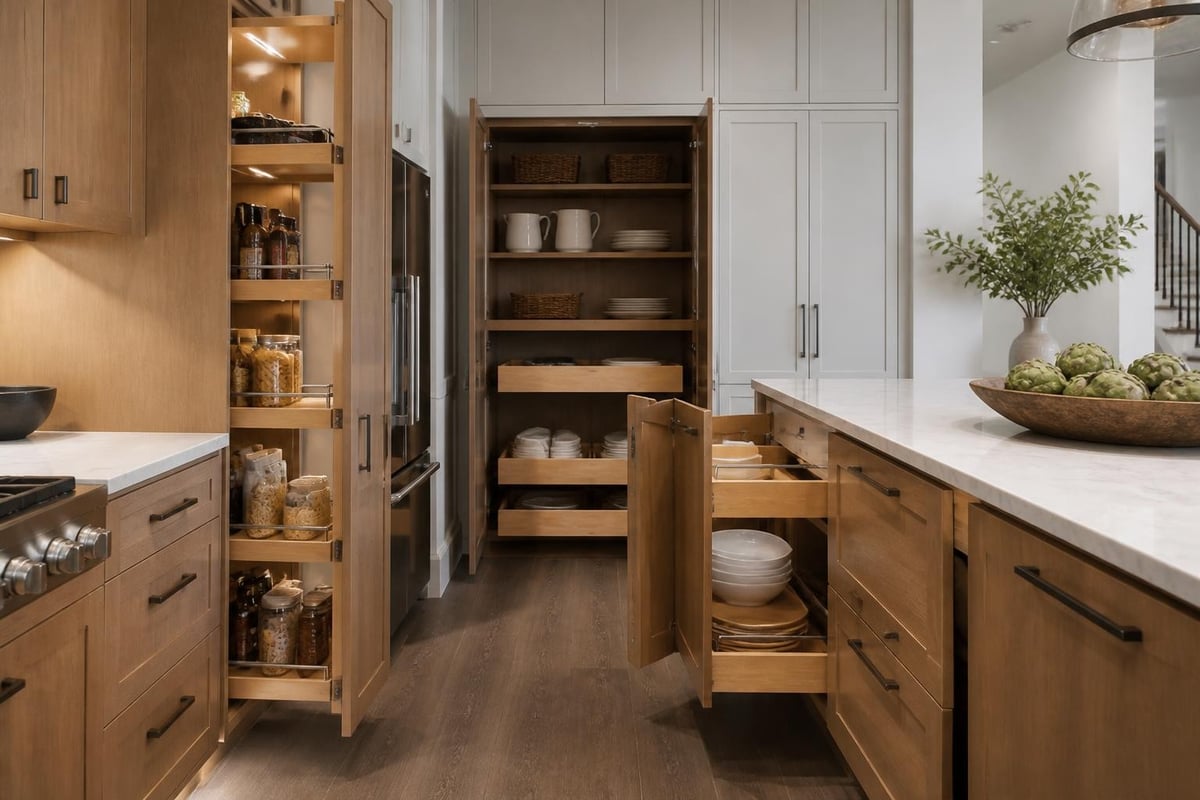
Pull-Out Components
Specialized pull-outs maximize cabinet utility:
Drawer Organization
Custom drawer dividers, peg systems, and dedicated cutlery inserts maintain organization through daily use. Deep drawers with internal dividers accommodate pots, pans, and small appliances more efficiently than traditional shelving.
The NKBA’s Kitchen & Bath Planning Guidelines establish industry standards for cabinet dimensions, spacing, and accessibility. Good cabinets conform to these planning principles, ensuring ergonomic functionality.
Standard base cabinets measure 24 inches deep and 34.5 inches tall (36 inches with countertop). Wall cabinets typically extend 12-13 inches deep, with heights varying from 30 to 42 inches based on ceiling height and homeowner preference.
Customization options include:
Finish quality protects cabinet surfaces and defines aesthetic appeal. Good cabinets for kitchens feature finishes resistant to moisture, heat, and daily wear.
Multi-step painting processes deliver superior results. Premium painted cabinets undergo:
Catalyzed conversion varnish provides the most durable painted finish available, creating a hard, chemically-resistant surface that withstands kitchen conditions for decades.
Quality staining highlights wood grain while providing protection. The best stained finishes incorporate:
This Old House’s comprehensive cabinet guide emphasizes that finish durability directly correlates with the number of topcoat applications and curing time between layers.
KCMA certification includes finish testing for:
Cabinets passing these tests maintain appearance through normal kitchen activities without excessive maintenance.
Door style affects both aesthetics and structural integrity. Quality construction remains consistent across style categories.
Popular door styles:
Five-piece doors combine four frame pieces with a center panel. This traditional construction allows natural wood movement without cracking. Solid wood frames joined with mortise-and-tenon or cope-and-stick joinery create durable doors maintaining alignment through decades of use.
Slab doors use single pieces of material (MDF, plywood, or solid wood). Modern adhesives and manufacturing techniques prevent warping when proper materials and finishing methods are employed.
Good cabinets for kitchens extend beyond standard wall and base units. Specialty cabinets address specific storage challenges and enhance kitchen functionality.
Pantry configurations include:
Tall cabinets reaching 84-96 inches maximize vertical storage. Quality tall cabinets include reinforced backs, adjustable shelving, and appropriate shelf pin spacing supporting heavier loads.
Islands require finished ends, backs, or decorative panels visible from multiple angles. Good island cabinets feature:
Understanding the relationship between investment and quality helps homeowners make informed decisions about good cabinets for kitchens. Price ranges reflect construction methods, materials, and features.
| Cabinet Category | Price Range (per linear foot) | Key Features | Best For |
|---|---|---|---|
| Stock/RTA | $75-$150 | Standard sizes, limited finishes, basic hardware | Budget-conscious renovations, rental properties |
| Semi-Custom | $150-$350 | Moderate customization, quality hardware, numerous finishes | Most residential remodels, excellent value |
| Custom | $350-$1,200+ | Unlimited options, premium materials, specialized features | High-end homes, unique layouts, specific requirements |
Frameless Cabinets offer an excellent middle ground, providing European-style construction with customizable dimensions, finishes, and interior configurations at competitive pricing. This semi-custom approach delivers premium features without full custom pricing.
Smart planning reduces expenses while maintaining cabinet quality:
Investment in quality hardware, joinery, and materials pays dividends through extended lifespan and reduced maintenance. Replacing poorly-made cabinets after ten years costs significantly more than purchasing quality cabinets lasting thirty years or longer.
Even the best cabinets perform poorly when improperly installed. Quality installation ensures proper function, alignment, and longevity.
Professional installers bring expertise in:
DIY installation succeeds when homeowners possess carpentry skills, appropriate tools, and realistic time estimates. Ready-to-assemble cabinets suit DIY projects more readily than custom installations requiring extensive on-site modifications.
Kitchen planning software and professional design consultations prevent costly mistakes. Effective layouts consider the work triangle (sink, stove, refrigerator positioning), traffic patterns, and appropriate clearances for appliances and doors.
Professional design services often include detailed plans showing exact cabinet placement, electrical and plumbing locations, and three-dimensional renderings. These tools help homeowners visualize finished results and identify potential issues before installation begins. Viewing completed projects provides inspiration and demonstrates how quality cabinets transform kitchen spaces.
Warranty coverage indicates manufacturer confidence in cabinet quality. Good cabinets for kitchens include comprehensive warranty protection and accessible service.
Comprehensive cabinet warranties include:
Premium manufacturers offer limited lifetime warranties on cabinet boxes and multi-year coverage on finishes and hardware. Review warranty exclusions carefully, as some specifically exclude damage from moisture exposure, improper installation, or normal wear.
Manufacturers committed to long-term customer satisfaction maintain replacement part inventories and provide service support. When hinges, slides, or other components eventually require replacement, availability determines whether repairs succeed or necessitate complete cabinet replacement.
Established manufacturers with strong dealer networks ensure service availability. Direct-to-consumer brands may offer lower initial pricing but lack local service infrastructure when issues arise.
Modern cabinets address environmental sustainability and indoor air quality. Informed homeowners prioritize these factors when selecting good cabinets for kitchens.
Composite wood products (particleboard, MDF, plywood) use adhesives that may emit formaldehyde. CARB2 compliant cabinets meet strict emission limits, significantly improving indoor air quality. The California Air Resources Board enforces these standards, requiring third-party testing and certification.
Low-emission indicators:
Environmentally conscious cabinet manufacturers employ sustainable practices:
These choices reduce environmental impact without compromising cabinet quality or durability. Many homeowners find sustainable options align with broader renovation goals while maintaining the performance characteristics of traditional materials.
Contemporary good cabinets for kitchens incorporate evolving design trends while maintaining timeless functionality. Understanding current preferences helps homeowners make choices that remain relevant for years.
2026 preferences include:
These trends emphasize personal expression while maintaining broad appeal. Selecting classic door styles in contemporary colors allows future updates through simple repainting without replacing entire cabinet boxes.
Technology integration continues advancing cabinet functionality. Modern innovations include:
These features enhance daily usability while adding minimal cost when specified during initial cabinet selection. Retrofitting technology later proves more expensive and challenging.
Selecting good cabinets for kitchens requires evaluating construction quality, material durability, hardware performance, and design features that enhance daily function. Prioritizing these elements ensures your investment delivers decades of reliable service and maintains aesthetic appeal through changing trends. Whether you're planning a complete renovation or targeted updates, SD Kitchen Cabinets offers comprehensive options from ready-to-assemble solutions to fully custom designs, all backed by professional design consultations, expert installation, and wholesale pricing that makes quality accessible. Visit our San Diego showroom to explore the largest selection of in-stock and custom cabinets in the region and discover how the right cabinet choices transform your kitchen vision into reality.