
Homeowners planning kitchen renovations in 2026 face mounting pressure to balance quality expectations with budget realities. Factory direct kitchen cabinets have emerged as a compelling solution, eliminating traditional retail markups while maintaining construction standards that meet or exceed industry benchmarks. This purchasing model connects buyers directly with manufacturers, cutting out intermediaries and passing savings to consumers without compromising on materials, finishes, or warranty coverage.
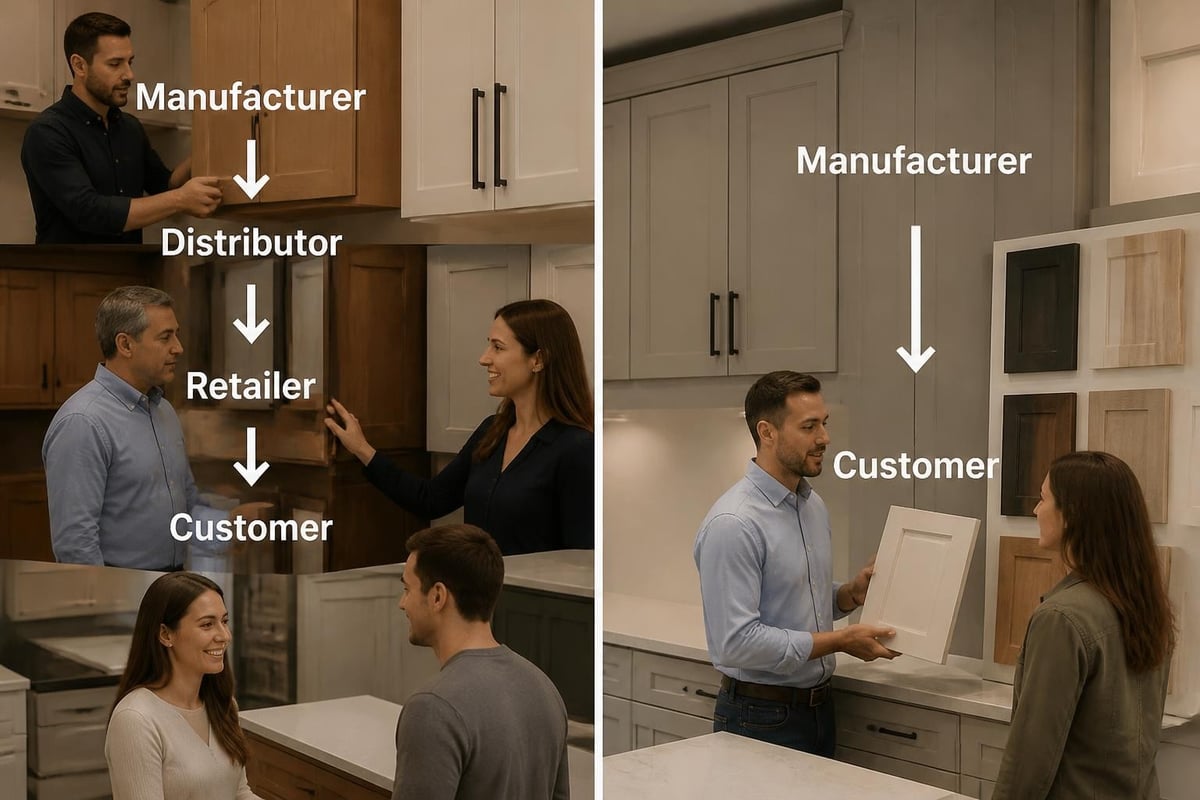
The factory direct approach fundamentally restructures how kitchen cabinets reach consumers. Traditional distribution chains involve manufacturers selling to distributors, who sell to retailers, who finally sell to homeowners. Each layer adds margin, inflating the final price by 40-60% above factory cost.
Direct purchasing removes these intermediaries. Manufacturers operate their own showrooms, maintain online platforms, or partner with specialized direct retailers who work on thinner margins. The result: cabinets meeting identical quality standards cost significantly less.
Three characteristics define authentic factory direct kitchen cabinets:
This model doesn't mean compromising on service. Many factory direct operations provide design consultations, installation coordination, and customer support comparable to traditional retailers.
Concerns about quality often accompany discussions of direct purchasing. However, factory direct kitchen cabinets typically adhere to the same rigorous standards governing retail cabinets. The KCMA’s official certification program provides independent verification of construction quality and performance.
KCMA certification requires cabinets to pass the A161.1 standard tests covering structural integrity, door and drawer durability, finish resistance, and joinery strength. Certified cabinets withstand 25,000 opening cycles, humidity exposure, and impact testing. Factory direct manufacturers pursuing certification invest in quality control systems that match or exceed traditional cabinet makers.
| Quality Indicator | KCMA Standard | Typical Factory Direct | Traditional Retail |
|---|---|---|---|
| Door cycle testing | 25,000 cycles | 25,000+ cycles | 25,000+ cycles |
| Drawer cycle testing | 25,000 cycles | 25,000+ cycles | 25,000+ cycles |
| Formaldehyde compliance | TSCA Title VI | TSCA Title VI | TSCA Title VI |
| Warranty coverage | Varies | 10 years to lifetime | 5-10 years |
Health-conscious buyers prioritize low-emission materials. Factory direct manufacturers must comply with EPA formaldehyde standards for composite wood products. TSCA Title VI regulations cap formaldehyde emissions from plywood, particleboard, and MDF used in cabinet construction.
California maintains even stricter requirements under CARB Phase 2 standards. Manufacturers serving national markets typically build to California specifications since they represent the highest threshold. This means factory direct kitchen cabinets often feature ultra-low-emitting materials regardless of buyer location.
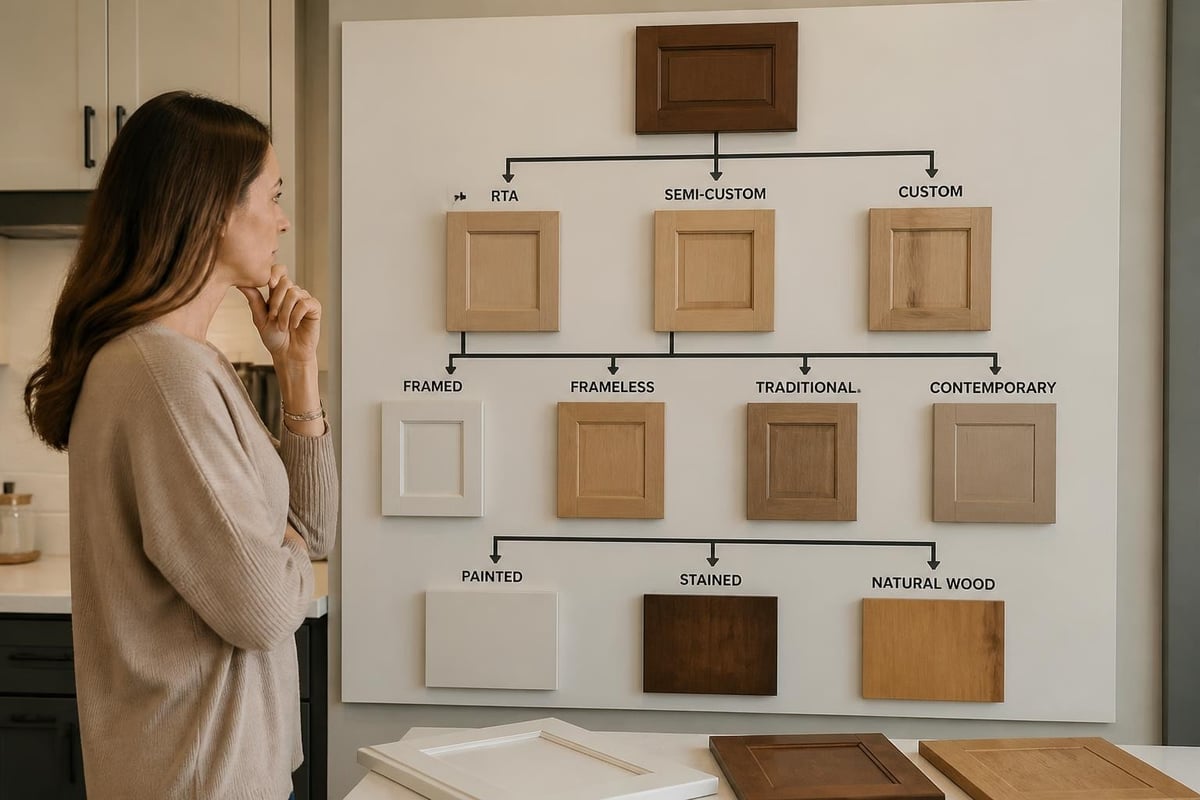
The perception that direct purchasing limits design choices doesn't reflect current market realities. Factory direct operations in 2026 offer extensive customization spanning door styles, finishes, hardware, and organizational accessories.
Three primary construction types serve different needs and budgets:
Ready-to-assemble (RTA) cabinets arrive flat-packed with hardware and instructions. Buyers save on shipping and can handle installation themselves or hire contractors. Quality RTA cabinets feature cam-lock connectors, adjustable hinges, and pre-finished components that assemble in minutes per unit.
Semi-custom cabinets start with standard sizes modified to fit specific spaces. Buyers select from dozens of door styles and hundreds of finish options. Manufacturing timelines run 4-8 weeks, balancing customization with efficiency. Frameless Cabinets exemplify this category, offering European-style construction with full-overlay doors and maximum interior access.
Fully custom cabinets accommodate unique dimensions, specialty storage, and architectural details. Manufacturers build each component to exact specifications, enabling truly personalized kitchens. Production requires 8-12 weeks but delivers millwork-quality results at factory direct pricing.
According to Architectural Digest’s 2025 kitchen trends, several design directions dominate current preferences. Two-tone kitchens pair light upper cabinets with darker lowers. Natural wood finishes showcase grain patterns rather than hiding them under paint. Handleless designs create sleek, minimalist aesthetics.
Factory direct manufacturers track these trends closely, updating offerings to reflect current demand. Many maintain inventories of popular styles while offering custom finishes for buyers seeking distinctive looks.
Price advantages drive most factory direct purchases, but understanding the full financial picture requires examining multiple cost factors. Kitchen cabinet expenses include product cost, delivery, installation, hardware upgrades, and accessories.
Factory direct kitchen cabinets typically cost 30-50% less than equivalent products sold through traditional retail channels. A mid-range kitchen with 20 linear feet of cabinetry might cost $8,000-$12,000 retail but $4,500-$7,000 factory direct.
However, direct purchases may require separate installation arrangements. Some factory direct operations bundle installation services; others expect buyers to hire contractors independently. When comparing options, calculate total project costs including:
| Cost Component | Traditional Retail | Factory Direct | Savings |
|---|---|---|---|
| Cabinets (20 LF) | $10,000 | $6,000 | $4,000 |
| Delivery | Included | $500 | -$500 |
| Installation | Included | $2,500 | -$2,500 |
| Hardware upgrade | $800 | $400 | $400 |
| Total | $10,800 | $9,400 | $1,400 |
Even accounting for separate installation, factory direct purchasing delivers meaningful savings. Buyers willing to handle installation themselves or who maintain contractor relationships maximize these advantages.
Major kitchen renovations strain budgets regardless of purchasing approach. Factory direct operations increasingly offer financing to make premium cabinets accessible. Payment plans spread costs over 12-60 months, with approved credit determining terms and interest rates.
Some manufacturers partner with third-party lenders while others maintain in-house financing programs. Promotional periods occasionally feature deferred interest, allowing buyers to pay balances before interest accrues. These options make factory direct kitchen cabinets competitive with retail financing while maintaining lower base prices.
Direct purchasing shifts responsibility for quality verification to buyers. Without showroom sales staff guiding selections, homeowners must evaluate construction details, material grades, and manufacturer reputations independently.
The Consumer Reports kitchen cabinet buying guide emphasizes several critical quality indicators. Box construction should use 3/4-inch plywood or furniture-grade particleboard, not thin laminated panels. Full-depth boxes (24 inches for base cabinets) provide maximum storage and stability.
Drawer construction reveals manufacturing priorities. Dovetail joints indicate quality craftsmanship, though doweled construction with metal brackets performs adequately at lower price points. Full-extension undermount slides outperform side-mount alternatives, enabling complete drawer access and supporting heavier loads.
Door and drawer fronts should attach with adjustable hardware allowing alignment tweaks during installation. Hinges rated for 50,000+ cycles outlast budget alternatives. Soft-close mechanisms prevent slamming and extend hardware life.
Before committing to factory direct purchases, research manufacturer backgrounds:
Reputable factory direct operations welcome scrutiny and provide detailed specifications. Reluctance to share construction details or vague warranty language signals potential issues.
Successful kitchen renovations require more than quality cabinets. Layout planning, dimensional accuracy, and proper installation determine functional outcomes and long-term satisfaction. Factory direct buyers need access to design expertise even when purchasing directly from manufacturers.
Many factory direct operations employ certified kitchen designers who create functional layouts optimized for available space. These professionals understand NKBA planning guidelines covering work triangles, clearance requirements, and accessibility standards.
Free design consultations typically include space measurement, 3D renderings showing cabinet placement, and material selection guidance. Designers help buyers balance aesthetic preferences with budget constraints, suggesting cost-effective alternatives when premium options exceed financial limits. This service level matches traditional retailers while maintaining direct pricing advantages.
For homeowners exploring options in Southern California, viewing cabinet gallery examples provides inspiration and demonstrates how factory direct quality translates into completed installations.
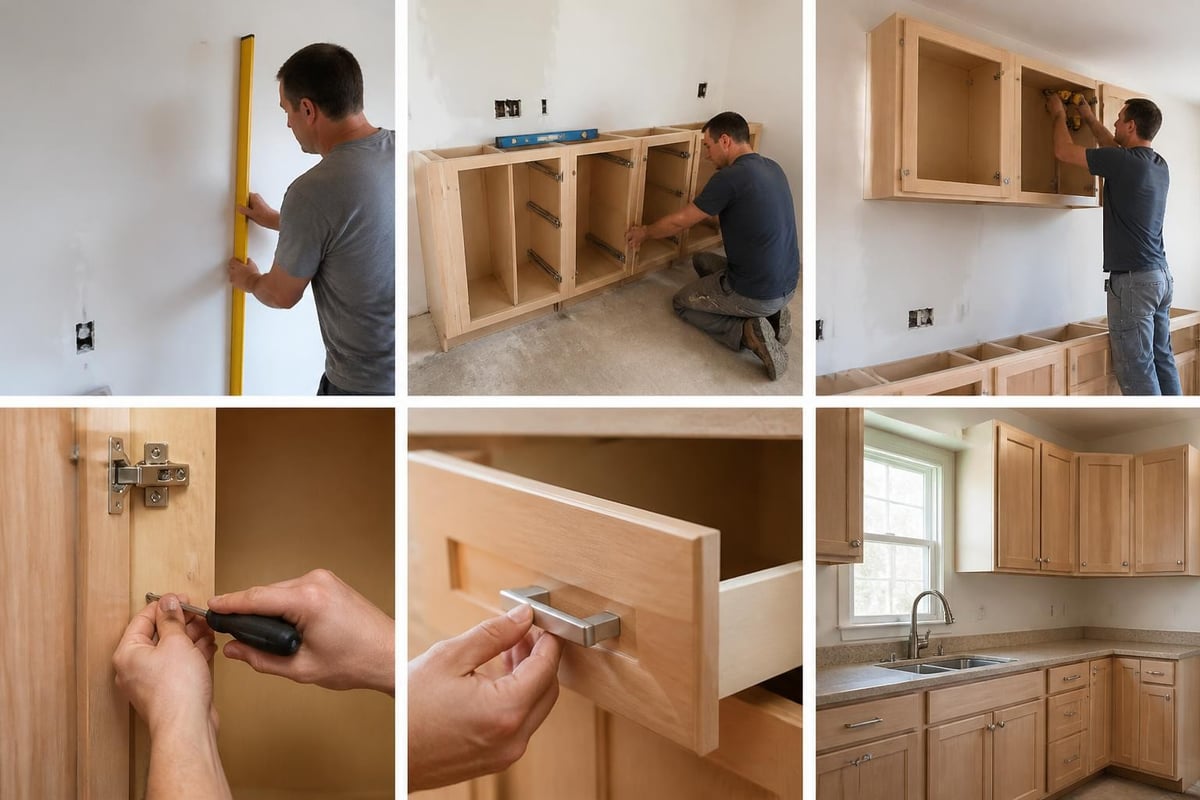
Cabinet installation requires precision carpentry skills and specialized tools. While experienced DIYers successfully install RTA cabinets, semi-custom and custom units benefit from professional installation. Proper installation ensures:
Factory direct suppliers typically maintain networks of qualified installers or offer installation as bundled services. Installation costs vary by region and project complexity but average $50-$75 per linear foot. This expense represents money well spent preventing costly mistakes and ensuring warranty coverage remains valid.
The factory direct model continues gaining market share as consumers become comfortable with direct purchasing across product categories. NKBA market research indicates manufacturers increasingly sell directly to consumers, bypassing traditional distribution.
Digital tools transform how buyers research, design, and purchase factory direct kitchen cabinets. Virtual reality showrooms let homeowners explore cabinet styles from home. Augmented reality apps overlay cabinet designs onto existing kitchens using smartphone cameras. Online configurators generate instant quotes based on selected options and dimensions.
These technologies reduce reliance on physical showrooms while improving design accuracy. Buyers visualize finished results before ordering, reducing returns and dissatisfaction. Manufacturers benefit from streamlined ordering and reduced overhead, passing savings to customers.
Environmental consciousness influences purchasing decisions in 2026. Factory direct operations highlight sustainable practices including:
Domestic production supports American jobs while enabling faster delivery and easier quality control. Several factory direct manufacturers operate facilities in the United States, competing effectively with imported alternatives by emphasizing quality, customization, and service.
Warranty terms directly impact total ownership costs and buyer confidence. Factory direct kitchen cabinets often include coverage matching or exceeding retail alternatives, contradicting assumptions that direct purchasing sacrifices support.
Comprehensive warranties cover material defects and workmanship failures under normal use conditions. Coverage typically includes:
Exclusions generally cite damage from improper installation, misuse, or environmental factors like flooding. Reading warranty fine print before purchasing prevents misunderstandings about coverage limitations.
Lifetime warranties sound impressive but require scrutiny. Some cover only original purchasers and exclude transferability. Others limit coverage to specific components while imposing shorter terms on hardware or finishes. Compare warranty details across manufacturers rather than relying on marketing claims.
Direct manufacturer warranties streamline claims by eliminating retailer intermediaries. Buyers contact manufacturers directly, often receiving faster resolutions. However, this requires manufacturers to maintain responsive customer service departments.
Before purchasing, test customer service responsiveness through pre-sale questions. Prompt, knowledgeable responses indicate adequate support infrastructure. Review online feedback about warranty claim experiences to gauge manufacturer reliability.
Geographic location influences factory direct purchasing decisions through delivery logistics, local regulations, and regional style preferences. Understanding these factors optimizes buying strategies.
Cabinet shipping costs scale with distance and order size. Buyers near manufacturing facilities or regional distribution centers enjoy lower delivery expenses and faster timelines. Those in remote areas may face significant freight charges offsetting some direct purchasing savings.
Delivery methods vary by manufacturer. Some use common carriers requiring buyers to unload shipments. Others provide white-glove delivery including placement in the home. Clarify delivery terms and fees before finalizing purchases.
RTA cabinets ship more economically than pre-assembled units due to reduced volume. This advantage particularly benefits buyers far from manufacturing facilities seeking to minimize transportation costs.
While national standards govern cabinet construction, local building codes may impose additional requirements. Earthquake zones sometimes mandate special bracing. Coastal areas may require enhanced moisture resistance. Factory direct manufacturers serving national markets typically accommodate regional requirements, but buyers should confirm compliance.
Working with local contractors familiar with area codes helps ensure proper installation meeting all regulatory requirements. Some jurisdictions require licensed contractors for cabinet installation, affecting project costs and timelines.
For San Diego area homeowners, exploring special promotions reveals opportunities to combine factory direct pricing with regional expertise and local showroom convenience.
Successful factory direct buying requires research, planning, and realistic expectations. Following structured evaluation processes leads to satisfying outcomes.
Complete these steps before committing to factory direct kitchen cabinets:
Factory direct purchasing offers significant advantages when approached carefully, but several mistakes undermine potential benefits:
Taking time to properly evaluate options and plan implementations prevents these issues and ensures factory direct purchases deliver expected value.
Factory direct kitchen cabinets represent a smart investment for homeowners seeking premium quality at wholesale prices, particularly when backed by industry certifications, comprehensive warranties, and professional support services. Whether you're renovating a home in Poway, La Jolla, or elsewhere in San Diego County, SD Kitchen Cabinets combines factory direct pricing with the largest selection of in-stock and custom options in the region, plus free design consultations, professional installation, and lifetime warranty coverage. Visit the Miramar Road showroom to explore over 150 colors and experience firsthand how factory direct quality transforms kitchens without compromising your budget.