
Kitchen renovations consistently rank among the most valuable home improvements, yet cabinet costs alone can consume 30-50% of a typical remodel budget. For homeowners searching for "discount kitchen cabinets near me," the challenge isn't just finding lower prices-it's discovering quality products that deliver professional results without the markup. In 2026, the cabinet market offers more discount pathways than ever before, from wholesale direct showrooms to ready-to-assemble options, clearance inventory, and salvage finds. Understanding which discount strategy aligns with your project timeline, skill level, and quality expectations is essential to achieving a kitchen that looks custom without the custom price tag.
The phrase "discount kitchen cabinets near me" encompasses a surprisingly diverse range of purchasing strategies, each with distinct advantages and tradeoffs. Not all discounts are created equal, and the best choice depends on your specific renovation goals.
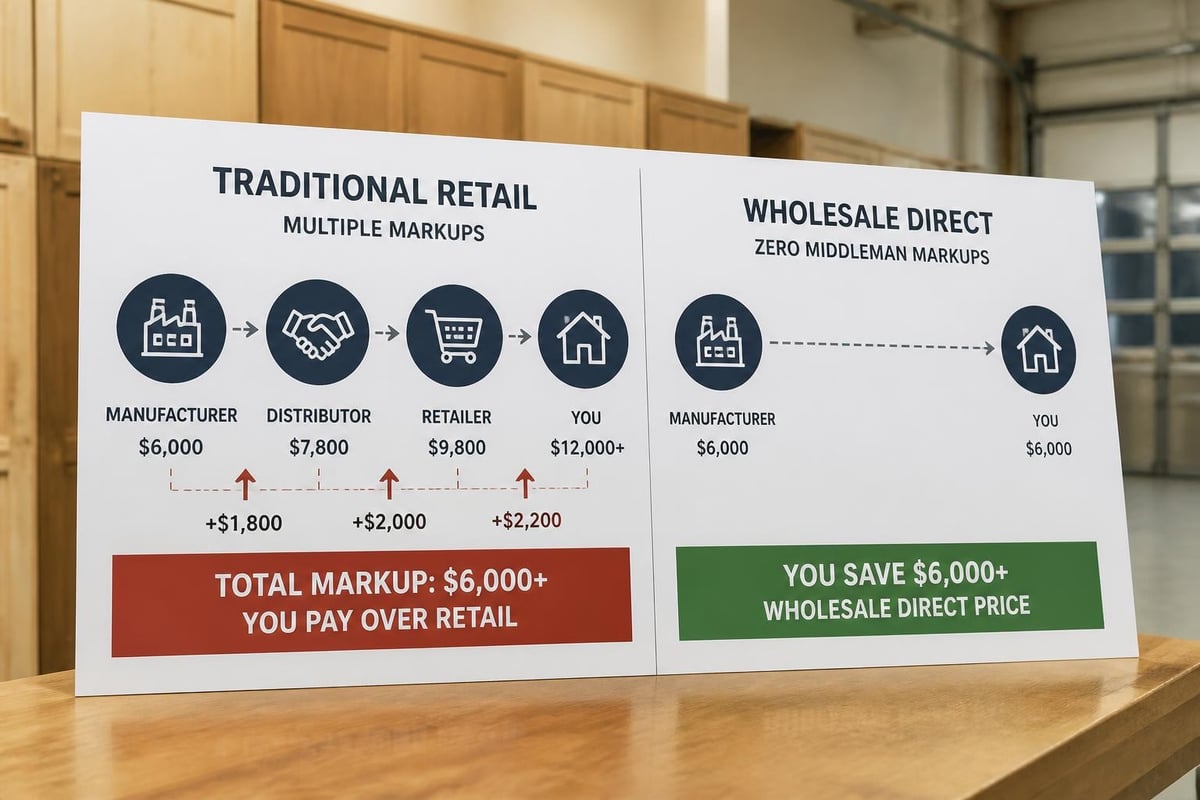
Traditional retail cabinet pricing includes multiple layers of markup-manufacturer to distributor, distributor to dealer, dealer to consumer. Each step adds 20-40% to the final cost. Wholesale direct operations eliminate these intermediaries, passing savings directly to homeowners.
When evaluating wholesale showrooms, verify they offer legitimate manufacturer-direct pricing rather than simply advertising "wholesale" as a marketing term. True wholesale operations maintain relationships directly with cabinet factories and can provide transparent pricing documentation.
Ready-to-assemble cabinets represent one of the most accessible discount options for budget-conscious renovators. These cabinets ship flat-packed, reducing freight costs by 60-70% and eliminating the premium charged for factory assembly.
Key RTA advantages include:
The tradeoff is labor-you invest time rather than money. Most homeowners with basic tools can assemble RTA cabinets successfully, though the process requires patience and precision. Budget 2-4 hours per cabinet for first-time assemblers.
Manufacturers and showrooms periodically rotate display models, discontinue colors, or liquidate overstock from canceled orders. These cabinets carry steep discounts-often 40-70% off retail-simply because they're taking up warehouse space.
According to 2024 kitchen and bath market data, inventory management has become increasingly aggressive post-pandemic, creating more clearance opportunities for savvy shoppers. However, clearance inventory is by definition limited; you must match your kitchen layout to available stock rather than the reverse.
Geographic proximity matters significantly more for cabinets than many other home improvement products. Understanding why distance affects both cost and convenience helps you search more strategically.
Kitchen cabinets are heavy, bulky, and fragile-a terrible combination for long-distance shipping. Freight costs escalate quickly beyond 100-mile radius from the warehouse or showroom.
| Distance from Source | Typical Freight Cost | Delivery Timeline |
|---|---|---|
| Under 25 miles | $0-$150 | Same week |
| 25-100 miles | $150-$400 | 1-2 weeks |
| 100-300 miles | $400-$800 | 2-3 weeks |
| Over 300 miles | $800+ | 3-4 weeks |
Local sourcing also enables you to inspect inventory personally before purchase, arrange multiple pickup trips to match your installation schedule, and return damaged pieces without complicated freight claims.
While online cabinet retailers advertise convenience, complex kitchen layouts benefit enormously from in-person design consultation. Professional designers can identify space-optimization opportunities, suggest cost-effective alternatives to custom pieces, and prevent expensive ordering mistakes.
Showrooms offering free design consultations-especially those with 3D visualization software-deliver tangible value that easily justifies a 30-minute drive. The consultation alone can save hundreds or thousands by optimizing your cabinet selection before purchase.
Price reduction doesn't necessarily indicate inferior quality, but discount shopping requires more vigilant quality assessment than traditional retail purchases.
Examine these critical quality indicators:
The Consumer Reports kitchen cabinet buying guide provides detailed testing methodology for evaluating construction quality across price points.
Discount cabinets-particularly clearance inventory, imports, or salvaged pieces-require verification of formaldehyde emission compliance. The EPA’s formaldehyde emission standards mandate specific limits for composite wood products, protecting indoor air quality.
Look for CARB2 or TSCA Title VI certification on any cabinet containing particleboard, MDF, or plywood. California maintains the nation's strictest standards, so CARB-certified products provide assurance nationwide. Never assume compliance-request documentation, especially for deeply discounted or used cabinets.
Successful discount cabinet shopping combines multiple sourcing strategies rather than relying on a single channel.
Wholesale showrooms maintain physical inventory, enabling same-week delivery for in-stock configurations. This model works particularly well for San Diego homeowners seeking frameless European-style cabinets, which often feature modern aesthetics at competitive wholesale pricing.
When visiting wholesale showrooms, bring accurate kitchen measurements, photos of your current space, and a preliminary layout if available. This preparation allows designers to provide specific recommendations and pricing rather than generic estimates.
Questions to ask wholesale showroom staff:
Cabinet manufacturers occasionally operate factory outlet stores to move seconds, discontinued lines, and overruns. These outlets offer legitimate manufacturer-branded products at 40-60% below regular wholesale.
The inventory turns over rapidly, so outlet shopping requires flexibility in design preferences and frequent return visits. Establish a relationship with outlet staff who can notify you when inventory matching your specifications arrives.
Organizations like Habitat for Humanity ReStore aggregate donated building materials, including kitchen cabinets from renovation tear-outs. Prices typically range from 70-90% below retail, though selection is entirely unpredictable.
Salvage shopping best practices:
Salvage cabinets work best for secondary spaces (laundry rooms, garages, basement kitchenettes) or as supplementary storage when primary cabinets come from conventional sources.
Smart design choices amplify your discount cabinet budget, creating a high-end appearance without custom pricing.
Allocate 80% of your budget to visible, high-impact cabinets (base cabinets, prominent upper cabinets, island) and 20% to utility pieces (pantry interiors, appliance garages, toe-kick drawers). This strategy focuses spending where it delivers maximum aesthetic and functional return.
For example, invest in premium drawer boxes with soft-close hardware for frequently accessed base cabinets, but use economy shelf-only construction for upper cabinets that simply store dishes. The functional difference is negligible, but the cost savings are substantial.
2025-2026 kitchen design trends favor clean-lined, minimalist cabinetry-styles that happen to be more economical to manufacture than ornate traditional designs. Slab-front doors, simple shaker styles, and handleless European cabinets cost 20-30% less than raised-panel, glazed, or heavily detailed alternatives.
Neutral colors also expand your discount options. White, gray, and natural wood tones appear in every manufacturer's standard lineup and dominate clearance inventory. Trendy colors (currently sage green, navy, and two-tone combinations) typically require custom orders at premium pricing.
Few building codes or design principles require uniform cabinetry throughout a kitchen. Strategic mixing allows you to combine discount in-stock base cabinets with semi-custom uppers, or use clearance cabinets for a butler's pantry while installing new cabinets in the main kitchen.
The key is maintaining consistent door style and finish across visible areas. Mixing is most successful when different cabinet lines occupy distinct zones separated by appliances, windows, or wall breaks.
Discount cabinets require more precise planning than custom orders because you adapt your design to available inventory rather than ordering cabinets manufactured to exact specifications.
Follow the NKBA Kitchen Planning Guidelines measurement protocol to ensure compatibility with standard cabinet dimensions:
Standard cabinet widths increase in 3-inch increments (12", 15", 18", 24", 30", 36"). Your measurements must account for filler strips, which compensate for walls that aren't perfectly square or dimensions that don't align precisely with standard sizing.
When designing around discount inventory, develop 2-3 alternative layouts that achieve similar functionality with different cabinet combinations. This flexibility allows you to capitalize on available deals without compromising your kitchen workflow.
For instance, a 36-inch range can be flanked by either two 18-inch base cabinets or one 15-inch and one 21-inch cabinet. Having both options drawn increases your chances of finding in-stock matches.
Labor represents 30-40% of traditional kitchen remodeling costs, making installation approach a significant budget factor.
Rate your capability honestly across these dimensions:
| Skill Area | Required Level | Evaluation Questions |
|---|---|---|
| Carpentry | Intermediate | Can you cut, trim, and shim materials to achieve level, plumb installations? |
| Tool access | Basic-Advanced | Do you own or can you rent laser level, miter saw, drill/driver, clamps? |
| Time availability | 40-80 hours | Can you dedicate 2-3 full weekends plus evenings to the project? |
| Problem-solving | High | Are you comfortable troubleshooting unexpected issues independently? |
| Physical capability | Moderate | Can you safely lift and position 80-pound cabinets overhead? |
RTA cabinets naturally suit DIY installation because you're already investing assembly labor. Conversely, pre-assembled premium cabinets deserve professional installation to protect your investment and ensure warranty compliance.
Professional installers charge $50-$150 per cabinet depending on complexity, region, and whether they provide materials (filler strips, crown molding, toe kicks). For a 15-cabinet kitchen, budget $1,500-$3,000 for professional installation.
This cost is often justified by:
The true cost of kitchen cabinets extends far beyond the initial purchase price. Smart discount shopping considers lifecycle value, not just upfront savings.
Legitimate cabinet manufacturers back their products with warranties ranging from 1 year (economy brands) to limited lifetime (premium manufacturers). Discount purchases sometimes complicate warranty coverage.
Verify these warranty details before purchase:
Kitchen needs evolve over time. Purchasing from manufacturers with consistent product lines allows you to match existing cabinets years later when adding an island, expanding a pantry, or reconfiguring space.
Conversely, clearance cabinets in discontinued styles or colors may be impossible to match for future modifications. Document your exact cabinet model, finish code, and hardware specifications with photos and purchase records.

Quality cabinet boxes often outlast their finish or hardware by decades. Discount shopping allows you to invest in solid construction even if the current finish or style isn't perfect-you can refinish, repaint, or update hardware as budgets and tastes evolve.
Refinishing potential depends on cabinet construction:
San Diego's unique housing stock, climate, and market conditions create specific opportunities and challenges for discount cabinet shopping.
Coastal proximity and humidity fluctuations demand moisture-resistant materials and finishes. For homeowners in areas like La Jolla, Del Mar, and Oceanside, plywood construction outperforms particleboard in long-term durability.
Ensure your discount cabinets feature:
San Diego County requires permits for kitchen remodels involving plumbing, electrical, or structural changes. Discount cabinets must still meet California building code requirements for seismic bracing, particularly for upper cabinets in multi-story buildings.
Verify that your cabinet supplier provides installation instructions compliant with California codes. Professional installers automatically address these requirements; DIY installers must research current code before beginning work.
San Diego's robust cabinet market includes big-box retailers, specialty showrooms, and wholesale operations. This competition benefits consumers through pricing pressure and frequent promotional events.
Monitor multiple local sources simultaneously. Subscribe to email lists, follow social media accounts, and visit showrooms quarterly to track inventory turnover patterns. You'll identify which retailers offer the deepest discounts during specific seasons (often June-July and December-January).
Even with substantial discounts, quality kitchen cabinets represent a significant investment. Strategic financing can make projects feasible without depleting emergency savings.
HELOCs typically offer the lowest interest rates for home improvement financing because they're secured by your property. Rates in 2026 range from 7-9% APR, substantially lower than credit cards or personal loans.
HELOC advantages for cabinet purchases:
Many cabinet showrooms and manufacturers offer promotional financing-0% APR for 12-24 months or low fixed rates for extended terms. These programs make sense when you can repay the balance within the promotional period, avoiding deferred interest charges.
Read financing terms carefully. Deferred interest promotions charge retroactive interest on any remaining balance after the promotional period, potentially erasing your cabinet discount savings.
Retailers incur 2-4% processing fees on credit card transactions. Offering cash payment (including checks or direct bank transfers) provides legitimate negotiation leverage for additional discounts.
The question "what's your best price for cash payment today?" often yields 5-10% additional savings, particularly on clearance inventory the retailer wants to move quickly.
Experience and industry expertise reveal several recurring mistakes that transform cabinet bargains into expensive problems.
Rushing cabinet selection to meet contractor schedules or personal deadlines eliminates your negotiating power and forces acceptance of whatever inventory is immediately available. Quality discount shopping requires patience.
Ideal timeline for cabinet shopping:
This timeline allows you to capitalize on sales events, clearance opportunities, and special orders without installation pressure.
Cabinets represent just one component of a complete kitchen. Discount cabinet savings evaporate quickly when you underbudget for countertops, backsplash, plumbing, electrical, flooring, and appliances.
Allocate your overall kitchen budget using these industry-standard percentages:
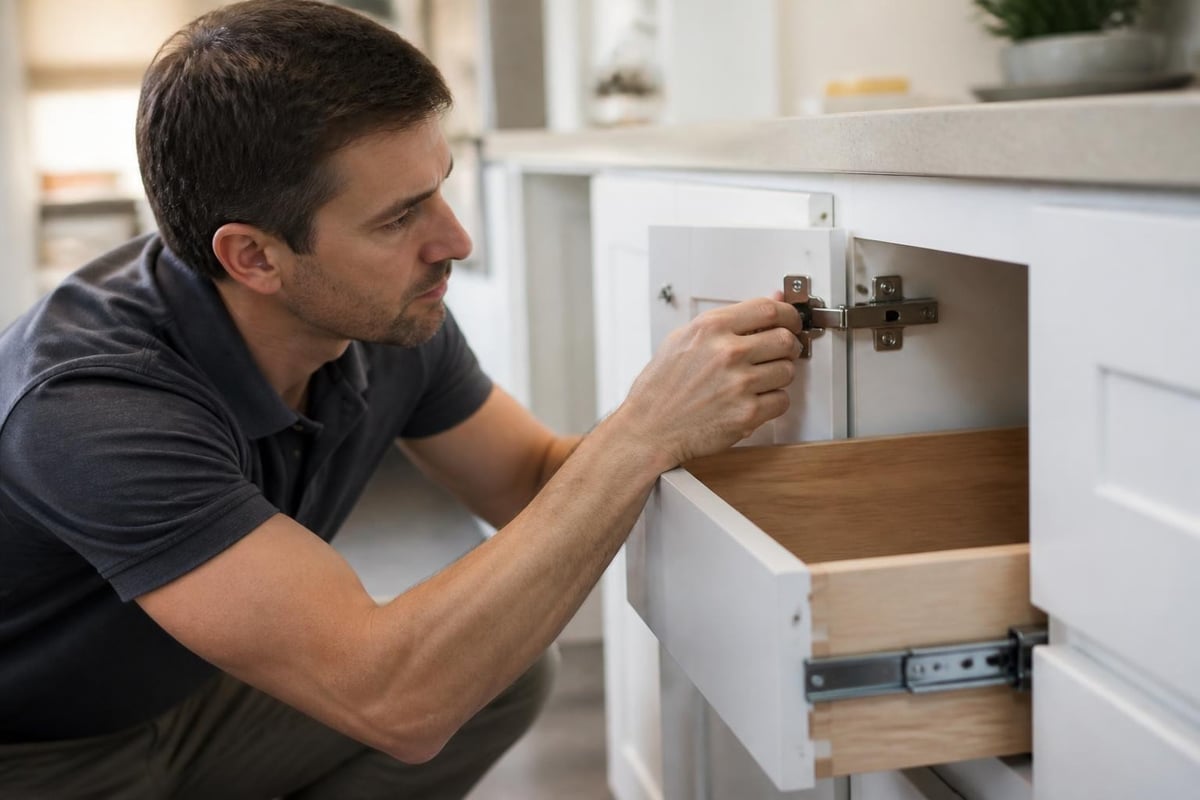
The least expensive cabinet solution isn't always the most economical long-term choice. Drawers with cheap slides that bind or fail after 18 months, doors that won't stay closed, or shelves that sag under normal loads create ongoing frustration and eventual replacement costs.
Prioritize functional elements that you'll interact with daily-soft-close drawer slides, adjustable shelves, sturdy door hinges-even if it means selecting a simpler style or finish to stay within budget.
Finding quality discount kitchen cabinets near me requires balancing price considerations with construction quality, warranty coverage, and installation requirements. Whether you choose wholesale direct pricing, ready-to-assemble options, or clearance inventory, careful evaluation ensures your cabinet investment delivers years of reliable service. For San Diego homeowners seeking the perfect combination of selection, quality, and value, SD Kitchen Cabinets provides a comprehensive solution. Visit the Miramar Road showroom to explore in-stock, semi-custom, and custom options with free 3D design consultation, transparent wholesale pricing, and professional installation services that protect your investment with a limited lifetime warranty.