
Searching for "custom kitchens near me" represents more than a simple internet query-it marks the beginning of a significant home investment that will shape your daily life for decades. The kitchen remodeling industry has grown substantially in 2026, with homeowners prioritizing personalized solutions over cookie-cutter designs. According to the NKBA’s Kitchen & Bath Market Outlook, custom cabinetry continues to drive market growth as homeowners seek tailored storage solutions that maximize functionality while reflecting their unique aesthetic preferences. Understanding the local landscape of custom kitchen providers, pricing structures, and quality indicators will empower you to make informed decisions that balance budget constraints with long-term value.
The term "custom kitchens" encompasses a spectrum of personalization levels that many homeowners initially find confusing. True custom cabinetry involves manufacturing built specifically to your dimensions, specifications, and design choices without the constraints of predetermined sizing increments.
When you search for custom kitchens near me, you'll encounter three primary categories that local providers typically offer. Stock cabinets arrive pre-manufactured in standard sizes and limited finishes, offering the most affordable entry point with immediate availability. Semi-custom cabinets provide a middle ground, allowing modifications to standard sizes along with expanded finish and hardware selections. Fully custom cabinets deliver complete design freedom, manufactured to precise specifications with unlimited material, finish, and configuration choices.
Local showrooms provide critical advantages over online-only retailers. The ability to physically examine construction quality, see true color representation under various lighting conditions, and discuss spatial challenges with experienced designers adds immeasurable value to the selection process. Many San Diego-area homeowners benefit from visiting established showrooms like SD Kitchen Cabinets to compare options side-by-side and receive professional guidance tailored to their specific project requirements.
Understanding the financial investment required for custom kitchens helps set realistic expectations and prevents mid-project surprises. Local pricing varies based on cabinet construction quality, material selections, finish complexity, and installation requirements.
| Cabinet Category | Price Per Linear Foot | Typical 10×10 Kitchen | Lead Time |
|---|---|---|---|
| Stock Cabinets | $60-$150 | $3,000-$7,500 | 1-2 weeks |
| Semi-Custom | $150-$350 | $7,500-$17,500 | 4-8 weeks |
| Fully Custom | $350-$1,200+ | $17,500-$60,000+ | 8-16 weeks |
These figures reflect cabinet costs only, excluding countertops, installation labor, hardware upgrades, and appliance integration. Consumer Reports emphasizes that cabinet quality significantly impacts longevity, with construction details like dovetail drawer joints, solid wood frames, and full-extension drawer slides justifying higher upfront investments through decades of reliable performance.
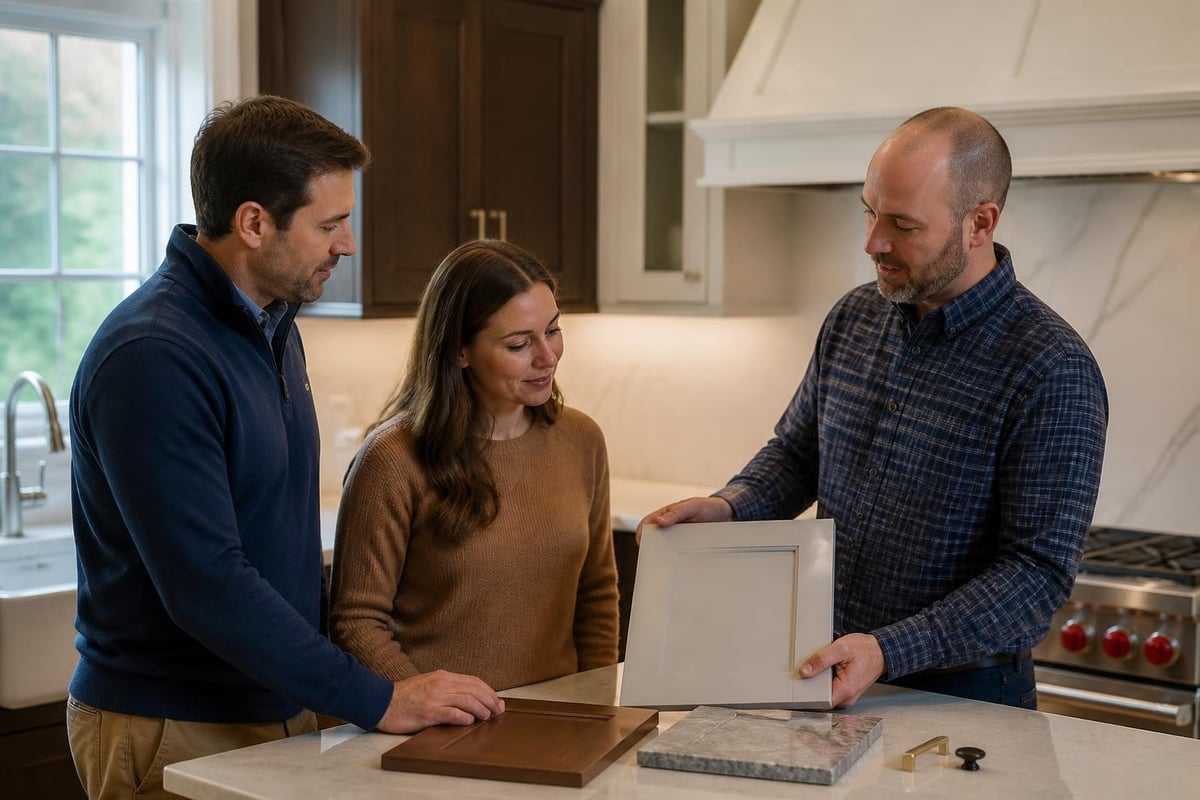
The proximity advantage of searching custom kitchens near me extends beyond convenient showroom visits. Local providers understand regional building codes, climate considerations affecting material selection, and architectural styles prevalent in your area.
Professional credibility separates reputable custom kitchen specialists from opportunistic contractors. Request verification of active contractor licenses, current liability insurance, and workers' compensation coverage before engaging any provider. Established businesses maintain physical showrooms where you can evaluate their work quality and meet design staff face-to-face.
Portfolio review reveals a provider's versatility and experience level. Request examples of completed projects similar to your vision, paying particular attention to complex installations that demonstrate problem-solving abilities. References from recent clients offer unfiltered perspectives on communication quality, timeline adherence, and post-installation support.
Local providers with established reputations often provide value-added services that streamline the remodeling process. Comprehensive offerings might include free design consultations, 3D visualization, coordinated installation, countertop fabrication, and financing options that simplify budget management.
Contemporary custom kitchen design balances aesthetic innovation with practical functionality. Architectural Digest identifies several dominant trends that inform local design decisions and material selections throughout 2026.
Mixed material palettes create visual interest while serving functional purposes. Combining wood-toned perimeter cabinets with contrasting island finishes adds depth and defines activity zones. Textured surfaces-from fluted cabinet doors to ribbed glass inserts-provide tactile variety that elevates standard flat-panel designs.
Modern minimalism continues dominating custom kitchen requests, characterized by handleless cabinets, integrated appliances, and streamlined profiles. Frameless Cabinets particularly suit this aesthetic, offering sleek European styling with full-access interiors that maximize storage capacity.
Transitional designs blend traditional warmth with contemporary clean lines, appealing to homeowners seeking timeless versatility. Shaker-style doors in updated proportions, paired with modern hardware and neutral color palettes, achieve this balanced approach.
Bold color adoption marks a significant shift from the all-white kitchens that dominated previous years. Deep navy, forest green, and charcoal cabinetry provide dramatic backdrops for metallic accents and natural stone countertops. Two-tone configurations allow homeowners to incorporate trend-forward hues while maintaining neutral foundations.
Sustainable material selection increasingly influences custom cabinet specifications. Low-VOC finishes, FSC-certified wood sources, and locally manufactured components appeal to environmentally conscious homeowners. The U.S. Green Building Council provides guidance on material selection that supports healthier indoor air quality while meeting sustainability objectives.
Beyond aesthetic considerations, custom kitchens excel in addressing specific functional requirements that stock options cannot accommodate. Tailored solutions optimize every cubic inch of available space while integrating modern conveniences that enhance daily workflows.
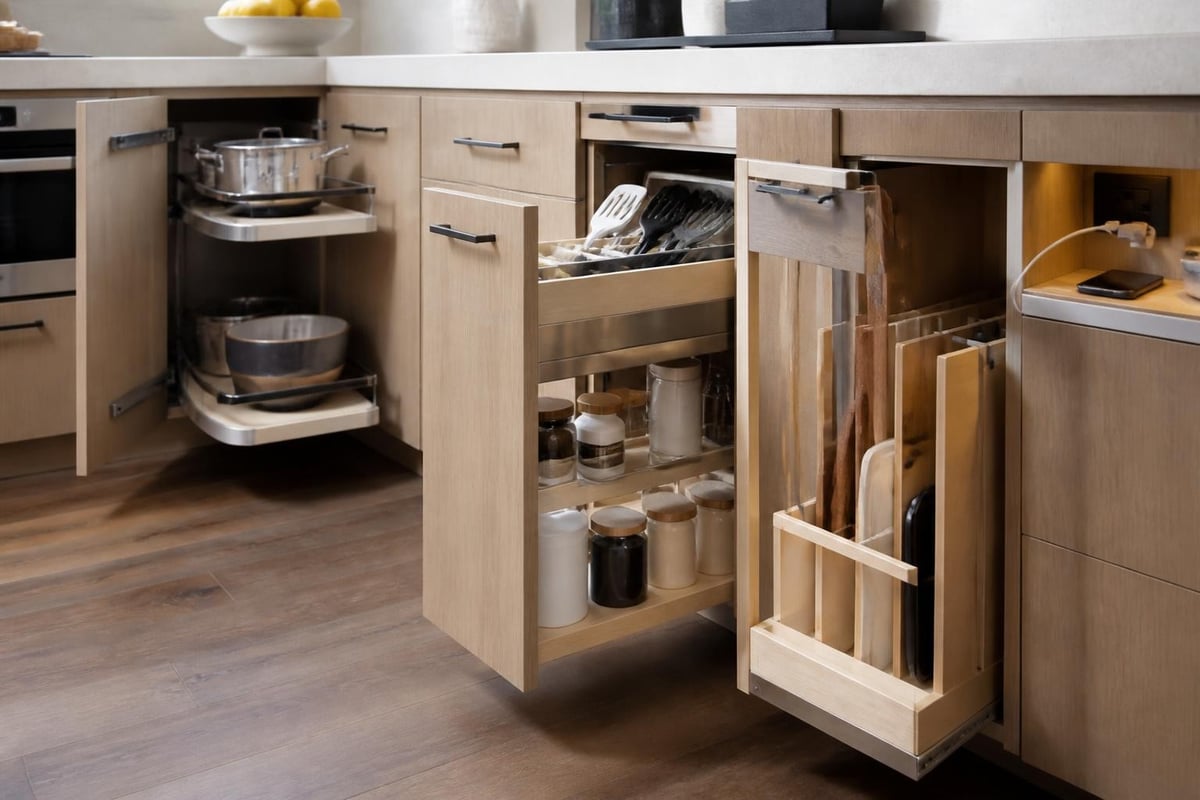
Custom cabinetry transforms awkward corners, narrow gaps, and vertical expanses into highly functional storage zones. Pull-out spice racks utilize narrow spaces between appliances, while corner carousel systems provide full access to previously wasted corner cabinets. Vertical dividers keep baking sheets and cutting boards organized, eliminating the frustration of horizontal stacking.
Appliance garages conceal small countertop equipment behind retractable doors, maintaining clean sightlines while keeping frequently used items accessible. Charging stations integrated within drawer systems organize electronics and eliminate countertop cord clutter. Deep drawer systems with custom dividers accommodate pots, pans, and mixing bowls more efficiently than traditional shelving configurations.
Accessibility features deserve consideration even in homes without current mobility limitations. Universal design principles create kitchens that accommodate users of all abilities while maintaining aesthetic appeal. The ADA Standards for Accessible Design outline clearance requirements, counter height variations, and hardware specifications that support inclusive kitchen design.
Geographic proximity profoundly impacts the custom kitchen experience, from initial consultations through final installation and warranty service. Local providers understand regional architectural characteristics, municipal permit requirements, and climate factors affecting material performance.
Google prioritizes location-based results when users search custom kitchens near me, displaying businesses within reasonable proximity to the searcher's location. Maintaining an optimized Google Business Profile enables kitchen specialists to appear in map-based results with contact information, operating hours, customer reviews, and project photos.
Local kitchen cabinet providers can demonstrate their area expertise through project portfolios highlighting neighborhood-specific installations. Homeowners searching for custom cabinets in La Jolla or custom cabinets in Oceanside benefit from seeing completed projects in similar architectural styles and spatial configurations.
Reviews and ratings dramatically influence local search visibility and consumer trust. Established providers with consistent five-star ratings and detailed customer testimonials earn preferential placement in search results while reassuring prospective clients about service quality and reliability.
Modern kitchen design increasingly addresses indoor air quality, ventilation performance, and material safety-factors that custom fabrication can optimize beyond standard product limitations.
Proper ventilation removes cooking byproducts, excess moisture, and airborne contaminants that accumulate during meal preparation. The U.S. EPA’s cooking and indoor air quality guidance recommends range hoods capturing at least 100 cubic feet per minute (CFM) for standard residential cooking, with higher capacities required for professional-grade appliances.
Custom kitchen design accommodates proper ventilation through strategic hood placement, adequate make-up air provisions, and ductwork routing that maintains efficiency. ASHRAE Standard 62.2 establishes minimum ventilation rates for residential spaces, ensuring fresh air exchange that supports healthy indoor environments.
Material selections impact long-term air quality through off-gassing of volatile organic compounds (VOCs). Custom cabinet manufacturers can specify low-VOC adhesives, water-based finishes, and formaldehyde-free substrates that minimize chemical emissions. These specifications become particularly important in tightly sealed modern homes where air exchange rates are minimized for energy efficiency.
Understanding realistic timelines prevents frustration and enables effective coordination with other renovation activities. Custom kitchens near me searches often stem from urgent remodel needs, but quality custom work requires adequate time for each project phase.
Total project duration typically spans 12-20 weeks from initial consultation to completed installation. Expedited timelines may be possible with in-stock or semi-custom options that reduce manufacturing lead times. For San Diego homeowners seeking faster turnaround, exploring semi-custom cabinets in San Diego can balance customization capabilities with shortened production schedules.
Weather-related delays, material backorders, and permit processing can extend timelines beyond initial projections. Building buffer periods into renovation schedules accommodates unforeseen complications without derailing overall project completion.
Strategic planning optimizes the return on your custom kitchen investment through choices that balance upfront costs against long-term performance and resale value.
Focus premium budget allocations on elements impacting daily functionality and durability. Cabinet construction quality, specifically drawer box construction and hinge systems, determines longevity more than decorative details. Dovetail or doweled drawer joints withstand decades of use, while undermount soft-close slides maintain smooth operation through thousands of cycles.
| Feature | Budget Option | Premium Option | Value Impact |
|---|---|---|---|
| Drawer Construction | Stapled particle board | Dovetail solid wood | High durability gain |
| Hinges | Standard overlay | Soft-close concealed | Moderate longevity |
| Interior Finish | Unfinished | Matching exterior | Low functional impact |
| Drawer Slides | Side-mount epoxy | Undermount full-extension | High usability gain |
Counter material selection significantly influences both aesthetic impact and maintenance requirements. Natural stone provides unique character with periodic sealing needs, while engineered quartz offers consistent appearance with minimal maintenance. Functionality requirements-heat resistance for avid bakers, stain resistance for families with young children-should guide material decisions more than trends alone.
Hardware selections disproportionately affect the kitchen's visual character relative to their cost. Quality knobs and pulls transform cabinet aesthetics at modest expense, making them ideal candidates for premium selections. Coordinating hardware finish with faucets, lighting fixtures, and appliance trim creates cohesive design flow.
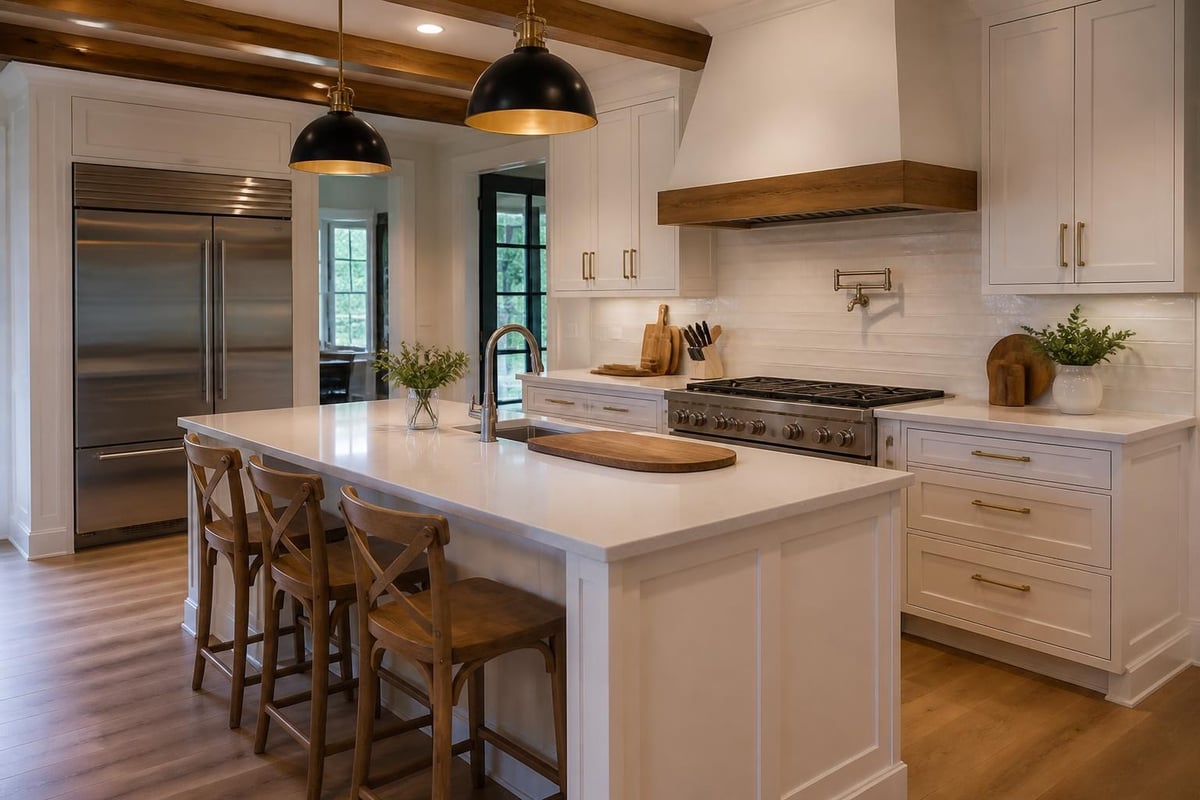
Professional design services transform vague preferences into detailed specifications that guide successful custom kitchen installation. While DIY planning tools exist, experienced designers provide spatial problem-solving that prevents costly mistakes.
Free design consultations offered by cabinet retailers provide basic layout services included with cabinet purchases. These consultations typically utilize manufacturer-specific catalogs and standard configurations. Fee-based independent designers offer broader product access and unbiased recommendations, charging hourly rates or flat project fees. Design-build firms integrate design and installation services under single contracts, streamlining project management.
Effective designer collaboration requires clear communication of functional priorities, aesthetic preferences, and budget parameters. Sharing inspiration images, describing cooking habits, and identifying storage pain points in your current kitchen provides designers the context needed for tailored solutions.
Three-dimensional renderings revolutionize the design review process, enabling clients to visualize completed spaces before manufacturing begins. These digital tools facilitate informed decisions about cabinet heights, finish combinations, and layout configurations that static floor plans cannot adequately convey.
Local climate conditions, architectural styles, and building codes influence appropriate material selections and design approaches for custom kitchens near me.
Coastal environments with elevated humidity levels require moisture-resistant materials that prevent warping and finish degradation. Marine-grade plywood substrates, moisture-resistant MDF, and catalyzed conversion varnish finishes withstand humid conditions better than standard particle board and lacquer finishes. San Francisco homeowners benefit from understanding cabinet materials for coastal climates that address region-specific challenges.
Desert regions with extreme temperature fluctuations and low humidity create different material stresses. Solid wood components may experience more pronounced expansion and contraction, making engineered materials preferable for certain applications. UV-resistant finishes prevent sun damage in kitchens with significant natural light exposure.
Local architectural traditions inform appropriate design aesthetics. Mediterranean, Craftsman, Mid-Century Modern, and Contemporary styles dominate different neighborhoods, with custom cabinetry designed to complement existing architectural character. Examining completed projects in your area reveals how successful installations harmonize with regional architectural contexts.
Distinguishing superior cabinet quality from mediocre alternatives requires understanding construction details that aren't immediately visible. These structural elements determine whether your custom kitchen performs flawlessly for decades or requires premature replacement.
Box construction forms the cabinet foundation. Plywood boxes offer superior strength and screw-holding capacity compared to particle board alternatives. Three-quarter-inch material thickness provides adequate structural integrity, while half-inch boxes may sag under countertop weight over time.
Drawer construction represents the most-used cabinet component, demanding robust joinery methods. Dovetail joints, whether hand-cut or machine-cut, provide maximum strength and longevity. Doweled construction offers adequate performance at lower cost, while stapled drawer boxes should be avoided in quality installations.
Back panel installation separates value-grade from premium cabinets. Flush-fit backs recessed into cabinet sides provide superior rigidity and dust protection compared to thin panels stapled over open backs. This detail becomes particularly important for wall cabinets supporting significant weight.
Finish quality determines both aesthetic appearance and durability. Multi-step finishing processes with stain, sealer, and topcoat layers provide depth and protection that single-coat applications cannot match. Catalyzed conversion varnish creates the most durable finish available, resisting moisture, chemicals, and physical impacts better than standard lacquer or polyurethane.
Strategic financing enables homeowners to proceed with quality custom kitchens while managing cash flow effectively. Multiple financing approaches accommodate different financial situations and project scopes.
Home equity loans leverage existing home value to secure favorable interest rates on lump-sum borrowing. Fixed rates and predictable monthly payments simplify budget planning, while interest may qualify for tax deductions. Home equity lines of credit (HELOCs) provide flexible draw periods that align with project payment schedules.
Personal loans offer quick approval without home collateral requirements, though typically at higher interest rates than secured options. Credit cards suit smaller purchases or homeowners pursuing reward point accumulation, but high interest rates make them expensive for large balances carried beyond grace periods.
Contractor financing programs increasingly offer competitive rates and promotional periods that defer interest accrual. These programs simplify payment coordination by consolidating project costs under single financing arrangements. Many established cabinet retailers provide in-house financing that streamlines approval processes and payment scheduling.
Project cost estimation should include contingency buffers of 10-15% to accommodate unforeseen complications discovered during demolition or installation. Accurate budgeting prevents mid-project financing scrambles that compromise design choices or force quality compromises.
Proper maintenance preserves your custom kitchen investment and ensures decades of optimal performance. Understanding appropriate cleaning methods and preventive care requirements protects finish integrity and cabinet functionality.
Daily cleaning with soft microfiber cloths and mild dish soap diluted in warm water removes cooking residue without damaging finishes. Harsh abrasive cleaners, ammonia-based products, and acidic solutions degrade finish coatings and should be avoided. Immediate spill cleanup prevents staining and moisture penetration that could damage substrates.
Cabinet hardware requires periodic adjustment as hinges settle and drawer slides accumulate debris. Tightening loose screws and lubricating drawer slides with silicone spray maintains smooth operation. Soft-close mechanisms may need occasional adjustment to maintain proper damping function.
Environmental controls support long-term cabinet performance. Maintaining indoor humidity between 35-50% prevents excessive wood movement that could cause joint separation or door warping. Avoiding direct sunlight exposure on cabinet faces prevents uneven fading and finish degradation over time.
Finding the right custom kitchen solution requires balancing aesthetic vision with functional requirements, quality standards, and budget realities. Local expertise, transparent communication, and attention to construction details ensure investments that enhance daily life while supporting long-term home value. Whether you're searching for comprehensive customization or exploring semi-custom alternatives, SD Kitchen Cabinets offers San Diego homeowners expert guidance through free 3D design consultations, wholesale pricing on over 150 cabinet colors, and professional installation backed by lifetime warranty coverage.