
Budget-conscious homeowners often assume that affordable cabinetry means compromising on quality, durability, or aesthetics. The reality in 2026 is far more nuanced. Cheap wood cabinets can deliver exceptional value when you understand the materials, construction methods, and sourcing strategies that separate genuinely good deals from regrettable purchases. Whether you're planning a complete kitchen remodel or a targeted upgrade, knowing how to evaluate inexpensive cabinet options empowers you to make smart decisions that balance immediate affordability with long-term performance.
The price of cabinetry reflects dozens of factors, from raw material costs to manufacturing processes and distribution channels. Cheap wood cabinets typically achieve their lower price points through strategic choices in each of these areas.
Wood species dramatically impacts cabinet pricing. Oak, maple, and cherry command premium prices due to their hardness, grain patterns, and scarcity, while birch, poplar, and pine offer solid performance at substantially lower costs. Many affordable cabinets use these budget-friendly hardwoods for face frames and doors while employing engineered materials for cabinet boxes.
This Old House provides an excellent overview of cabinet materials, explaining how plywood, MDF, and particleboard each serve different roles in cabinet construction. Plywood offers superior strength and moisture resistance, making it ideal for cabinet boxes even in budget lines. MDF provides a smooth, stable surface perfect for painted finishes at a fraction of solid wood's cost.
Particle board, when properly sealed and used in dry applications, delivers adequate performance for shelving and interior components. The key distinction lies in understanding where each material performs best:
Ready-to-assemble (RTA) cabinets represent one of the most significant cost-saving innovations in the cabinetry industry. By shipping flat-packed components and eliminating pre-assembly labor, RTA cabinets reduce costs by 30-50% compared to fully assembled units. Modern RTA construction has evolved far beyond the flimsy furniture of previous decades, with cam-lock systems and precision-cut components enabling sturdy assemblies.
Direct wholesale pricing eliminates multiple markup layers. Traditional retail channels add 50-100% to manufacturer costs through showroom overhead, commissions, and inventory carrying costs. Wholesale operations streamline this process, passing savings directly to consumers.
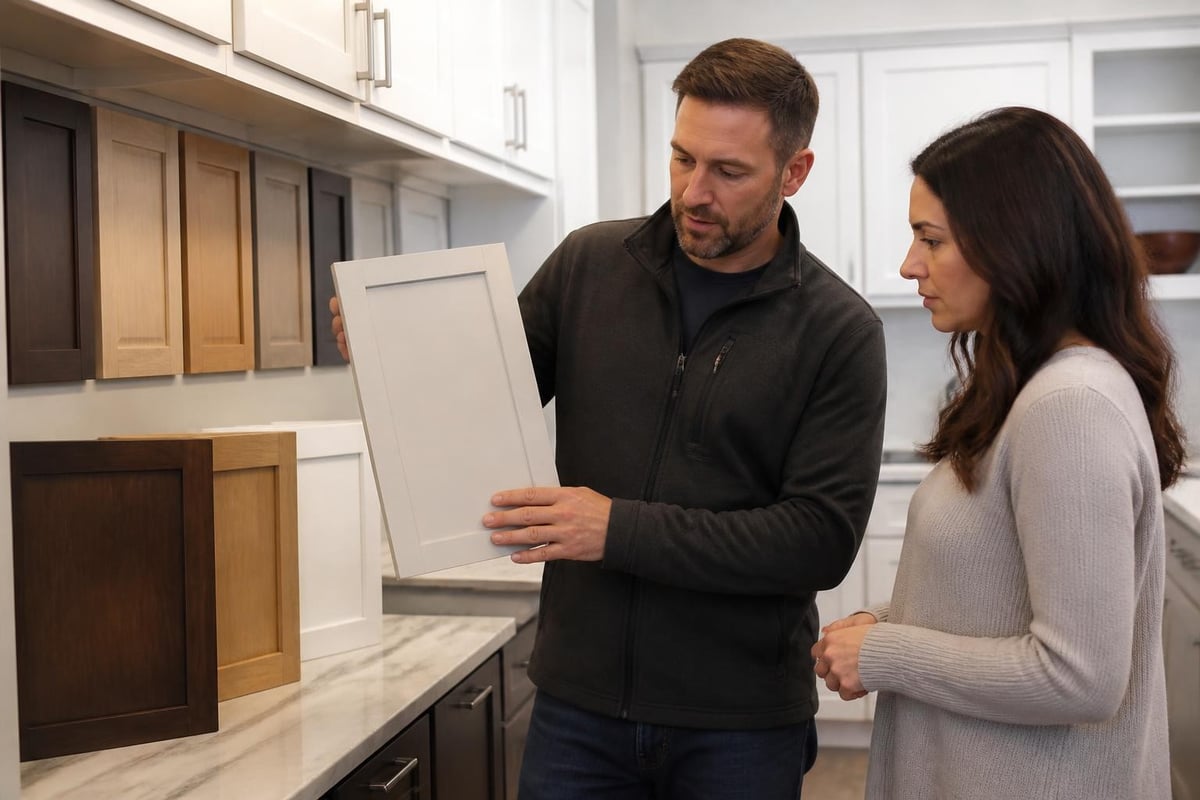
Price alone never tells the complete story. Cheap wood cabinets vary enormously in quality, and discerning buyers examine specific indicators before making purchase decisions.
| Quality Indicator | What to Look For | Why It Matters |
|---|---|---|
| Joint Type | Dovetail or dowel joints | Superior strength vs. stapled corners |
| Drawer Boxes | Solid wood or plywood | Withstands daily use better than particle board |
| Drawer Glides | Full-extension ball-bearing | Smooth operation and longevity |
| Hinges | Six-way adjustable European hinges | Easy alignment and door adjustment |
| Back Panel | 1/4" plywood minimum | Structural rigidity and moisture protection |
Examine drawer construction carefully. Dovetail joints indicate quality craftsmanship even in budget lines, while stapled corners suggest corners were cut that may impact longevity. Full-extension drawer glides allow complete access to drawer contents and typically outlast cheaper side-mount alternatives by years.
Budget cabinets constructed with composite wood products must comply with federal formaldehyde emission standards. The EPA’s Formaldehyde Emission Standards under TSCA Title VI establish maximum emission limits for plywood, particle board, and MDF used in cabinetry.
Third-party certification ensures compliance with these health standards. Look for labels indicating CARB Phase 2 compliance or EPA TSCA Title VI certification. These designations confirm that composite panels meet strict formaldehyde emission limits, protecting indoor air quality.
Understanding EPA compliance requirements helps buyers verify that cost savings don't come at the expense of family health. Reputable manufacturers provide certification documentation upon request, while evasive responses to certification questions raise red flags.
Finding quality cheap wood cabinets requires strategic timing, comparative shopping, and understanding where flexibility creates opportunities.
Cabinet pricing fluctuates seasonally and in response to inventory needs. January through March typically brings promotional pricing as manufacturers and retailers clear previous-year inventory. Similarly, September and October often feature discounts as suppliers make room for new product lines before the holiday season.
In-stock cabinet lines offer immediate cost advantages over custom orders. Pre-manufactured cabinets in standard dimensions eliminate custom manufacturing premiums while enabling same-week or next-week delivery. Many homeowners successfully design kitchens around standard cabinet sizes, achieving professional results at wholesale pricing.
The Consumer Reports guide to kitchen upgrades emphasizes how working with standard sizes dramatically reduces project costs without sacrificing functionality.
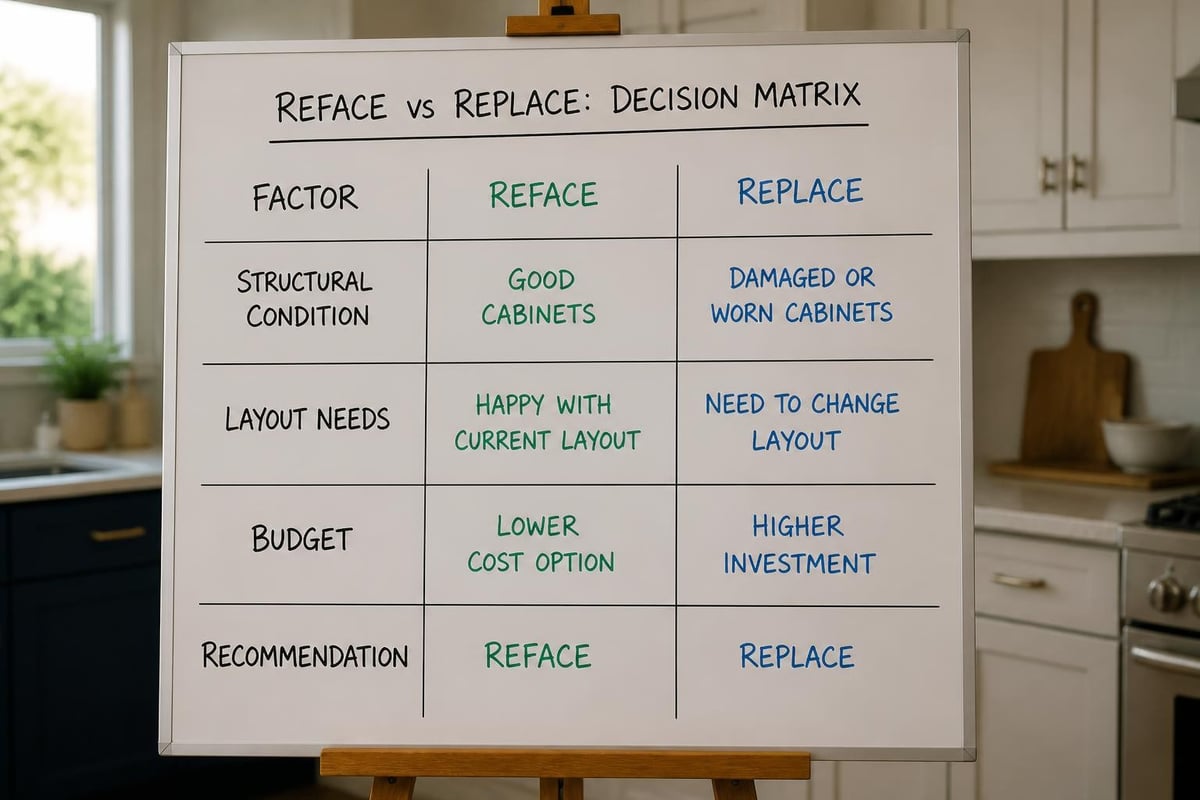
Not every kitchen requires complete cabinet replacement. Cabinet refacing involves installing new doors and drawer fronts on existing cabinet boxes, updating the visible elements while preserving the structural components. This approach costs 40-60% less than full replacement when cabinet boxes remain structurally sound.
According to Bob Vila’s cabinet refacing cost analysis, professional refacing typically runs $4,000-$10,000 for an average kitchen, while complete replacement starts at $8,000-$15,000 for budget-grade cabinets. The math favors refacing when existing boxes feature quality construction and proper layout.
Replacement makes sense when:
Understanding material compromises in cheap wood cabinets enables realistic expectations and appropriate applications.
Medium-density fiberboard (MDF) dominates budget cabinet door production for good reasons. This engineered material machines cleanly, accepts paint flawlessly, and resists warping better than solid wood. MDF's uniform density eliminates grain patterns that telegraph through paint, creating showroom-quality finishes on budget-priced doors.
The trade-off appears in moisture sensitivity. MDF absorbs water readily, swelling and deteriorating when exposed to leaks or high humidity. Proper sealing mitigates this vulnerability, but MDF should never be used in areas prone to water exposure without comprehensive finishing on all surfaces and edges.
Particle board serves adequately for shelving and interior components when properly finished and supported. Modern particle board formulations incorporate moisture-resistant additives and higher-density pressing techniques that improve performance over previous generations. Critical distinctions include:
Budget cabinets frequently employ plywood strategically rather than universally. Baltic birch plywood offers exceptional strength-to-cost ratios, making it popular for drawer boxes and cabinet sides even in value-priced lines. Seven-ply or nine-ply construction provides superior screw-holding capacity compared to five-ply alternatives.
Plywood grades range from A to D, with A representing defect-free surfaces and D allowing significant imperfections. Budget cabinet manufacturers typically use B/C grade plywood for cabinet boxes, where one face (B) appears in visible locations while the inner face (C) contains acceptable defects hidden from view.
Professional installation represents 20-35% of total cabinet project costs. Cheap wood cabinets often require more careful installation to achieve optimal results.
RTA cabinets specifically target DIY installation, with manufacturers providing detailed instructions and pre-drilled mounting holes. Successful DIY installation requires basic carpentry skills, appropriate tools, and realistic time commitments. A typical 10' x 10' kitchen takes experienced DIYers 12-16 hours to assemble and install.
Essential tools include:
The Home Depot cabinet installation guide outlines the step-by-step process and common pitfalls. While the guide promotes professional installation services, it provides valuable insights into complexity factors that help homeowners assess their capability level honestly.
Professional installers bring speed, precision, and warranty protection that often justify their cost. Experienced crews complete installations in 1-2 days that consume DIYers' entire weekends. More critically, professionals ensure proper leveling, secure anchoring, and appropriate spacing that prevent future problems.
Many cabinet warranties require professional installation for validity. This requirement protects manufacturers from installation-related damage claims while ensuring cabinets perform as designed. Budget cabinet buyers should verify warranty terms before attempting DIY installation that might void coverage.
Strategic planning transforms cheap wood cabinets from compromise solutions into smart investments.
Open shelving integration reduces cabinet quantity requirements while creating contemporary design elements. Replacing 2-3 upper cabinets with floating shelves cuts material costs by $400-$800 while achieving on-trend aesthetics. This approach works particularly well for displaying attractive dishware or creating coffee stations.
Standard height configurations eliminate custom sizing premiums. Most budget cabinet lines offer 30", 36", and 42" wall cabinet heights and 34.5" base cabinets. Designing around these dimensions avoids special-order surcharges that can add 30-50% to individual unit costs.
| Strategy | Typical Savings | Implementation Difficulty |
|---|---|---|
| Open shelving integration | $400-$800 | Low |
| Standard sizes only | 25-40% | Medium |
| Fewer upper cabinets | $1,200-$2,000 | Low |
| Stock color selection | $600-$1,500 | Low |
| Single-tier islands | $800-$1,400 | Medium |
Stock finishes cost substantially less than custom colors or specialty treatments. White, off-white, and natural wood tones represent the most affordable options across manufacturers. These timeless choices also support broader resale appeal than trend-driven colors that date quickly.
Hardware represents an easy upgrade opportunity. Budget cabinets often ship with basic knobs and pulls that homeowners can replace inexpensively. Allocating $200-$400 for upgraded hardware transforms cabinet appearance dramatically while maintaining overall budget parameters.
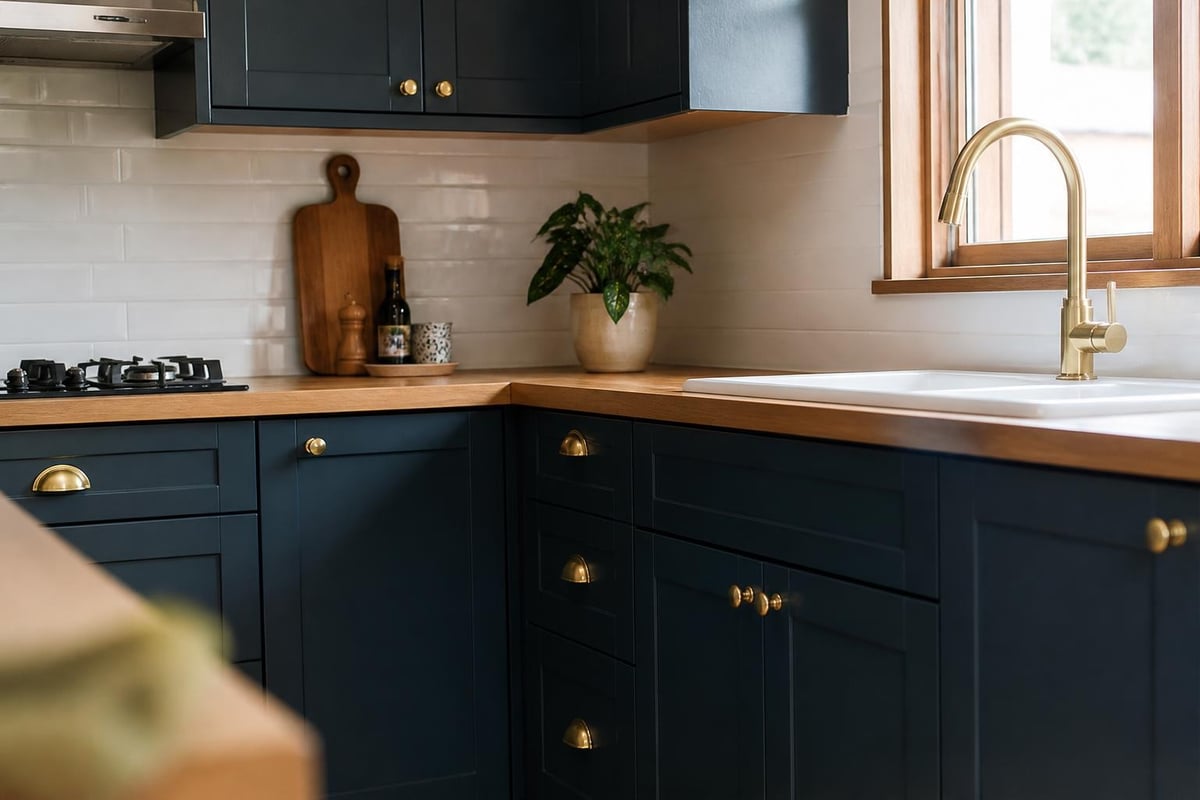
Different wood species offer distinct advantages at various price points. Understanding these differences helps buyers select appropriately for their priorities and usage patterns.
Birch provides exceptional value in painted cabinet applications. Its tight, uniform grain creates smooth surfaces that require minimal preparation before painting. Birch's hardness rivals maple while costing 25-35% less, making it ideal for budget-conscious buyers prioritizing durability over exotic grain patterns.
Poplar serves as another paint-grade favorite, though slightly softer than birch. Its light color and fine texture accept stain unevenly, making it best suited for painted finishes. Poplar costs 15-20% less than birch while offering adequate durability for normal kitchen use.
For buyers seeking stained or natural finishes, oak represents the most affordable option among traditional hardwoods. Red oak's prominent grain creates bold visual interest, while white oak's subtler grain pattern suits contemporary aesthetics. Both species accept stain predictably and wear exceptionally well.
Budget cabinets frequently employ wood veneer over engineered substrates rather than solid wood construction. Modern veneering technology produces beautiful, durable surfaces at fractions of solid wood costs. High-quality veneers measure 1/32" to 1/16" thick, providing adequate material for light refinishing if needed years later.
The distinction matters primarily in door edge profiles. Solid wood edges can be shaped into detailed profiles and withstand impacts better than veneered edges. Simpler door profiles (shaker, slab) perform equally well in veneer or solid construction, while ornate traditional profiles benefit from solid wood's machining capabilities.
Realistic expectations prevent disappointment while strategic maintenance extends cabinet lifespan significantly.
Quality cheap wood cabinets should deliver 15-20 years of satisfactory performance with proper care. This timeframe assumes normal residential use, proper installation, and reasonable maintenance. Premium cabinets may last 25-30 years or longer, but the cost differential often exceeds the proportional longevity increase.
Critical failure points to monitor:
Early intervention when minor issues emerge prevents cascading failures. Loose hinges require immediate tightening before screw holes enlarge beyond repair. Edge banding lifts should be reglued promptly before moisture penetrates substrate materials.
Simple maintenance routines dramatically extend cabinet life regardless of price point. Weekly cleaning with mild dish soap and water prevents buildup that degrades finishes over time. Harsh chemicals, abrasive cleaners, and excessive moisture all accelerate finish breakdown on budget cabinets more rapidly than premium alternatives.
Annual maintenance tasks include:
These preventive measures cost nothing beyond minimal time investment while identifying problems before they require expensive repairs or replacement.
Geographic proximity to suppliers creates opportunities unavailable through national retailers or online-only vendors.
Local wholesale showrooms eliminate shipping costs on bulky cabinet orders while enabling hands-on inspection before purchase. Seeing, touching, and operating cabinet samples provides confidence impossible through online photographs or descriptions. Door swing quality, drawer glide smoothness, and finish consistency become immediately apparent.
Showrooms also offer design consultation services that help customers maximize their budgets. Experienced designers identify opportunities to reduce costs without sacrificing functionality, such as Premium Framed Cabinets in standard sizes that ship immediately rather than custom configurations requiring extended lead times and premium pricing.
Local advantages include:
Regional suppliers understand local building codes, climate considerations, and design preferences that influence cabinet selection. San Diego's mild climate, for example, reduces moisture concerns that dominate cabinet decisions in humid regions, allowing broader material choices within budget parameters.
Transportation represents significant cabinet project costs, particularly for large orders spanning multiple rooms. National suppliers typically charge $300-$800 for residential delivery, with fees varying by distance and order size. Local pickup eliminates these charges entirely for buyers with appropriate vehicles, or reduces them substantially for short-distance delivery.
Damage during shipping poses another risk that local sourcing minimizes. Factory-direct online orders travel hundreds or thousands of miles, enduring multiple handling events that risk finish damage, broken components, or missing hardware. Local inventory moves minimal distances with fewer touch points, reducing damage likelihood considerably.
Understanding the factors that influence cabinet pricing empowers homeowners to find cheap wood cabinets that deliver genuine value rather than false economy. Material selection, construction quality, and smart shopping strategies combine to create kitchens that look expensive while respecting tight budgets. Whether you're tackling a complete remodel or targeted upgrades, the key lies in knowing where quality matters most and where compromise is acceptable. SD Kitchen Cabinets brings wholesale pricing and expert design guidance together in their San Diego showroom, offering free 3D consultations that help homeowners maximize every dollar while accessing the area's largest selection of in-stock and custom options backed by limited lifetime warranties.