
Finding qualified cabinet makers in my area requires more than a quick internet search. Whether you're planning a complete kitchen overhaul or updating a single room, the cabinetmaker you choose will significantly impact both the aesthetics and functionality of your space for decades to come. This comprehensive guide walks you through the essential steps for locating, evaluating, and selecting the right professional for your project, ensuring you make an informed decision that balances quality, price, and craftsmanship.
Not all cabinet makers offer the same services or expertise. The term "cabinet maker" encompasses several distinct categories of professionals, each with different capabilities and business models.
Custom cabinet makers design and build cabinets from scratch according to your exact specifications. These artisans typically operate smaller workshops and handle every aspect of production in-house. They offer unlimited design flexibility, allowing you to specify wood species, door styles, dimensions, and finishes that match your vision perfectly.
Advantages of custom shops:
Custom work commands premium pricing, typically ranging from $500 to $1,500 per linear foot installed. Lead times often extend 8-16 weeks depending on shop capacity and project complexity.
Many cabinet makers in my area operate as retailers or showrooms, offering semi-custom and stock cabinet lines from established manufacturers. These businesses provide professional design services, product selection guidance, and often coordinate installation. Frameless Cabinets represent a popular semi-custom option, offering European-style construction with numerous door styles and finish choices at more accessible price points.
Semi-custom options typically cost between $150 and $650 per linear foot, while stock cabinets range from $75 to $200 per linear foot. Delivery timeframes are considerably shorter, often 2-6 weeks.
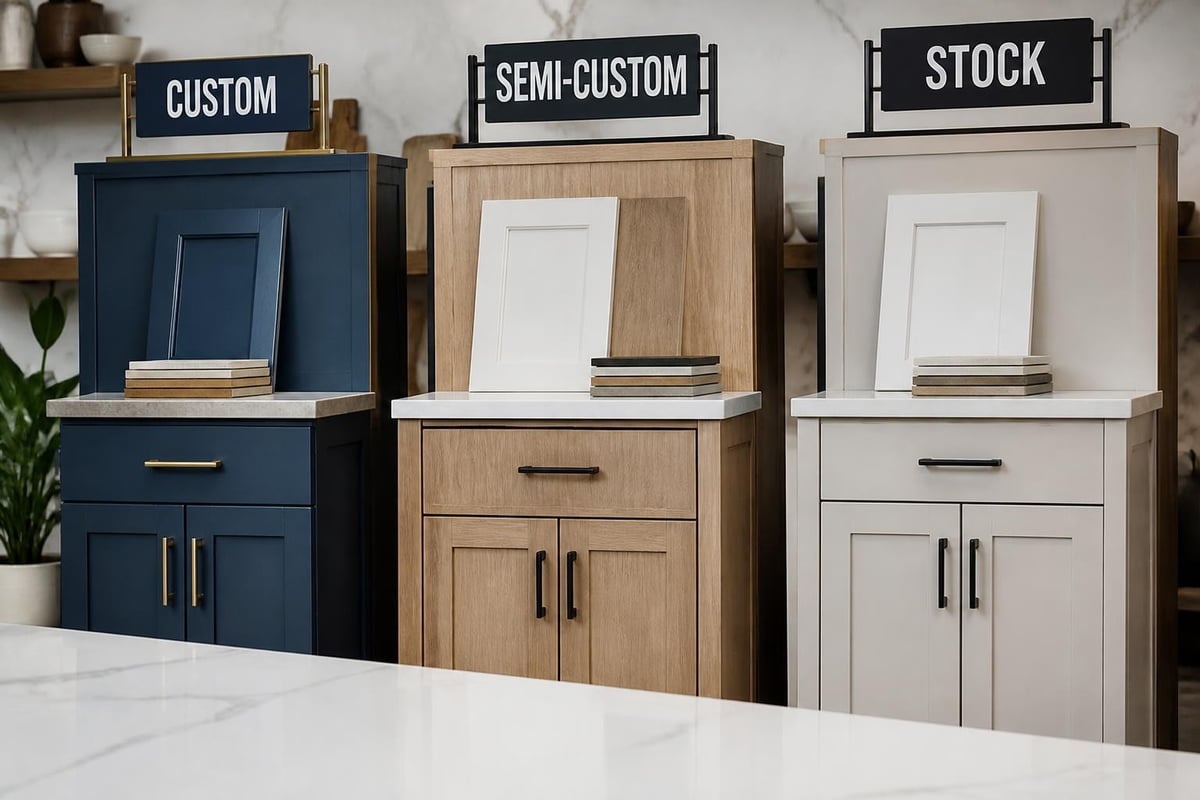
Large-scale manufacturers rarely work directly with homeowners but supply cabinets to dealers, contractors, and showrooms throughout your region. Understanding this supply chain helps you recognize that multiple cabinet makers in my area may offer identical product lines at different price points.
Effective research combines online tools with traditional networking to compile a comprehensive list of candidates.
Start with targeted searches that include your specific location. Google searches for "cabinet makers in my area" combined with your city name will surface local businesses, but don't stop there.
Additional research channels:
The Better Business Bureau provides valuable guidance on vetting contractors and understanding what to look for in consumer reviews and ratings.
Personal recommendations from people who have completed similar projects carry significant weight. Ask neighbors, colleagues, and friends about their experiences with cabinet makers in my area.
Interior designers, general contractors, and kitchen appliance showrooms maintain relationships with multiple cabinet suppliers and can recommend professionals suited to your budget and style preferences. These industry referrals often come with insider knowledge about reliability, pricing, and workmanship quality.
Professional certifications and industry standards separate skilled craftspeople from less qualified operators.
The Architectural Woodwork Institute (AWI) establishes standards for architectural woodwork quality across three grades: Economy, Custom, and Premium. AWI certification demonstrates a cabinetmaker's commitment to industry-recognized benchmarks for construction, materials, and finishing.
The AWI Quality Certification Program verifies that participating manufacturers and shops maintain consistent quality control processes. When evaluating cabinet makers in my area, ask specifically about AWI certification and which grade level they typically produce.
| Certification | What It Indicates | Importance Level |
|---|---|---|
| AWI Certified | Industry standard compliance | High |
| KCMA Certified | Durability testing passed | High |
| Licensed Contractor | Legal requirement met | Essential |
| Insured | Liability protection | Essential |
| EPA TSCA Title VI | Low-emission materials | Moderate-High |
Understanding material sourcing and environmental compliance helps you evaluate the long-term value and health impact of your investment. The EPA provides guidance on formaldehyde standards that apply to composite wood products used in cabinet construction.
Cabinet makers committed to sustainable practices often source materials certified by the Forest Stewardship Council, ensuring responsible forestry management. While FSC certification may increase costs slightly, it provides assurance about environmental stewardship.
Key material questions to ask:
Price transparency varies significantly among cabinet makers in my area, making direct comparisons challenging without understanding different pricing structures.
Comprehensive cabinet quotes should itemize several distinct components. Box construction, door and drawer fronts, hardware, finishing, delivery, and installation each contribute to the total investment.
Request itemized quotes that specify:
Some cabinet makers quote per linear foot installed, while others separate materials from labor. Neither approach is inherently better, but consistent formatting across multiple quotes enables accurate comparison.
Beyond the cabinet quote itself, complete kitchen projects incur additional expenses that affect your total budget.
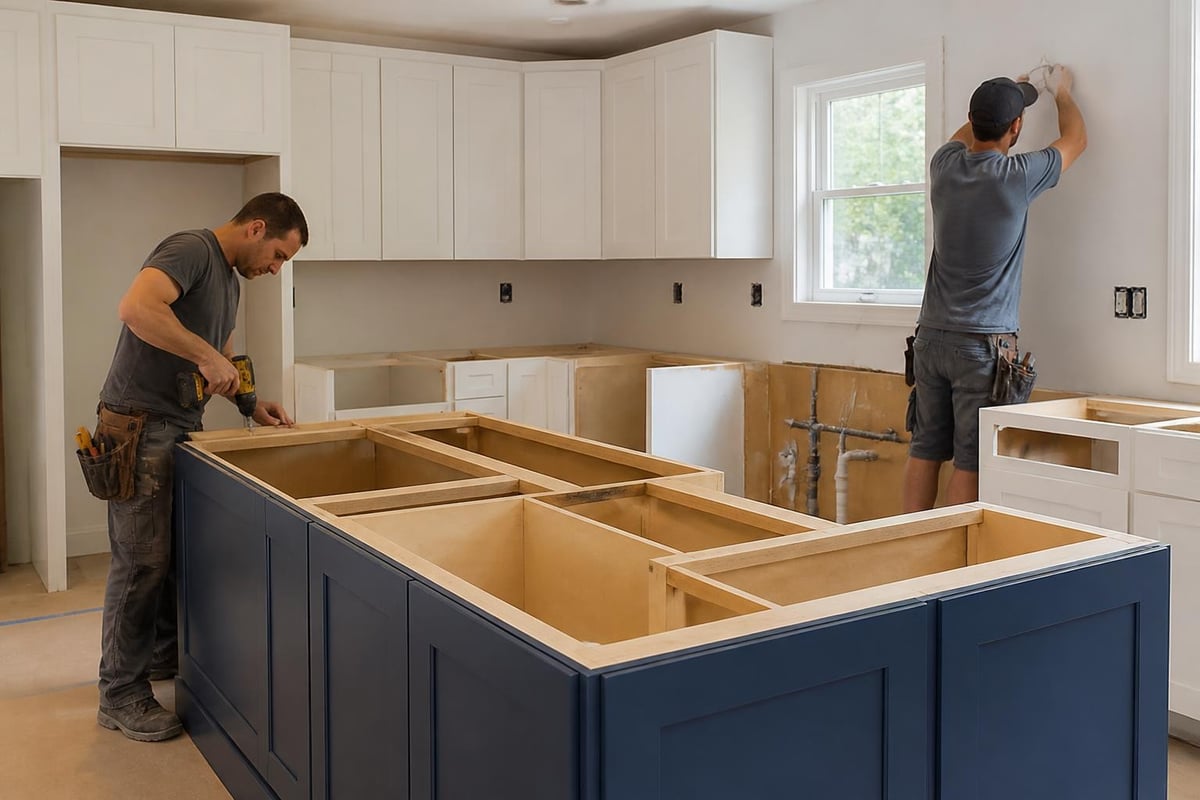
Most projects require modifications to plumbing or electrical systems. Removal and disposal of existing cabinets adds $500-$2,000 depending on size and disposal fees. Wall repairs after cabinet removal frequently reveal unexpected issues requiring attention before new installation.
Countertops represent a substantial separate investment, ranging from $40 per square foot for laminate to $200+ for premium natural stone. Factor in backsplash materials, new sink and faucet, and any appliance upgrades planned concurrently.
Meeting with cabinet makers in my area allows you to assess communication style, professionalism, and expertise before committing to a partnership.
Prepare a standardized question list to facilitate comparison across different candidates.
Process and timeline questions:
Business practice questions:
The National Association of Home Builders offers checklists that help structure these conversations and ensure you cover critical topics.
Pay attention to how quickly cabinet makers respond to initial inquiries and whether they listen actively to your needs. Professionals who ask detailed questions about your cooking habits, storage requirements, and aesthetic preferences demonstrate customer-focused thinking.
Request to see physical samples of door styles, finishes, and construction methods. Cabinet makers with showrooms provide obvious advantages for visualizing options, but smaller custom shops should still maintain sample materials for client review.
Past work provides the most reliable indicator of future performance when selecting cabinet makers in my area.
Request to see completed projects similar in scope, style, and budget to yours. Pay attention to detail execution: door alignment, consistent finish quality, hardware installation precision, and how cabinets meet walls and appliances.
Portfolio evaluation checklist:
Photographs can be misleading, so whenever possible, ask to visit completed installations in person. Seeing and touching finished work reveals quality levels that images cannot convey.
Consumer Reports recommends speaking with at least three recent clients before hiring any tradesperson. When contacting references provided by cabinet makers in my area, ask specific questions that reveal working relationship dynamics.
Effective reference questions:
Don't limit yourself to provided references. Search for online reviews across multiple platforms and note patterns in feedback, both positive and negative.
Physical locations reveal operational professionalism and provide hands-on product evaluation opportunities.
Established showrooms demonstrate market stability and customer commitment. The breadth and quality of displays indicate the manufacturer relationships and product access available to you. Well-organized showrooms with knowledgeable staff suggest professional business operations.
When visiting SD Kitchen Cabinets or similar facilities, examine how cabinets are displayed. Can you open drawers and doors to feel the hardware quality? Are different construction methods explained clearly? Does the staff ask questions about your project before recommending products?
Custom cabinet shops may invite clients to visit production facilities. Clean, organized workshops with modern equipment indicate pride in craftsmanship and investment in quality tools. Observing work in progress provides insight into construction methods and attention to detail.
Safety protocols, dust collection systems, and finishing areas should meet professional standards. Cabinetmakers who welcome shop visits typically have nothing to hide about their processes or quality control.
Written agreements protect both parties and prevent misunderstandings that could derail your project.
Every agreement with cabinet makers in my area should clearly specify deliverables, timelines, payment schedules, and responsibilities.
Non-negotiable contract elements:
Never sign contracts with blank spaces or vague language like "approximately" or "about" when describing costs, materials, or timelines. Specificity prevents disputes and sets clear expectations.
Reputable cabinet makers request deposits to secure production slots and purchase materials, but payment structures should protect your interests. Standard practice involves three to four payments tied to project milestones.
| Payment Stage | Typical Percentage | What It Secures |
|---|---|---|
| Deposit | 25-33% | Design completion, material ordering |
| Production Start | 25-33% | Manufacturing begins |
| Delivery | 25-33% | Cabinets arrive at site |
| Final Completion | 10-25% | Installation complete, punch list resolved |
Avoid paying more than one-third upfront or paying the full balance before installation is completely finished. Final payment should be withheld until you've inspected the work and confirmed all items meet contract specifications.
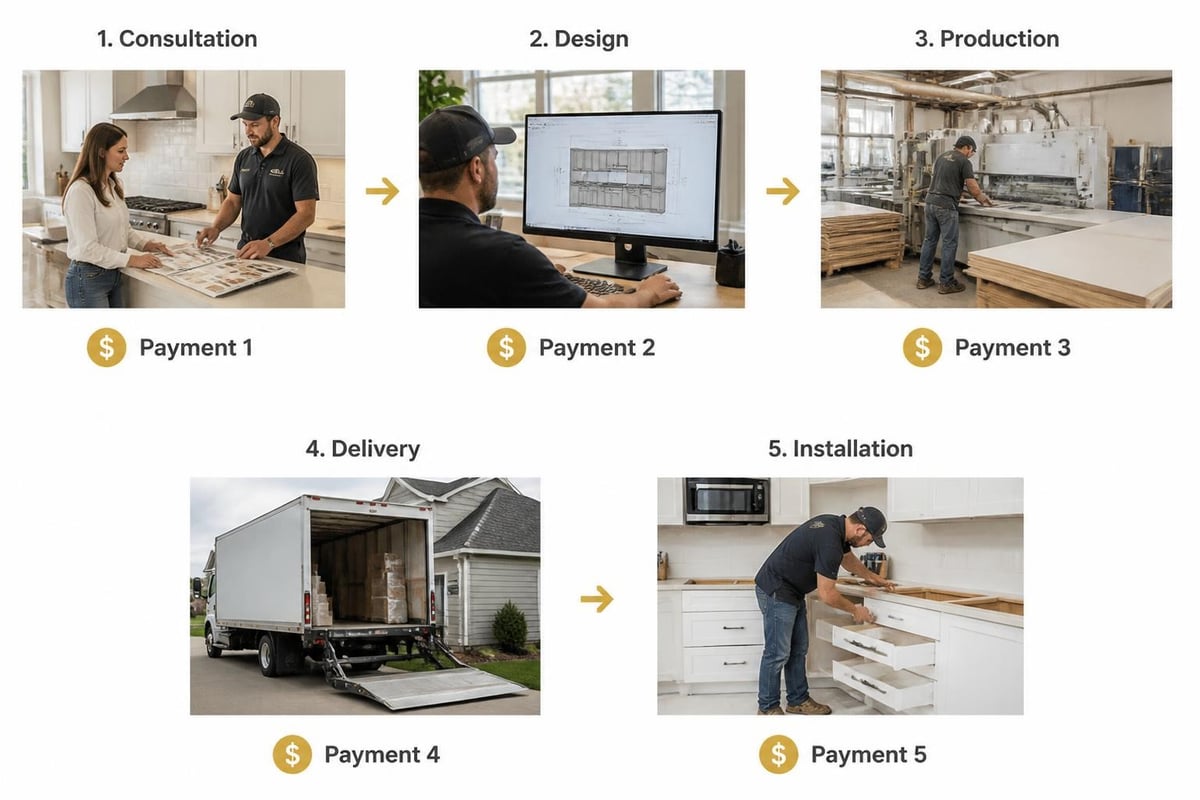
Design capabilities vary significantly among cabinet makers in my area, affecting both your creative freedom and project timeline.
Large retailers and showrooms typically offer free design consultations using computer-aided design software that generates 3D renderings. These visualizations help you understand spatial relationships and make informed decisions about layout and style.
Custom cabinet shops may charge for design services, particularly for complex projects requiring detailed architectural drawings. These fees sometimes apply toward the final project cost if you proceed with that cabinetmaker.
Questions about design services:
Cabinet door styles range from traditional raised panel designs to contemporary flat-panel or slab fronts. The style significantly affects both appearance and cost, with more complex profiles requiring additional machining time.
Finish options include painted, stained, glazed, and natural wood appearances. Multiple finish samples should be available for evaluation under different lighting conditions. Remember that wood grain variation means your finished cabinets won't perfectly match small samples.
For those exploring modern aesthetics, frameless cabinet construction offers sleek European styling with maximized interior storage space. Traditional face-frame construction provides a more classic American appearance with slightly reduced interior access but increased structural support.
Comprehensive cabinet makers in my area often provide services beyond cabinet fabrication that simplify project coordination.
Professional installation ensures proper mounting, alignment, and integration with other kitchen elements. Cabinet makers who employ their own installation crews maintain better quality control than those relying exclusively on subcontractors.
Ask whether installers handle connection to existing plumbing and electrical systems or if you need to coordinate separate trades. Some cabinet makers offer turnkey services including countertop fabrication and installation, backsplash work, and trim carpentry.
Warranty coverage and long-term support distinguish exceptional cabinet makers from those focused solely on completing the sale. Comprehensive warranties typically cover workmanship for one year and materials for five to ten years, though some premium manufacturers offer limited lifetime coverage.
Understand warranty exclusions and what constitutes normal wear versus defective materials or workmanship. Ask how warranty claims are processed and how quickly cabinet makers respond to service requests.
After researching, interviewing, and comparing cabinet makers in my area, synthesize your findings to make a confident decision.
Price represents just one consideration among many. The lowest quote often comes from less experienced shops using inferior materials or from businesses struggling to generate revenue. The highest quote doesn't guarantee superior quality either.
Create a decision matrix evaluating:
Trust your instincts about which cabinetmaker feels like the right partner for your project. Kitchen renovations involve weeks or months of collaboration, so choose someone you communicate with comfortably.
Certain warning signs should eliminate cabinet makers from consideration regardless of attractive pricing or other factors.
Disqualifying red flags:
Professional cabinet makers welcome scrutiny and understand that informed clients make better partners. Those who discourage questions or rush decision-making likely have something to hide.
Current design trends influence what cabinet makers in my area stock and promote, though timeless styles remain perpetually popular.
Classic white shaker cabinets continue dominating kitchen design, offering clean lines that complement both traditional and contemporary interiors. The versatility of white finishes ensures long-term aesthetic relevance and broad buyer appeal for those concerned about resale value.
Natural wood finishes have resurged in popularity as homeowners embrace organic textures and warmth. White oak and walnut species are particularly sought after, offering beautiful grain patterns that serve as focal points in modern kitchen designs.
Two-tone kitchens mixing cabinet colors create visual interest and define functional zones. Popular combinations include white upper cabinets with darker lower cabinets or contrasting island finishes that establish the island as a design centerpiece.
Regional factors influence cabinet availability, pricing, and style preferences when searching for cabinet makers in my area.
San Diego's coastal climate affects wood movement and finish durability. Cabinetmakers experienced with local conditions recommend appropriate construction methods and finishes that resist humidity-related expansion and contraction.
Import access through local ports provides San Diego cabinet makers with diverse material sourcing options, potentially offering cost advantages on certain products compared to inland markets.
California maintains stringent environmental regulations affecting cabinet materials and finishes. All cabinet makers operating in the state must comply with CARB2 (California Air Resources Board Phase 2) formaldehyde emission standards, which are among the strictest in the nation.
These regulations protect indoor air quality but sometimes limit product options compared to less-regulated markets. Ensure any cabinet makers you consider understand and comply with these requirements.
Selecting the right cabinetmaker transforms your kitchen vision into reality while avoiding costly mistakes and disappointment. By thoroughly researching credentials, comparing value propositions, and verifying past performance, you position yourself for a successful project outcome. Whether you're drawn to SD Kitchen Cabinets for their extensive in-stock selection and wholesale pricing at their Miramar Road showroom, or exploring custom options, the investment in proper vetting pays dividends through superior results and peace of mind. Visit their showroom to explore over 150 color options with professional design support and discover how their limited lifetime warranty protects your investment for years to come.