
Ready-to-assemble (RTA) cabinets have revolutionized the kitchen remodeling industry by offering homeowners a cost-effective alternative to traditional custom cabinetry without sacrificing quality or style. These flat-pack solutions arrive at your doorstep with all components pre-cut, pre-drilled, and ready for assembly, making them an attractive option for both DIY enthusiasts and professional contractors looking to maximize value. Choosing the best ready to assemble cabinets requires understanding construction quality, material options, hardware standards, and the certification benchmarks that separate exceptional products from budget alternatives.
The foundation of any quality RTA cabinet system starts with how it's engineered and manufactured. Unlike traditional cabinets that arrive fully assembled, ready-to-assemble units must maintain structural integrity through hundreds of shipping miles and then provide decades of reliable service after installation.
Premium RTA cabinets utilize cam-lock and dowel joinery systems that create rigid, square connections between cabinet panels. This European-style hardware provides superior holding power compared to simple screw-and-glue methods found in lower-tier products.
Key construction features to evaluate:
The Kitchen Cabinet Manufacturers Association establishes rigorous testing protocols that evaluate structural performance, drawer operation, finish durability, and door alignment. Products bearing KCMA certification have passed standardized stress tests that simulate years of normal household use.
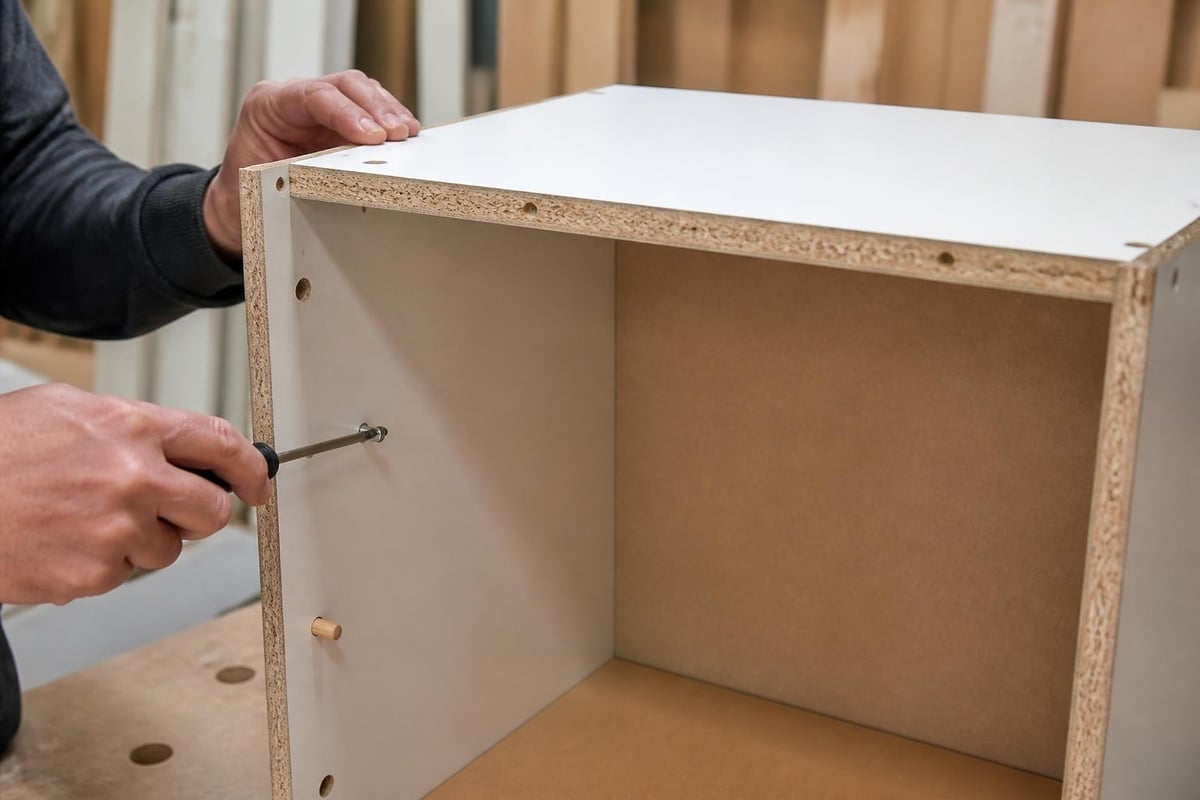
Today's best ready to assemble cabinets use materials that balance affordability with performance and environmental responsibility. Plywood construction offers superior strength and screw-holding capacity, while high-quality engineered wood products provide dimensional stability at lower price points.
| Material Type | Durability | Moisture Resistance | Price Point | Best Application |
|---|---|---|---|---|
| Birch Plywood | Excellent | Very Good | $$$ | Full cabinet boxes |
| Maple Plywood | Excellent | Excellent | $$$$ | Premium installations |
| Particle Board | Good | Fair | $ | Budget-friendly options |
| MDF (Medium-Density Fiberboard) | Very Good | Fair | $$ | Door panels, shelving |
Environmental certifications matter significantly in 2026, as homeowners increasingly prioritize indoor air quality. The EPA’s formaldehyde emission standards require composite wood products to meet strict CARB Phase 2 limits, dramatically reducing off-gassing concerns. When evaluating manufacturers, confirm compliance through the KCMA Environmental Stewardship Program, which addresses sustainability, emissions testing, and responsible material sourcing.
Cabinet doors define your kitchen's aesthetic personality, and the best ready to assemble cabinets offer extensive style selections that compete directly with custom options. Modern RTA manufacturers provide everything from classic raised-panel designs to contemporary slab doors in dozens of finishes.
Shaker-style doors remain the dominant choice in 2026, accounting for approximately 60% of RTA cabinet sales. Their clean lines, recessed center panel, and versatile appearance complement both traditional and transitional kitchen designs. For those exploring minimalist aesthetics, frameless cabinets deliver the sleek, handle-free appearance popular in European and contemporary American kitchens.
Door style categories:
Professional-grade finishes protect your investment while simplifying daily maintenance. Catalyzed conversion varnish and UV-cured coatings create hard, chemical-resistant surfaces that withstand kitchen humidity, grease, and cleaning products far better than basic paints or stains.
Top-tier RTA manufacturers apply multiple finish coats with intermediate sanding, creating smooth surfaces that resist chipping and wear. KCMA certification testing includes finish evaluations for detergent resistance, water resistance, and stain resistance, ensuring products maintain their appearance through years of use.
The quality of hinges, drawer slides, and assembly hardware directly impacts long-term satisfaction with RTA cabinets. Premium manufacturers equip their products with European-style soft-close mechanisms and adjustable hardware that professional installers appreciate.
Six-way adjustable concealed hinges represent the gold standard for RTA cabinet doors. These allow precise alignment adjustments in three dimensions, compensating for minor installation variations and ensuring doors hang perfectly square.
Hinge quality indicators:
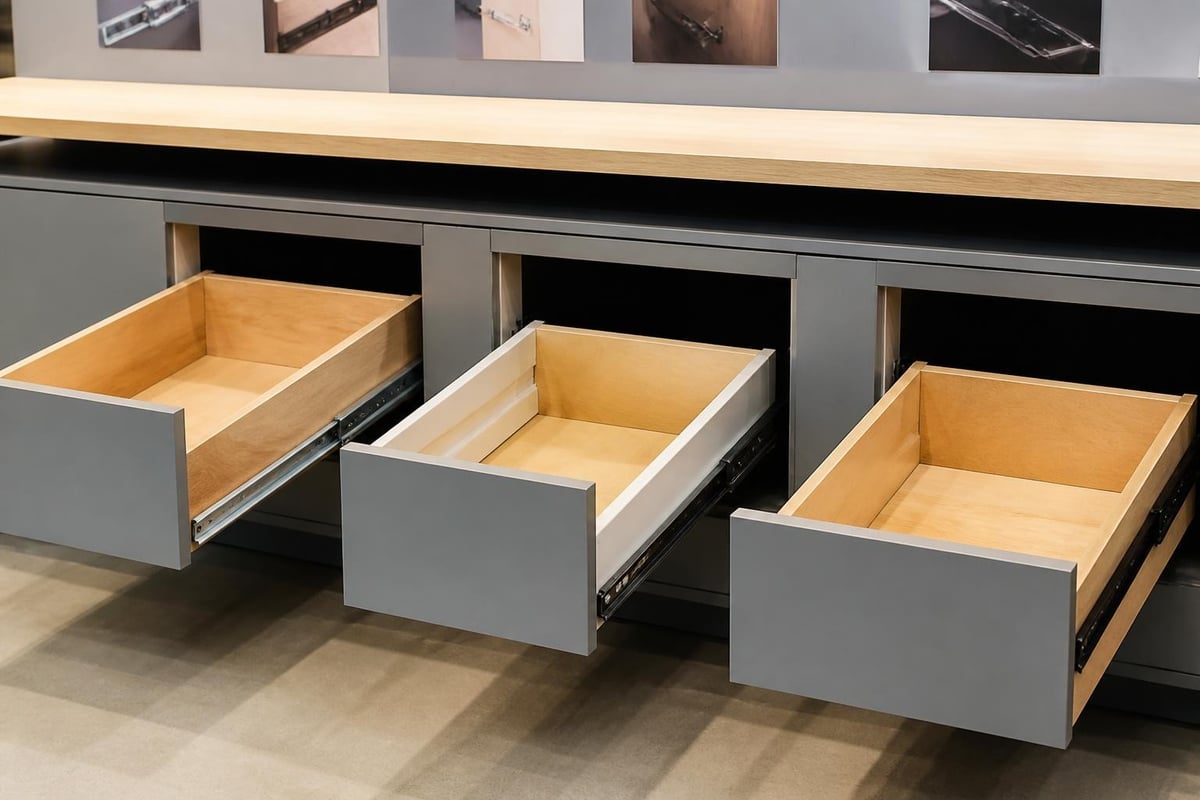
Full-extension ball-bearing slides have become standard on the best ready to assemble cabinets, providing complete access to drawer contents and supporting 75-100 pounds when properly installed. Dovetail drawer boxes with solid wood sides and plywood bottoms significantly outlast stapled or glued drawer construction.
Undermount drawer slides create a cleaner aesthetic and smoother operation compared to side-mounted alternatives. While they require precise installation, the professional appearance and enhanced functionality justify the additional care during assembly.
One of the primary advantages of RTA cabinetry is the streamlined installation timeline. With proper planning and basic carpentry skills, homeowners can achieve professional-looking results. This Old House provides detailed assembly guidance that walks through the complete process from unpacking to final installation.
Successful RTA assembly requires a modest tool collection and adequate workspace. Most manufacturers design their systems around standard household tools, eliminating the need for specialized equipment.
Essential assembly tools:
The National Kitchen & Bath Association’s professional guidelines emphasize the importance of layout planning before assembly begins. Accurate floor plan drawings, electrical and plumbing coordination, and realistic timeline expectations prevent costly mistakes and installation delays.
A typical 10-foot by 10-foot kitchen with base and wall cabinets requires approximately 12-16 hours for assembly and installation when completed by a homeowner with basic carpentry experience. Professional installers often complete the same project in 6-8 hours, demonstrating the efficiency gains that come with experience.
Breaking the project into phases helps maintain quality while managing time constraints. Most successful DIY installations follow this sequence:
RTA cabinets span a broad price spectrum, from economy lines at $75-$125 per linear foot to premium products at $200-$350 per linear foot. Understanding what drives these price differences helps buyers make informed decisions aligned with their budget and performance expectations.
Entry-level RTA cabinets deliver functional storage at minimal cost, typically using particle board construction with laminate or thermofoil finishes. These products suit rental properties, temporary installations, or situations where budget constraints outweigh longevity concerns.
Trade-offs in budget options:
This category represents the sweet spot for most homeowners, offering plywood construction, soft-close hardware, and diverse style options at prices significantly below custom cabinetry. Houzz’s cabinet selection guide highlights how mid-tier RTA products now compete directly with semi-custom lines in terms of quality and aesthetics.
High-end ready-to-assemble options feature all-plywood construction, furniture-grade finishes, Blum or Salice hardware, and extensive customization possibilities. These products often come from the same factories producing semi-custom cabinets, simply shipped unassembled to reduce costs.
| Price Tier | Box Material | Hardware Quality | Finish Options | Typical Warranty |
|---|---|---|---|---|
| Budget | Particle board | Basic slides | 3-8 colors | 1-5 years |
| Mid-Range | Plywood sides, particle back | Soft-close standard | 15-30 colors | 10-15 years |
| Premium | All-plywood | European precision | 40+ colors | 25 years-lifetime |
The best ready to assemble cabinets include specialized units that maximize storage efficiency and accommodate modern kitchen appliances. Manufacturers have expanded beyond basic base and wall cabinets to offer comprehensive solutions for every kitchen challenge.
Lazy Susan corner units, pull-out spice racks, trash roll-outs, and appliance garages transform standard kitchen layouts into highly organized workspaces. When comparing RTA brands, evaluate the breadth of specialty options and whether they integrate seamlessly with standard cabinet lines.
High-demand specialty configurations:
Unlike pre-assembled stock cabinets with fixed dimensions, RTA units offer modification opportunities during assembly. Experienced installers can adjust shelf heights, add interior organizers, or modify drawer configurations to meet specific needs. This flexibility bridges the gap between rigid stock options and expensive custom fabrication.

One practical advantage of RTA cabinetry is shipping efficiency. Flat-pack packaging reduces freight costs and allows same-week delivery timelines that would be impossible with fully assembled products. However, proper inspection and handling prevent assembly frustrations.
Examine all cartons immediately upon delivery, noting any visible damage on the delivery receipt. Reputable RTA suppliers include detailed packing lists that itemize every component, making it easy to verify complete orders before the delivery truck departs.
Inspection checklist:
Most RTA manufacturers ship replacement parts within 3-5 business days for any damaged or missing components, but prompt reporting is essential for rapid resolution.
Warranty terms reveal manufacturer confidence in their products. The best ready to assemble cabinets include comprehensive coverage that protects your investment against defects in materials and workmanship.
Limited lifetime warranties have become increasingly common on premium RTA lines, typically covering structural components, finish integrity, and hardware functionality. Read the fine print carefully, as exclusions often apply to damage from improper installation, normal wear, or environmental factors.
Standard warranty exclusions:
Reputable suppliers provide detailed installation instructions and assembly videos, reducing the risk of mistakes that could void warranty coverage. This Old House’s RTA cabinet overview emphasizes following manufacturer guidelines precisely to maintain warranty protection.
Environmental responsibility has transitioned from niche concern to mainstream requirement in 2026. The best ready to assemble cabinets meet or exceed current emissions standards while incorporating sustainably harvested materials.
Composite wood products can emit formaldehyde gas over time, affecting indoor air quality. EPA Indoor airPLUS specifications reference CARB Phase 2 compliance for low-emitting cabinetry in high-performance homes. When evaluating RTA options, prioritize products with third-party emissions testing and certification.
Modern low-VOC finishes cure completely during manufacturing, eliminating the off-gassing concerns associated with traditional lacquers and varnishes applied on-site. This results in safer installation conditions and faster move-in timelines after kitchen completion.
FSC (Forest Stewardship Council) certification indicates that wood materials come from responsibly managed forests. Some premium RTA manufacturers incorporate post-consumer recycled content in their particle board cores, reducing environmental impact without compromising structural performance.
Coastal California's unique climate and design preferences influence optimal cabinet selection. Humidity variations between marine layer mornings and dry afternoons test finish durability and joint stability in ways that don't affect cabinets in more stable climates.
Homeowners seeking immediate availability benefit from exploring options at local showrooms where in-stock kitchen cabinets in San Diego often include ready-to-assemble lines with same-week delivery. This eliminates long shipping delays while providing the opportunity to physically inspect finish quality and construction details before purchasing.
California's strict environmental regulations mean that all cabinets sold in the state must already meet CARB compliance, giving buyers confidence that even budget-tier RTA products meet minimum emissions standards. However, premium lines often exceed these baseline requirements significantly.
Choosing the best ready to assemble cabinets requires balancing multiple factors: budget constraints, aesthetic preferences, DIY capability, and long-term performance expectations. Start by defining your priorities and researching manufacturers with proven track records in your price range.
Request samples before committing to large orders, examining door finishes under various lighting conditions and testing hardware operation firsthand. Online reviews provide valuable insights into customer service responsiveness, shipping damage rates, and real-world assembly experiences from homeowners who've completed similar projects.
Consider the total project cost beyond cabinet purchase price. Professional installation typically adds $50-$100 per cabinet, while DIY assembly saves money but requires significant time investment. Factor in countertops, backsplashes, and any necessary plumbing or electrical modifications when budgeting your complete kitchen renovation.
Ready-to-assemble cabinets offer exceptional value when you select products with quality construction, durable finishes, and reliable hardware from manufacturers who stand behind their work with comprehensive warranties. Whether you're tackling installation yourself or working with professional contractors, understanding the features that define the best ready to assemble cabinets ensures your kitchen renovation delivers lasting satisfaction. SD Kitchen Cabinets combines the affordability of RTA options with professional design support, same-week delivery, and expert installation services, helping San Diego area homeowners achieve their dream kitchens at wholesale prices backed by a limited lifetime warranty.