
Finding affordable kitchen cabinets near me has become a top priority for San Diego homeowners planning renovations in 2026. With kitchen remodeling consistently ranking among the most valuable home improvements according to the National Association of REALTORS® Remodeling Impact Report, balancing quality with cost is essential. The challenge lies not in finding cabinets, but in discovering options that combine competitive pricing, superior construction, and local availability without the typical markup chain. Understanding how to navigate wholesale pricing, recognize quality construction, and leverage local showrooms can save thousands while delivering professional results that last decades.
Kitchen cabinets typically consume 30-40% of a total kitchen renovation budget. For a mid-range kitchen remodel, this translates to $5,000-$15,000 in cabinet costs alone. However, pricing varies dramatically based on construction method, materials, and purchasing channel.
The traditional retail model adds significant markups at every step. Manufacturers sell to distributors, who sell to retailers, who sell to consumers. Each intermediary adds 20-40% to the base cost. This explains why identical cabinets can cost twice as much at a big-box store compared to wholesale outlets.
Wholesale showrooms eliminate middleman markups by purchasing directly from manufacturers and passing savings to customers. This direct-to-consumer model reduces cabinet costs by 25-50% compared to traditional retail channels.
Key wholesale pricing benefits include:
Wholesale pricing doesn't mean wholesale quality. Many wholesale suppliers offer the same manufacturers and construction standards as high-end retailers, simply removing the distribution markup. The Consumer Reports cabinet buying guide emphasizes that construction quality matters more than purchase location when evaluating long-term value.
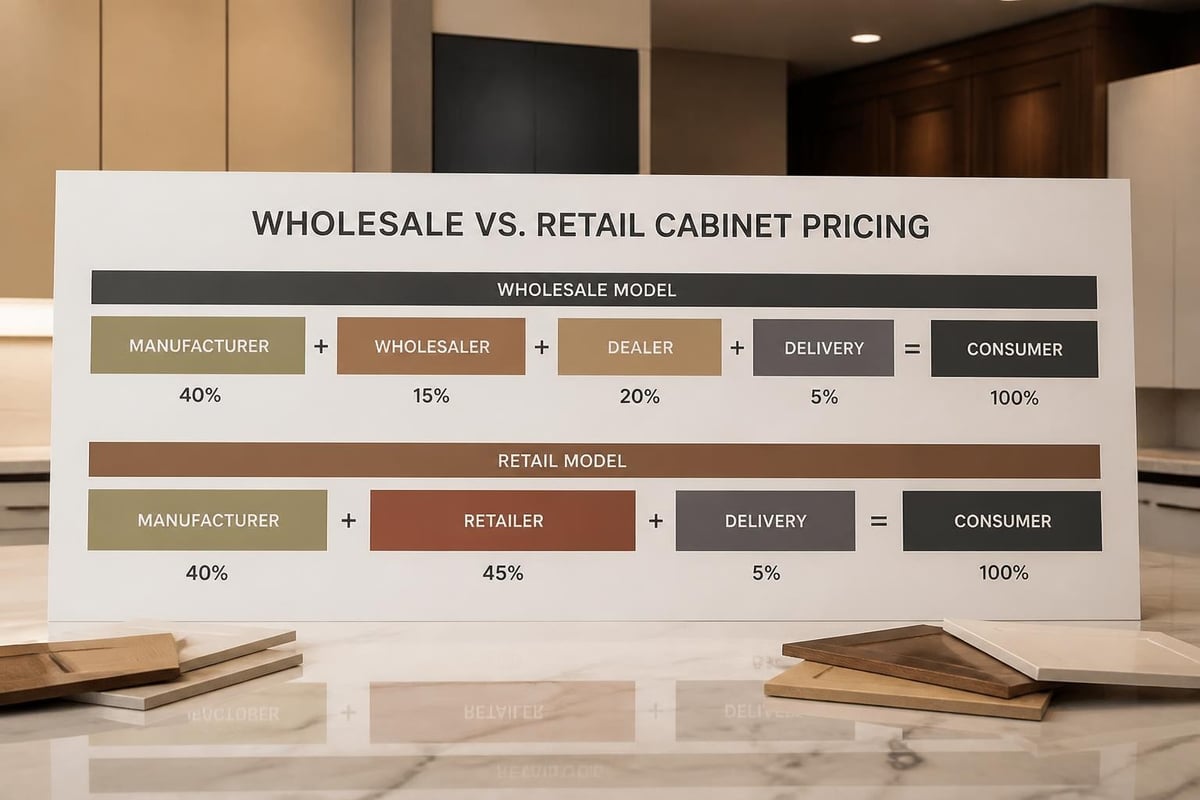
Understanding construction methods helps identify where to invest and where to save when searching for affordable kitchen cabinets near me.
| Construction Type | Price Range | Build Time | Best For |
|---|---|---|---|
| Stock (Ready-to-Assemble) | $75-$150/linear foot | Same-week delivery | Budget-conscious DIYers, rental properties |
| Semi-Custom | $150-$300/linear foot | 4-8 weeks | Most homeowners, standard layouts |
| Custom | $300-$600+/linear foot | 8-16 weeks | Unique spaces, high-end finishes |
Ready-to-assemble (RTA) cabinets represent the most budget-friendly option without sacrificing quality. Modern RTA construction has evolved significantly from the particleboard boxes of decades past. According to This Old House’s guide to RTA cabinets, today's RTA options use plywood construction, soft-close hardware, and durable finishes comparable to pre-assembled units.
RTA cabinets reduce costs through:
The assembly process typically takes 15-20 minutes per cabinet for someone with basic DIY skills. Professional assembly services are available for those preferring expert installation while still maintaining significant cost savings.
Semi-custom cabinets offer the sweet spot between affordability and customization. These cabinets start with standard cabinet box sizes but allow modifications to door styles, finishes, interior accessories, and hardware. Frameless cabinets exemplify this category with European-style construction that maximizes interior storage space while offering extensive finish options.
Semi-custom options typically include:
Cabinet materials significantly influence both upfront costs and long-term durability. Understanding these options helps prioritize spending for maximum value.
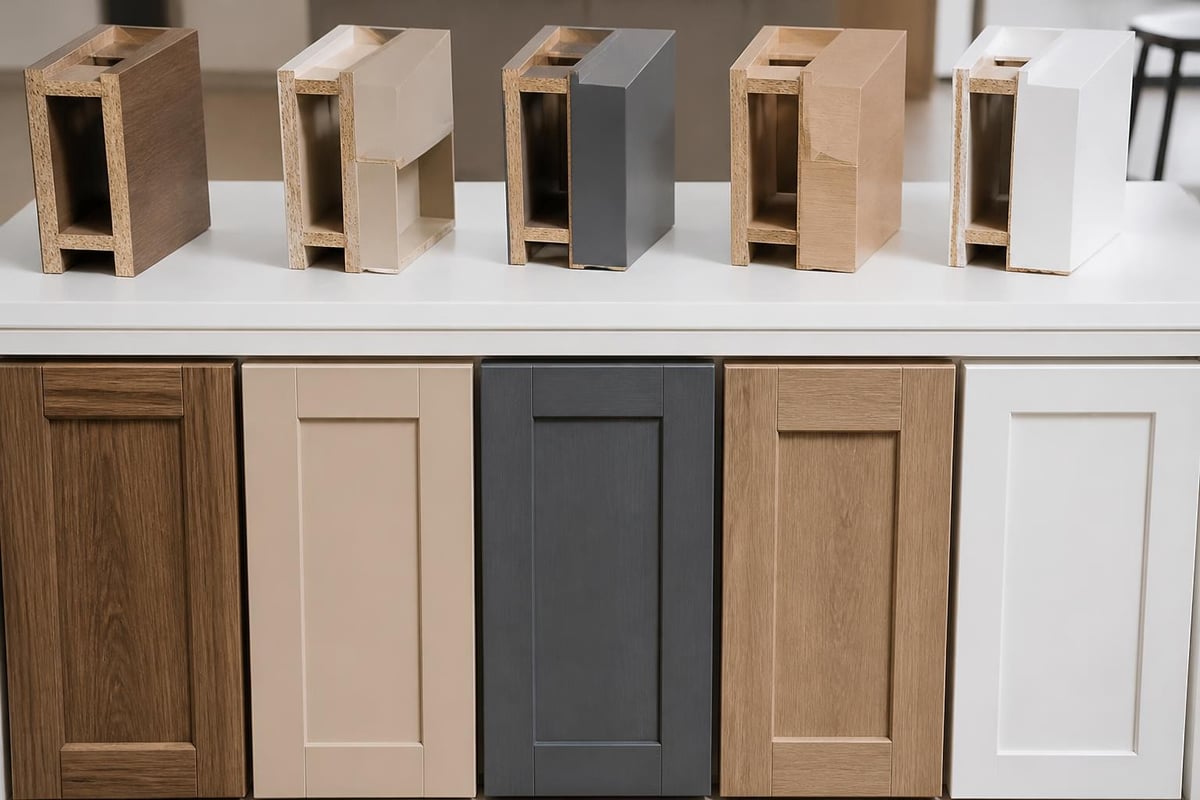
Plywood: The gold standard for cabinet boxes, plywood resists moisture, holds fasteners securely, and provides superior structural integrity. Expect to pay $20-40 more per cabinet compared to particleboard, but the longevity justifies the investment.
Particleboard/MDF: Acceptable for budget-conscious projects when properly sealed and kept away from moisture exposure. These materials cost less but require careful installation and maintenance to prevent swelling or deterioration.
Solid Wood: Rarely used for entire cabinet boxes due to cost and tendency to warp. When found, solid wood construction adds 40-60% to cabinet pricing.
The This Old House cabinet construction guide recommends plywood for any cabinet base or sink area while accepting particleboard for upper cabinets in dry locations as a reasonable cost-saving measure.
Door materials create the visible aesthetic and represent a strategic area for budget allocation. For a full breakdown of what new kitchen cabinets cost across stock and custom options, see our New Kitchen Cabinets Cost Guide for 2026.
Searching for affordable kitchen cabinets near me requires more than price comparison. Strategic shopping involves evaluating total project costs, understanding what's included, and leveraging local advantages.
When visiting showrooms or requesting quotes, these questions reveal true project costs:
Buying affordable kitchen cabinets near me from local showrooms offers distinct advantages over online ordering or big-box stores:
Physical inspection: Touch finishes, test drawer glides, examine construction details, and compare door styles side-by-side. Online photos never capture true color accuracy or finish quality.
Professional design consultation: Experienced designers optimize layouts, suggest storage solutions, and identify cost-saving alternatives while maintaining aesthetic goals. This service often comes free with purchase but costs $500-2,000 when hired independently.
Immediate problem solving: Local suppliers coordinate installations, address delivery issues, and provide replacement parts quickly. Online vendors require shipping delays and complicated return processes for even simple problems.
Coordination with contractors: Established showrooms maintain relationships with qualified installers, countertop fabricators, and other trades, streamlining project timelines and ensuring compatible products.
The NKBA Kitchen & Bath Market Outlook notes that homeowners increasingly value the consultation and support local suppliers provide, particularly for complex projects where mistakes prove costly.
Strategic decisions throughout the planning process stretch cabinet budgets without compromising results.
Allocate premium budget to these high-impact areas:
Make strategic compromises in these lower-impact areas:
Even budget-conscious cabinet shopping should meet minimum quality standards. The KCMA certification standard provides objective performance benchmarks that separate quality construction from cheap alternatives.
| Feature | Budget Quality | Professional Quality |
|---|---|---|
| Box joinery | Stapled butt joints | Doweled or dado joints |
| Drawer construction | Stapled particleboard | Dovetailed solid wood |
| Drawer glides | Side-mount epoxy | Under-mount soft-close |
| Shelf material | 1/2" particleboard | 3/4" plywood |
| Back panel | 1/8" hardboard | 1/4" plywood |
| Hinge quality | Concealed standard | Concealed soft-close |
Reputable manufacturers stand behind their products with meaningful warranties and third-party certifications. Look for:
A comprehensive warranty protects your investment. Cheap cabinets often carry minimal 1-3 year warranties, while quality affordable options include 10-year to lifetime coverage.
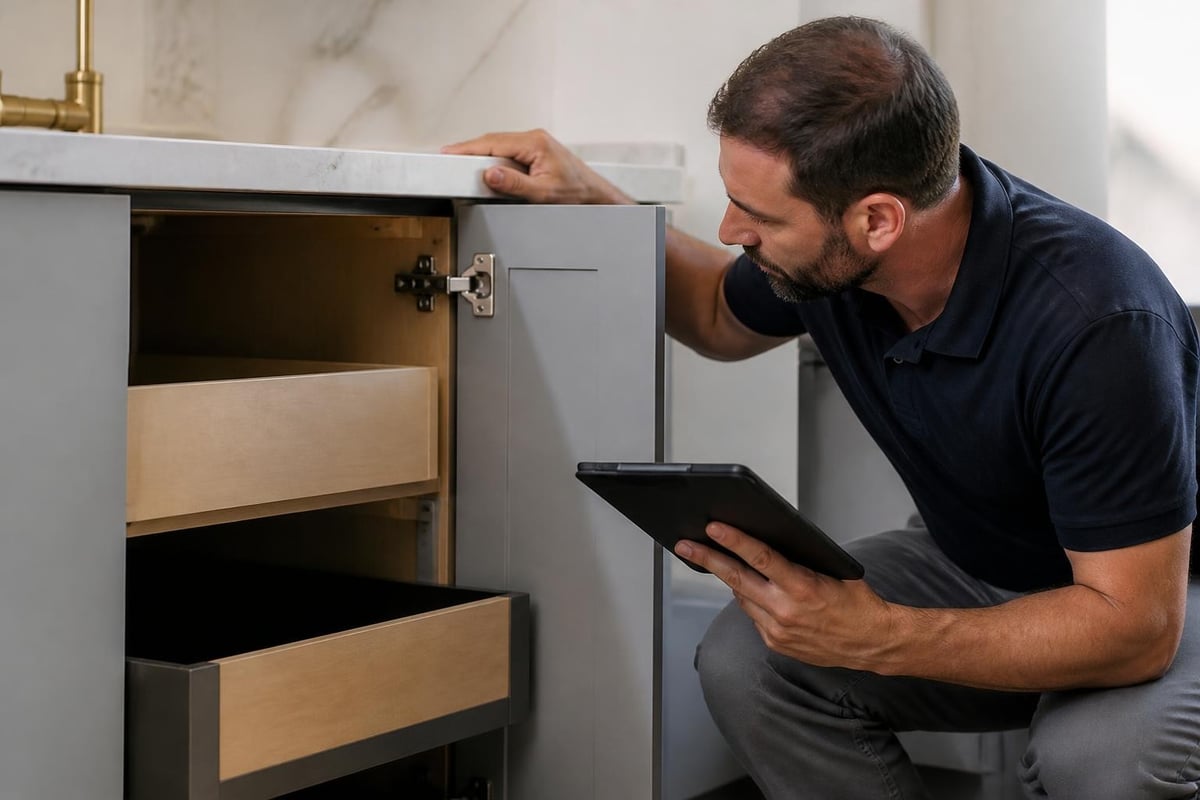
Cabinet costs extend beyond the box price. Professional installation, preparation work, and complementary products affect total project investment.
While DIY installation saves labor costs, professional installers provide:
Professional installation typically costs $75-150 per cabinet or 10-20% of total cabinet purchase price. This investment prevents costly mistakes and ensures optimal function.
Complete kitchens require more than cabinets. Budget for these related expenses:
The Department of Energy’s remodeling efficiency guide recommends coordinating cabinet and appliance selection to maximize energy efficiency opportunities and avoid retrofit complications.
Current kitchen design trends influence both pricing and product availability. The NKBA Kitchen Trends report identifies several movements affecting affordable cabinet options.
Shaker doors continue dominating the market, offering clean lines and timeless appeal across all price ranges. This popularity keeps manufacturing costs competitive. Options like Premium White Shaker Framed Cabinets or Espresso Shaker Framed Cabinets provide classic aesthetics at wholesale pricing.
Two-tone kitchens remain trendy but require careful budget management. Mixing painted uppers with wood-tone lowers creates visual interest. Smart shoppers achieve this look affordably by selecting stock colors for upper cabinets while investing slightly more in distinctive lower cabinet finishes.
Minimalist hardware trends work favorably for budgets. Touch-latch doors and integrated pulls eliminate per-piece hardware costs while delivering contemporary aesthetics.
White, gray, and navy cabinets dominate 2026 design preferences. This popularity ensures wide selection and competitive pricing in these colors. For unique color preferences, semi-custom options provide access to extensive color palettes without full custom pricing.
Natural wood finishes, particularly oak and walnut, see renewed interest but carry premium pricing due to material costs. Budget-conscious alternatives include wood-look laminates or strategic use of real wood on focal pieces like kitchen islands.
Major cabinet investments often benefit from financing arrangements that spread costs over time while preserving renovation budgets for complementary projects.
In-house financing: Many cabinet suppliers offer promotional financing through partnerships with lenders. Terms typically include:
Home equity options: Larger renovations may justify home equity loans or lines of credit offering:
Credit card rewards: Strategic use of rewards credit cards on cabinet purchases can return 2-5% in cash back or travel points. Pay balances before interest accrues to maximize value.
Effective cabinet shopping follows this timeline:
Not all suppliers offering affordable kitchen cabinets near me provide equal value. Thorough evaluation prevents expensive mistakes.
During supplier visits, assess these factors:
Certain warning signs indicate potentially problematic suppliers:
Professional suppliers welcome questions, provide detailed documentation, and maintain transparent pricing structures. Trust your instincts if something feels wrong during the shopping process.
San Diego's unique housing characteristics and climate affect cabinet selection and availability.
San Diego's moderate coastal climate with occasional humidity requires consideration:
San Diego County building codes influence cabinet installation:
Working with local suppliers familiar with San Diego requirements ensures code-compliant installations that pass inspections.
Environmental responsibility doesn't require premium pricing. Several affordable cabinet options support sustainable practices.
The most sustainable cabinet choice is one that lasts decades rather than requiring replacement every 10-15 years. Investing in durable construction reduces environmental impact through longevity, even if initial costs slightly exceed rock-bottom alternatives.
Quality affordable cabinets with proper care easily function for 20-30+ years, avoiding landfill waste and repeated manufacturing environmental costs associated with cheap replacements.
Finding affordable kitchen cabinets near me requires balancing cost consciousness with quality awareness, leveraging wholesale pricing, and working with suppliers who provide comprehensive support. Smart shoppers who understand construction details, ask informed questions, and plan strategically achieve professional results at accessible price points. SD Kitchen Cabinets eliminates the typical markup chain by offering direct wholesale pricing on in-stock, semi-custom, and fully custom cabinets, combined with free 3D design consultations and professional installation coordination. Visit the showroom at 7944 Miramar Road to explore San Diego's largest cabinet selection and discover how wholesale pricing makes quality cabinets accessible for every budget.